Thursday, March 30, 2017

How philosophy came to disdain the wisdom of oral cultures


How philosophy came to disdain the wisdom of oral cultures

Justin E H Smith
is a professor of history and philosophy of science at the Université Paris Diderot – Paris 7. He writes frequently for The New York Times and Harper’s Magazine. His latest book is The Philosopher: A History in Six Types (2016).
Published in association with 
Princeton University Press 
an Aeon Partner
volume_up
play_circle_outlineListen here
Brought to you by curio.io, an Aeon partner
1,300 words
Edited by Marina Benjamin
REPUBLISH
Do oral traditions have a place in philosophy?
 79Responses
Ahron de Leeuw/Flickr
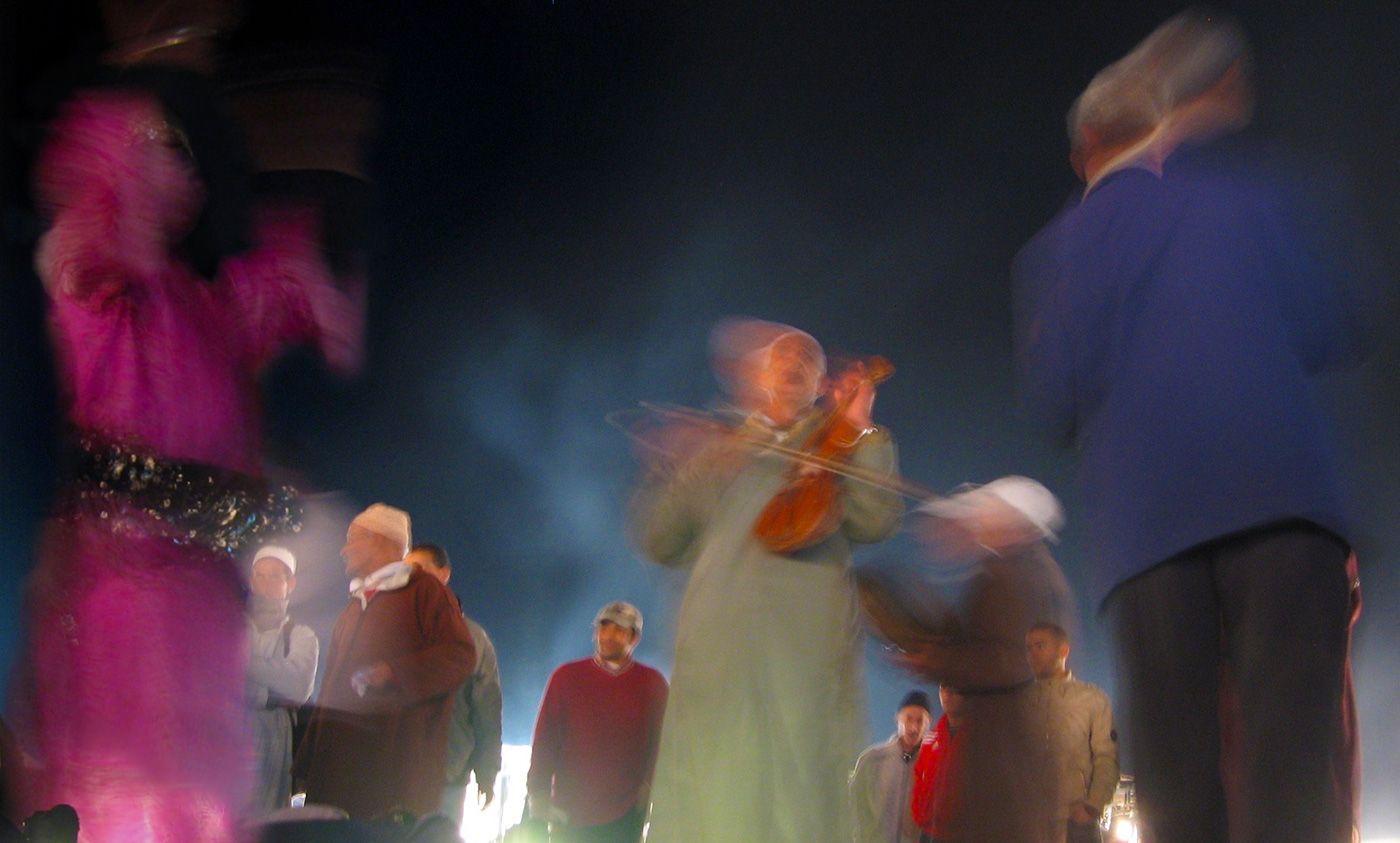
A poet, somewhere in Siberia, or the Balkans, or West Africa, some time in the past 60,000 years, recites thousands of memorised lines in the course of an evening. The lines are packed with fixed epithets and clichés. The bard is not concerned with originality, but with intonation and delivery: he or she is perfectly attuned to the circumstances of the day, and to the mood and expectations of his or her listeners. 
If this were happening 6,000-plus years ago, the poet’s words would in no way have been anchored in visible signs, in text. For the vast majority of the time that human beings have been on Earth, words have had no worldly reality other than the sound made when they are spoken. 
As the theorist Walter J Ong pointed out in Orality and Literacy: Technologizing the Word(1982), it is difficult, perhaps even impossible, now to imagine how differently language would have been experienced in a culture of ‘primary orality’. There would be nowhere to ‘look up a word’, no authoritative source telling us the shape the word ‘actually’ takes. There would be no way to affirm the word’s existence at all except by speaking it – and this necessary condition of survival is important for understanding the relatively repetitive nature of epic poetry. Say it over and over again, or it will slip away. In the absence of fixed, textual anchors for words, there would be a sharp sense that language is charged with power, almost magic: the idea that words, when spoken, can bring about new states of affairs in the world. They do not so much describe, as invoke.
Get Aeon straight to your inbox
As a consequence of the development of writing, first in the ancient Near East and soon after in Greece, old habits of thought began to die out, and certain other, previously latent, mental faculties began to express themselves. Words were now anchored and, though spellings could change from one generation to another, or one region to another, there were now physical traces that endured, which could be transmitted, consulted and pointed to in settling questions about the use or authority of spoken language. 
Writing rapidly turned customs into laws, agreements into contracts, genealogical lore into history. In each case, what had once been fundamentally temporal and singular was transformed into something eternal (as in, ‘outside of time’) and general. Even the simple act of making everyday lists of common objects – an act impossible in a primary oral culture – was already a triumph of abstraction and systematisation. From here it was just one small step to what we now call ‘philosophy’.
Homer’s epic poetry, which originates in the same oral epic traditions as those of the Balkans or of West Africa, was written down, frozen, fixed, and from this it became ‘literature’. There are no arguments in the Iliad: much of what is said arises from metrical exigencies, the need to fill in a line with the right number of syllables, or from epithets whose function is largely mnemonic (and thus unnecessary when transferred into writing). Yet Homer would become an authority for early philosophers nonetheless: revealing truths about humanity not by argument or debate, but by declamation, now frozen into text.
Plato would express extreme concern about the role, if any, that poets should play in society. But he was not talking about poets as we think of them: he had in mind reciters, bards who incite emotions with living performances, invocations and channellings of absent persons and beings. 
It is not orality that philosophy rejects, necessarily: Socrates himself rejected writing, identifying instead with a form of oral culture. Plato would also ensure the philosophical canonisation of his own mentor by writing down (how faithfully, we don’t know) what Socrates would have preferred to merely say, and so would have preferred to have lost to the wind. Arguably, it is in virtue of Plato’s recording that we might say, today, that Socrates was a philosopher.
Plato and Aristotle, both, were willing to learn from Homer, once he had been written down. And Socrates, though Plato still felt he had to write him down, was already engaged in a sort of activity very different from poetic recitation. This was dialectic: the structured, working-through of a question towards an end that has not been predetermined – even if this practice emerged indirectly from forms of reasoning only actualised with the advent of writing. 
The freezing in text of dialectical reasoning, with a heavy admixture (however impure or problematic) of poetry, aphorism and myth, became the model for what, in the European tradition, was thought of as ‘philosophy’ for the next few millennia.
Why are these historical reflections important today? Because what is at stake is nothing less than our understanding of the scope and nature of philosophical enquiry.
The Italian philosopher of history Giambattista Vico wrote in his Scienza Nuova (1725): ‘the order of ideas must follow the order of institutions’. This order was, namely: ‘First the woods, then cultivated fields and huts, next little houses and villages, thence cities, finally academies and philosophers.’ It is implicit for Vico that the philosophers in these academies are not illiterate. The order of ideas is the order of the emergence of the technology of writing. 
Within academic philosophy today, there is significant concern arising from how to make philosophy more ‘inclusive’, but no interest at all in questioning Vico’s order, in going back and recuperating what forms of thought might have been left behind in the woods and fields. 
The groups ordinarily targeted by philosophy’s ‘inclusivity drive’ already dwell in the cities and share in literacy, even if discriminatory measures often block their full cultivation of it. No arguments are being made for the inclusion of people belonging to cultures that value other forms of knowledge: there are no efforts to recruit philosophers from among Inuit hunters or Hmong peasants. 
The practical obstacles to such recruitment from a true cross-section of humanity are obvious. Were it to happen, the simple process of moving from traditional ways of life into academic institutions would at the same time dilute and transform the perspectives that are deserving of more attention. Irrespective of such unhappy outcomes, there is already substantial scholarship on these forms of thought accumulated in philosophy’s neighbouring disciplines – notably history, anthropology, and world literatures – to which philosophers already have access. It’s a literature that could serve as a corrective to the foundational bias, present since the emergence of philosophy as a distinct activity.
As it happens, there are few members of primary oral cultures left in the world. And yet from a historical perspective the great bulk of human experience resides with them. There are, moreover, members of literate cultures, and subcultures, whose primary experience of language is oral, based in storytelling, not argumentation, and that is living and charged, not fixed and frozen. Plato saw these people as representing a lower, and more dangerous, use of language than the one worthy of philosophers. 
Philosophers still tend to disdain, or at least to conceive as categorically different from their own speciality, the use of language deployed by bards and poets, whether from Siberia or the South Bronx. Again, this disdain leaves out the bulk of human experience. Until it is eradicated, the present talk of the ideal of inclusion will remain mere lip-service.

The Photography Show presents more than 115 exhibitors from around the world


2:42 pm /
The First Art Newspaper on the Net Established in 1996PortugalThursday, March 30, 2017


The Photography Show presents more than 115 exhibitors from around the world
The Photography Show will feature more than 115 galleries from across the U.S. and around the world, including Europe, Asia, Canada, Mexico, the Middle East, and South America. Four new sections – Salon, Gallery, Positions, and Discovery – will offer work from established and new AIPAD members and first-time exhibitors, as well as younger galleries.
4
  
NEW YORK, NY.- In its new location at Pier 94, The Photography Show will be held from Thursday, March 30 through Sunday, April 2, 2017, with an expanded program of exhibitions and events. More than 115 galleries from around the world will offer contemporary, modern, and 19th-century photographs as well as photo-based art, video, and new media. Presented by AIPAD (the Association of International Photography Art Dealers), the 37th edition of the Show commenced with a Vernissage on Wednesday, March 29. One of the world’s most highly-anticipated annual art fairs, the Show is the longest-running and foremost exhibition dedicated to the photographic medium.

The 2017 Show will include more than a dozen AIPAD Talks featuring prominent curators, collectors, artists, and journalists as well as special exhibitions on loan from the noted collections of Artur Walther, Martin Z. Margulies, and Madeleine P. Plonsker. New projects will include portrait-making with the world’s first digital camera, the AIPAD Screening Room, and an outdoor video projection.

“This is the most exciting, innovative, and comprehensive Photography Show we have ever produced,” said Catherine Edelman, President, AIPAD, and President, Catherine Edelman Gallery, Chicago. “The anticipation of AIPAD's transformation has energized the photography community, and collectors are telling me they are greatly looking forward to the expanded offerings.”

EXHIBITORS
The Photography Show will feature more than 115 galleries from across the U.S. and around the world, including Europe, Asia, Canada, Mexico, the Middle East, and South America. Four new sections – Salon, Gallery, Positions, and Discovery – will offer work from established and new AIPAD members and first-time exhibitors, as well as younger galleries. In addition, more than 30 book sellers and publishers will also be represented at the Show.

HIGHLIGHTS

Portraits

Yancey Richardson Gallery, New York, will exhibit recent portraits by Mickalene Thomas and Zanele Muholi. Scheinbaum & Russek, Santa Fe, will show work by Carrie Mae Weems in a themed exhibition that celebrates the child.

Alfred Stieglitz’s 1919 portrait of Georgia O’Keeffe will be exhibited at Edwynn Houk Gallery, New York. Philippe Halsman’s gelatin silver prints of Marilyn Monroe from 1952 will be on view at Keith de Lellis Gallery, New York.

Starting in 1968 as a member of the Nigerian Arts Council, J. D. 'Okhai Ojeikere cataloged the extraordinary varieties of women's intricate hairstyles. Ojeikere's work was featured in Documenta 12, 2007, and in The Encyclopedic Palace, curated by Massimiliano Giono for the 2013 Venice Biennale and will be on view at L. Parker Stephenson Photographs, New York.

De Soto Gallery, Venice, CA, will show portraits from Alma Haser’s Cosmic Surgery series, 2014-2016, including 3D photographs and freestanding paper sculptures. The exhibition, Haser’s first with the gallery, will include new pieces that combine photography with collage and origami.

Mark Klett and his eldest daughter Lena share the same birthday. His annual father and daughter “birthday portraits,” made from 1992 – 2016, have never been seen and will be on view at Etherton Gallery, Tucson.

Lisa Sette Gallery, Phoenix, will present a solo exhibition of work by Charlotte Potter who creates hand-engraved portraits from glass treated with a digitally developed light-sensitive decal, merging modern and traditional technologies. Her 2017 miniature portraits of iconic photographers pay homage to those who shaped the history of the medium.

Rania Matar’s arresting, coming-of-age studies of U.S. and Lebanese girls resonate universally and can be seen at Pictura Gallery, Bloomington, IN. In a similar vein, Jo Bentdal captures the sensitive strong gaze of teenage girls reminiscent of Renaissance portraiture on view at Shoot Gallery, Oslo.

At Tasveer, New Delhi and Bangalore, Jyoti Bhatt documents fading vernacular artistic traditions found in rural India including a 1969 image of a tribal woman decorating a bull for a festival. Alex Majoli’s striking photograph of a man walking along a railroad track in the Republic of Congo from 2012 will be on view at Howard Greenberg Gallery, New York. Majoli explores the human condition and calls into question darker elements of society.

Immigration/Borders
Photographs made by Ashley Gilbertson of the refugee crisis in Greece, the Balkans, and Germany while on assignment for UNICEF in 2015 at Monroe Gallery of Photography, Santa Fe, are among the fine examples of photojournalism on view.

Patricia Conde Galería, Mexico City, will exhibit Alejandro Cartagena’s Carpoolers series, 2011-2012. Photographed from a pedestrian bridge, Cartagena, depicts pick-up trucks taking people to work near the U.S. Mexican border.

Omar Imam’s recent photographs of refugees living in tents in Lebanon will be on view at Catherine Edelman Gallery, Chicago. As a Syrian refugee himself now living in Amsterdam, he photographs families, and listens to their stories of war and starvation.

Social Justice
Photographs from Lucinda Devlin’s series of 30 images of electric chairs and lethal injection chambers throughout the U.S. will be on view at Lee Marks Fine Art, Shelbyville, IN. Since the publication of her book of the same title published by Steidl in 2000, some of these facilities have been closed, but some remain in operation. A retrospective of Devlin’s work is currently on view at the Weatherspoon Art Museum, Greensboro, NC, and will travel to the George Eastman House, Rochester, NY.

Climate Change
With the support of a Guggenheim fellowship, Scott Conarroe at Stephen Bulger Gallery, Toronto, examines how climate change is affecting the Alps. As permafrost retreats even higher, terrain no longer conforms to borders established in the last century.

Gender Issues
Christa Blackwood addresses gender issues by placing large red dots, which signify female empowerment, on her portraits and landscapes, at Candela, Richmond, VA. Selections from Lissa Rivera’s 2015 Beautiful Boy series at ClampArt, New York, feature portraits of her gender queer domestic partner muse. The photographs investigate the visual language of womanhood and recall childhood fantasies of dressing up, tapping into deep-seated narratives about desire, beauty, and cultural taboo.

Tara Bogart’s work from her series A Modern Hair Study, 2012-2015, on view at Elizabeth Houston Gallery, New York, features portraits of young women shot from behind, highlighting hair color, style, and tattoos.

Abstraction
Kopeikin Gallery, Los Angeles, will show abstracted landscapes by Katie Shapiro and Jason Engelund. Sabrina Raffaghello Contemporary Art, Milan and Berlin, will exhibit experimental work by Franco Grignani from 1956. At Galerie Lefebvre, Paris, Jaroslav Rossler’s c. 1923 The Bridge represents a very early example of abstract photography.

Cameraless Photography
Gallery 1/1, Seattle, will feature a themed exhibition of one-of-a-kind cameraless prints that honor the photograph as an object by Jenna Kuiper, Daniel Kukla, and Brianna Tadeo. Michael Hoppen Gallery, London, will present Manuel Franquelo’s Things in a Room (Untitled#10), 2015, part of a new series by one of Spain's most important photographers. The still lifes of objects from his studio result from the artist’s own printing technique, which allows for incredible detail and depth.

Ibasho, Antwerp, Belgium will show recent work from Motohiro Takeda who became fascinated by the camera obscura while studying at Parsons in New York. His resent series Another Sun was based on his discovery of a mark made by the sun on the photographic paper hanging in his apartment.

JHB Gallery, New York, will offer a themed exhibition of cameraless photography by three women artists, Ellen Carey, Christine Dalenta, Amanda Means, who are among the foremost experimental photographers working today.

Wendy Small was trained as a painter and approaches photography as such. Her work, though imagistic, is distinctly painterly: carefully selected objects from her life are photographed, transferred to paper negatives, and then exposed as photograms and will be on view at Morgan Lehman Gallery, New York. Since his first exhibition in 1967, German photographer Karl Martin Holzhäuser has been one of the earliest pioneers of Concrete and Generative photography. Creating a new genre in the field of cameraless photography, he works completely in the dark according to a predetermined program of movement and exposes photographic paper with self-devised lighting tools. His work will be exhibited at Sous Les Etoiles Gallery, New York.

Early Photography
Contemporary Works/Vintage Works, Chalfont, PA, will present 19 photographs by French 19th-century photographer, Gustave Le Gray, perhaps the most influential photographer of that century. Charles Isaacs Photographs, New York, will show Timothy O’Sullivan’s 1873 print of Ancient Ruins in the Canon de Chelle (New Mexico), one of the most important and iconic images to have emerged from the exploration of the American western frontier.

One of the most famous houses in the world, Abbotsford in Scotland, was purchased by novelist and poet Sir Walter Scott in 1811. With the addition of a fantastical pile of turrets and crow-stepped gables, Scott transformed the once humble farmhouse into his own fairy-tale castle. William Henry Fox Talbot’s 1844 salt print of the house will be on view at Hans P. Kraus Jr., New York.


Is It a Toy? Is It Art?

Photo
Frank Kozik, chief creative officer at Kidrobot, with Yummy World toys, at left. The company hopes to sell the child-friendly line through mass-market retailers. CreditDamon Winter/The New York Times
It stands four feet high, looks like a squat monkey with a giant head and doubles as a chalkboard that can be drawn on and wiped clean. And it costs $5,000.
Is it a toy, or is it art?
Even the toy industry is split. The statue, known as Monsta Munny, is part of a growing category of collectible figures called designer toys. Kidrobot, the statue’s maker, leans toward calling them art, while its leading competitor, Funko, sees them more as toys.
No matter how such designer toys are labeled, consumer demand has made the sector a booming business.
Sales of all collectible toys — a category that also includes action figures, miniature figures and trading cards — surged 33 percent in 2016, according to the NPD Group. That has helped the toy industry’s overall sales rise 5 percent last year.
Designer toys, whether oversize or pocket-size, are typically made from materials like resin, vinyl or wood. Some are original designs by urban artists, but most have pop-culture roots, which has led to brisk business for the figures at fan conventions like Comic-Con International and at specialty shops where they are sold. The entertainment industry has been quick to license characters for designer toys to promote movies, TV series and video games.
Continue reading the main story
Larger figures are produced in limited editions, making them highly valuable to collectors. Smaller toys are often sold in blind packaging, similar to trading cards, giving the buyers an extra thrill of mystery. That has led to a trend called unboxing, in which excited fans open an entire case all at once in the hope of getting a rare figure and posting the frenzy on YouTube.
 
Video

Inside the world of collectible toys

Gregory Schmidt, a New York Times reporter, takes a tour of Midtown Comics in Times Square to look at collectible toys by Kidrobot and Funko. He talks with Brian Charles Rooney, an actor and avid toy collector, about the unboxing phenomenon, a trend that showcases fans unwrapping new products all at once for their online audience.
 Publish DateMarch 29, 2017. .
Kidrobot, based in Boulder, Colo., is considered a pioneer in the field, having brought designer toys to the United States from Japan in 2002. But it has been overshadowed by Funko, a fast-growing toy company in Everett, Wash., that started out making bobbleheads in 1998 and wound up dominating the market for collectible toys.
Both companies make similar products, sometimes of the same character, like Batman, Bugs Bunny or Homer Simpson. But they have different business strategies, and neither thinks of the other as a rival.
Frank Kozik, the chief creative officer at Kidrobot, said he was grateful for the growth and attention that Funko has brought to the industry. “Funko has done the genre a huge favor,” he said. “Through their success, they opened the world to us.”
When Mr. Kozik came aboard at Kidrobot in 2014, the company was struggling with financial and leadership woes. The toymaker had stumbled after its founder and chief executive left in 2012. Without strong direction, sales were slumping, morale was suffering and employees were jumping ship.
“The company had lost its way,” said Mr. Kozik, who had been designing toys for Kidrobot before being hired by its new owner, a toy company called the National Entertainment Collectibles Association. Mr. Kozik aimed to lead Kidrobot back to its roots by working with young, urban artists to make designer toys with a whimsical edge.
Up-and-coming names like Tara McPherson, Amanda Visell and Nathan Jurevicius began customizing a prototype that Kidrobot calls a Dunny, street slang for “devil bunny,” creating a new work of art at an affordable price. (The Munny, on the other hand, is customized by the buyer.)
The Dunny concept has been used by other companies like Funko, Medicom, Tokidoki and Disney, which uses a Mickey Mouse form as its prototype for a line called Vinylmation.
But the real coup for Kidrobot came after the Andy Warhol Foundation for the Visual Arts agreed to give the company a license. To Mr. Kozik, who grew up in a punk rock scene, the Pop artist was a natural fit.
“Warhol is an amazing artist, and he used industrial technique to popularize his work,” Mr. Kozik said. “We do the same thing.”
Photo
Funko focuses primarily on licensed products, which tend to sell better at mass retailers. Brian Mariotti, the company’s chief executive, said Funko typically handled 175 to 200 licenses at any given time.CreditDamon Winter/The New York Times
Its first line of Warhol Dunnys had been “very well received” by retailers and collectors, said Allen Richardson, vice president for product and marketing at Kidrobot.
MYSTERY UNBOXING! - WARHOL DUNNIES Video by grav3yardgirl
The success encouraged Kidrobot to broaden the line to include plush figures, Campbell’s Soup cans that contain mystery figures, and a higher-end reproduction of a Warhol artwork called “Invisible Sculpture.”
Kidrobot also puts its own twist on characters from Marvel and DC properties, as well as TV shows like “South Park” and “The Simpsons.” The mix of artistic and licensed properties helped Kidrobot turn profitable six months ago, Mr. Kozik said. He would not reveal sales numbers, but said the company was growing. He added that the company was able to bolster its workplace as well and now has nearly 20 employees.
Kidrobot still faces challenges. Its biggest risk will be a property of its own called Yummy World, a child-friendly line that it is developing for mass-market retailers, which means a greater investment and more inventory for Kidrobot.
Yummy World plush toys, key chains and other products are available now, and Mr. Kozik said Kidrobot was exploring the possibility of housewares and lifestyle products. “They are visually appealing and they have a tactile comfort too, like cuddling a kitten,” he said.
Funko, on the other hand, has fewer risks because it focuses primarily on licensed products, which tend to sell better at mass retailers. According to Brian Mariotti, the company’s chief executive, Funko typically handles 175 to 200 licenses at any given time.
It prides itself on its awareness of entertainment blockbusters, making toys on a wide range of well-known properties like “Game of Thrones,” “Harry Potter,” “League of Legends” and “Star Wars,” and even a few unusual ones like “The Golden Girls” and Hanna-Barbera cartoons.
That large portfolio of licenses is a crucial factor in Funko’s growth. The company said it posted $400 million in revenue in 2016, 50 percent higher than the previous year.
Photo
Visitors admired the collectibles at the Funko booth at the North American International Toy Fair earlier this year. CreditDamon Winter/The New York Times
“Most major toy companies make a big investment in six or seven licenses,” Mr. Mariotti said. “At Funko, we are not going to have to worry about the constrictions that bigger companies have.”
Funko recently announced that it acquired a license for “Rick and Morty,” an animated series on Cartoon Network, which it plans to use to expand beyond toys into housewares, home décor and apparel later this year.
Funko has 274 employees and maintains a design studio in the United States, cutting turnaround time. Mr. Mariotti said that Funko could get toys to retailers in as little as 70 days.
To shorten the window, Funko is considering new products that can be made in the United States instead of China. “We are much more effective with our quality control, overall design and speed to market by having this stuff designed all the way in the U.S.A.,” Mr. Mariotti said.
The fast turnaround is crucial for a toy company, said Jim Silver, chief executive of TTPM.com, a toy review website, because hot properties can burn out quickly. “You don’t know the life span of some of them.”
Funko has few worries about being squeezed by larger toymakers. Remaining agile helps it stay competitive, Mr. Silver said. “If you look at the cost of manufacturing and labor, overhead is a lot smaller for the smaller company,” he said. In fact, Hasbro and Mattel, two of the biggest toy companies in the world, license their properties to Funko.
Managing so many licenses has also attracted the attention of retailers, helping Funko move quickly into mass-market stores like Walmart, Hot Topic, Barnes & Noble and Target, which has a dedicated Funko area in most of its stores. Funko is also selling direct to consumers through a monthly subscription plan.
But the secret to the company’s success was not the number of licenses that it carried, but the devotion it had for each one, said Mr. Mariotti, who is a toy collector himself.
“We are 100 percent dedicated to everything we are excited about in pop culture,” he said.