The Phaidon Folio
What Was Dada? Our Primer on the Revolutionary Roots of the Original Anti-Art Movement
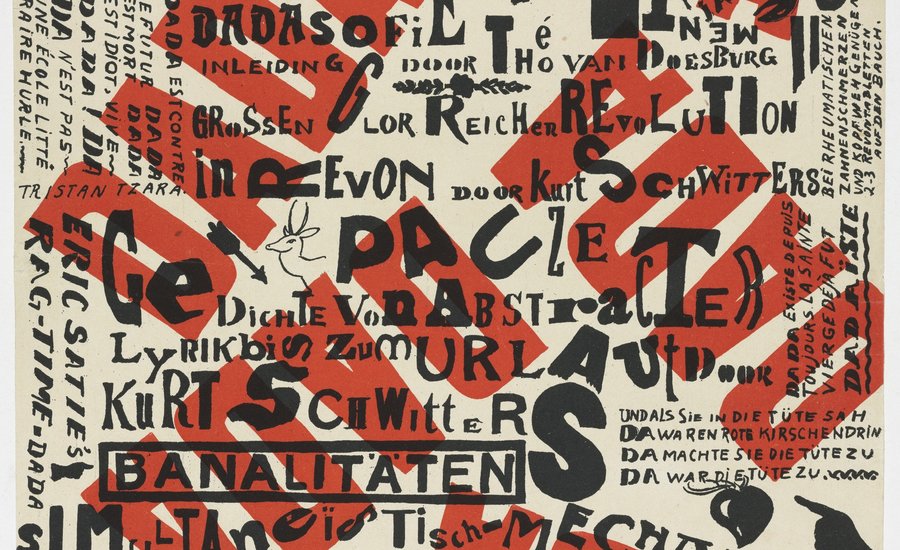 The early twentieth century positively lousy with
radical art movements, most trying in one way or another to reckon with
the culture-shaking shifts of that heady period. Few had as much fun
with this self-serious task as the artists behind Dada,
the international “anti-art” group dedicated to challenging the
strictures of good taste and the sanctity of art itself. Before heading
to MoMA to check out “Dadaglobe Reconstructed” (featuring works by 50 artists from Tristan Tzara’s unfinished anthology Dadaglobe), brush up on your Dada history with this brief essay from Phaidon’s Art in Time.
The early twentieth century positively lousy with
radical art movements, most trying in one way or another to reckon with
the culture-shaking shifts of that heady period. Few had as much fun
with this self-serious task as the artists behind Dada,
the international “anti-art” group dedicated to challenging the
strictures of good taste and the sanctity of art itself. Before heading
to MoMA to check out “Dadaglobe Reconstructed” (featuring works by 50 artists from Tristan Tzara’s unfinished anthology Dadaglobe), brush up on your Dada history with this brief essay from Phaidon’s Art in Time.“Dada means nothing,” wrote Tristan Tzara in the 1918 Dada Manifesto. Indeed, Dada is definable more easily by what it was not than by what it was. It was not a cohesive movement, but a mentality that was taken up in a variety of ways: chaotic, experimental performance in Zürich from 1916; satirical collage and painting in Berlin and Cologne; playful poetry and “Ready-mades” in Paris and New York. It was not about formal aesthetics or skill, unlike even such movements such as Cubism or Futurism. It was not about conforming: class, religion, war, and art itself were all under scrutiny and attack by often humorous and always incisive artists who sought to break down barriers between art and everyday life.
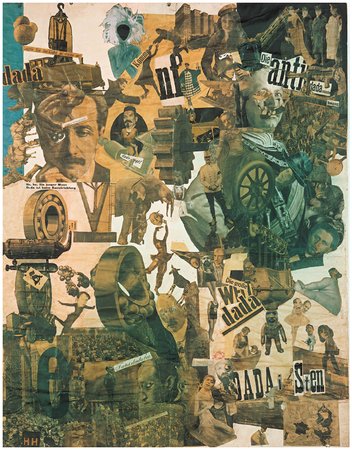 Hannah Höch, Cut with the Dada Kitchen Knife through the Last Weimar Beer-Belly Cultural Epoch in Germany, 1919
For post-war Germany, everyday life was wrought with anxiety and a sense of wounded loss; both Cut with the Dada Kitchen Knife, by Hannah Höch (1889–1978), and The Worker Picture, by Kurt Schwitters (1887–1948), speak to this with painful eloquence. Höch used photos from newspapers and magazines to create a montage in which the placement of image and text is telling: Kaiser Wilhelm’s face appears surrounding the word “anti,” and Höch’s own face is next to a map of countries with female suffrage. The domestic kitchen knife suggests the abilities of female artists to cut through the gluttony at the heart of the war, symbolized by the male-gendered “beer-belly” of the title.
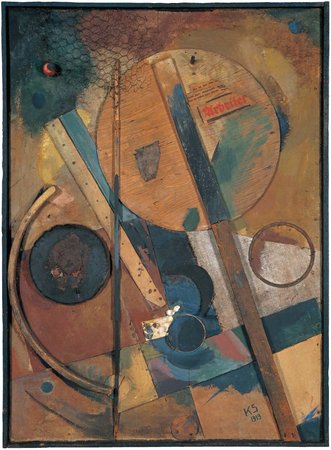 Kurt Schwitters, The Worker Picture, 1919
 The title of Schwitters’s piece comes from a fragment of newspaper text pasted into the composition: Arbeiter (“worker”). Indicating the working class, the word is also a pun, suggesting that the picture itself might “function” with its system of cogs and pistons. However, this is no slick, well-oiled mechanism, but one created from fragments of wood, wire, and newsprint, seeming to stutter and grind; both picture and worker are vulnerable and struggling.
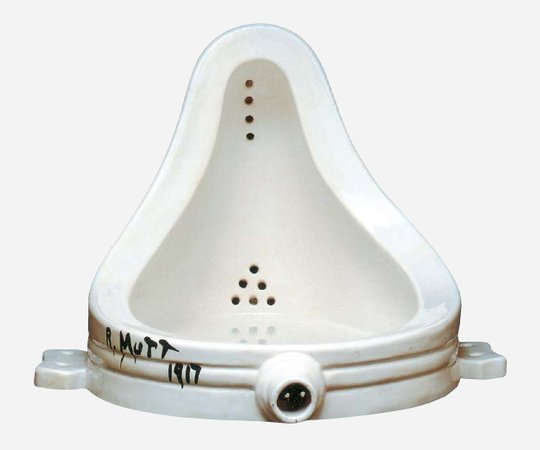 Marcel Duchamp, Fountain, 1964 (replica of 1917 original)
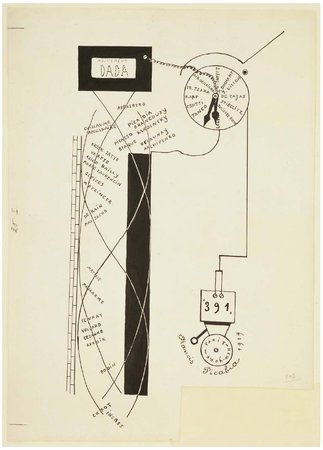 Francis Picabia, Dada Movement, 1919
No comments:
Post a Comment