Sunday, May 5, 2019

The Human Alphabet

The Public Domain Review


COLLECTIONS

The Human Alphabet

alhpabetbanner
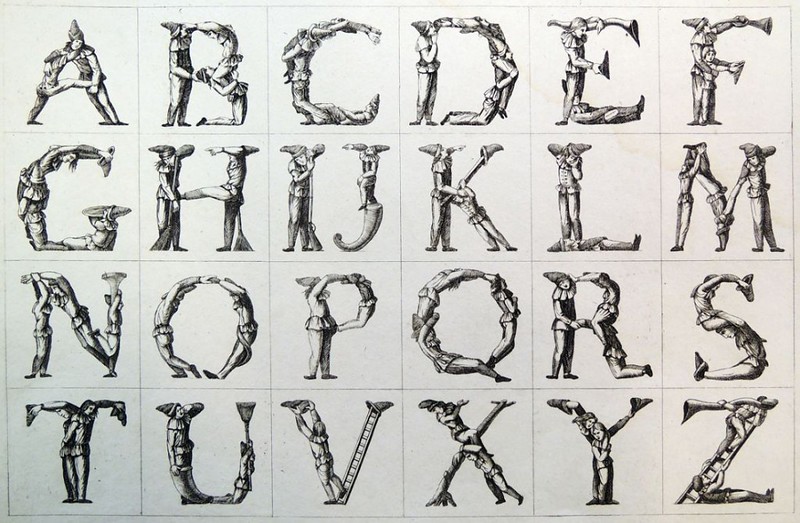
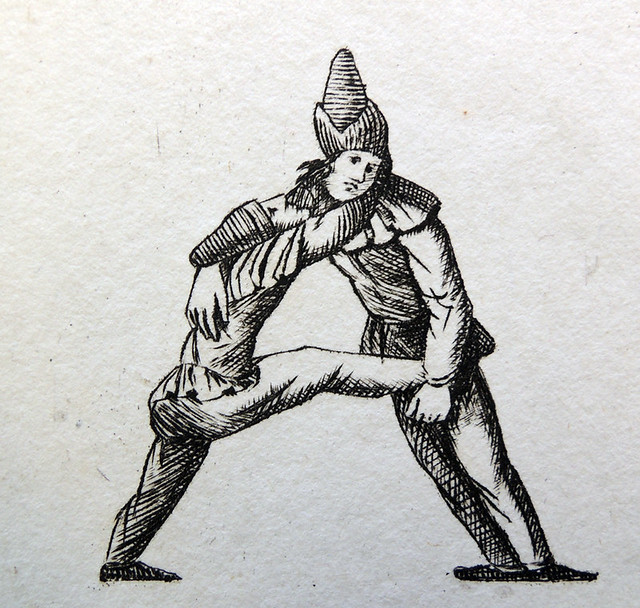
There is arguably nothing more human than the alphabet, given that language, and particularly written language, often tops the list of qualities which distinguish our dear species most distinctly from others. To form the letters of these alphabets using the human body is then, perhaps, not so strange a leap, and, in fact, seems to be rather appropriate. In their own varied ways artists and scribes have been doing it for centuries. Below we’ve collected some highlights of the many twists and turns of the human font.

Varied, see sources.
Zoe Typelark / Io9 / Spamula.net / Sotirios Raptis
Underlying Work: PD Worldwide | Digital Copy: Varied, see sources.
Download: Right click on image or see source for higher res versions
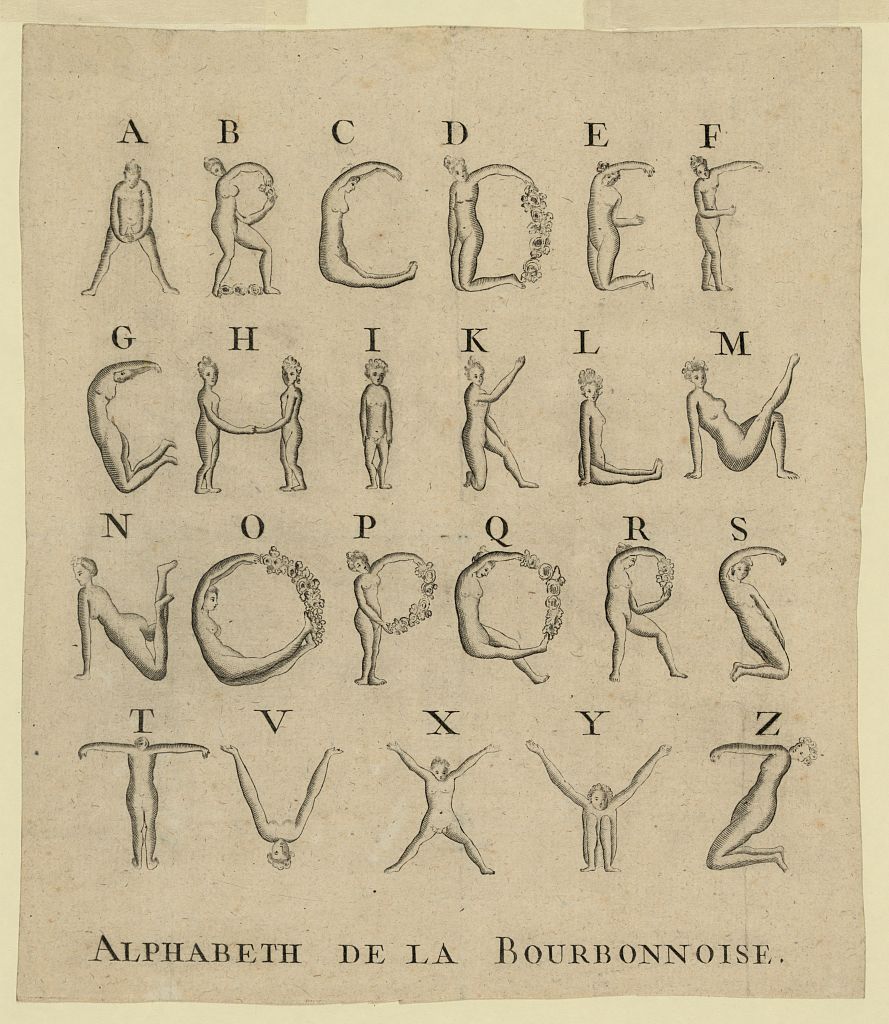
Alphabeth de la Bourbonnoise
 human alphabet
Alphabeth de la Bourbonnoise (1789) — Source.
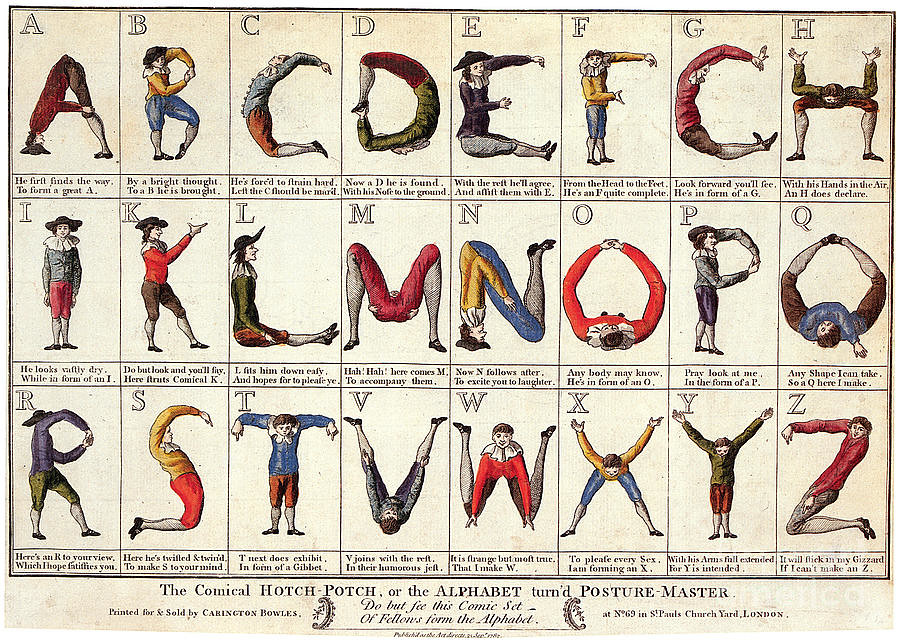
The Comical Hotch Potch, or The Alphabet turn'd Posture-Master, 1782 human alphabet
The Comical Hotch Potch, or The Alphabet turn’d Posture-Master (1782) — Source.
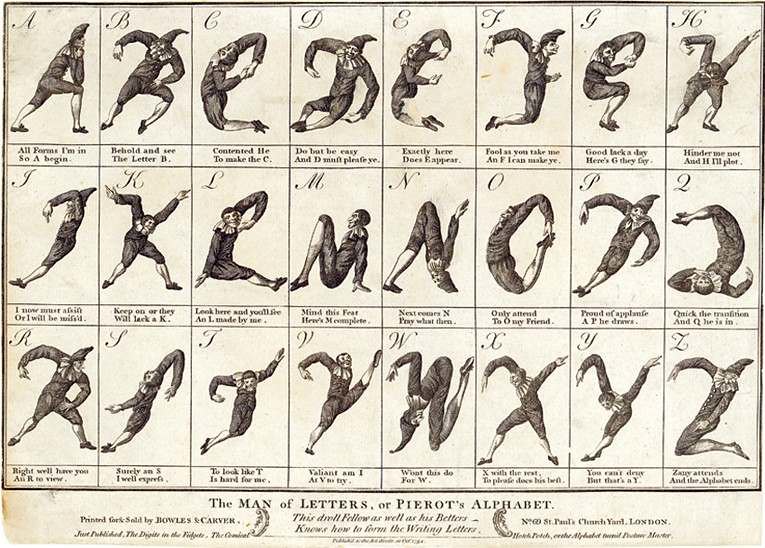
The Man of Letters or Pierrot's Alphabet (1794)
The Man of Letters or Pierrot’s Alphabet (1794) — Source.
Page from a Tudor pattern book, (ca. 1520) human alphabet
Page from a Tudor pattern book, (ca. 1520) — Source.
Peter Flötner's Human Alphabet
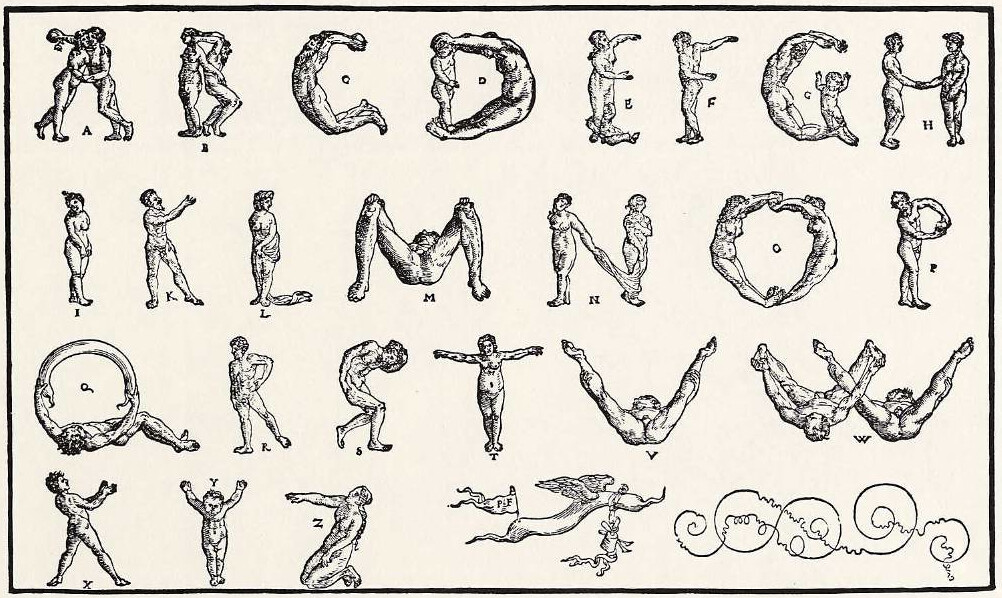
Peter Flötner’s “Human Alphabet” (1534) — Source.
dsdsd
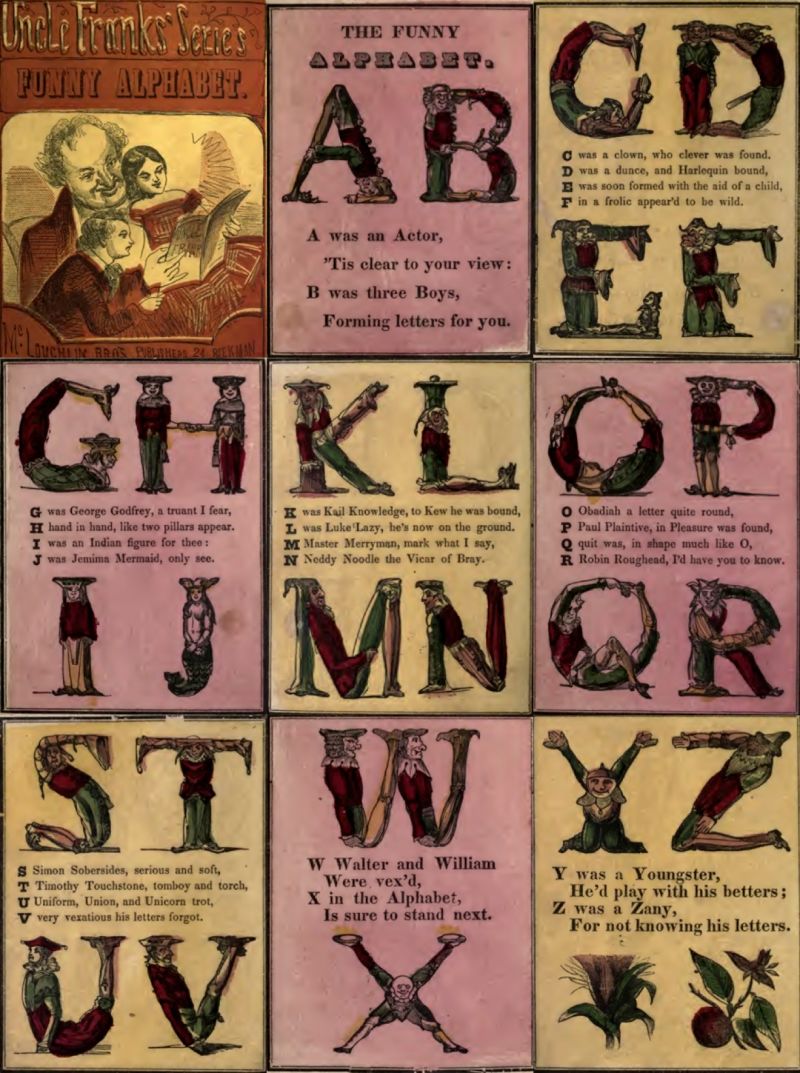
Pages from The Funny Alphabet (ca.1850) — Source.
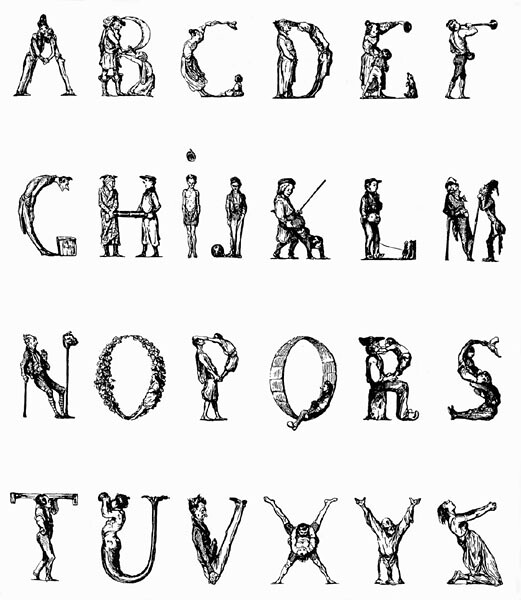
Honoré Daumier's comic alphabet (1836) — Source.
Honoré Daumier’s comic alphabet (1836) — Source.
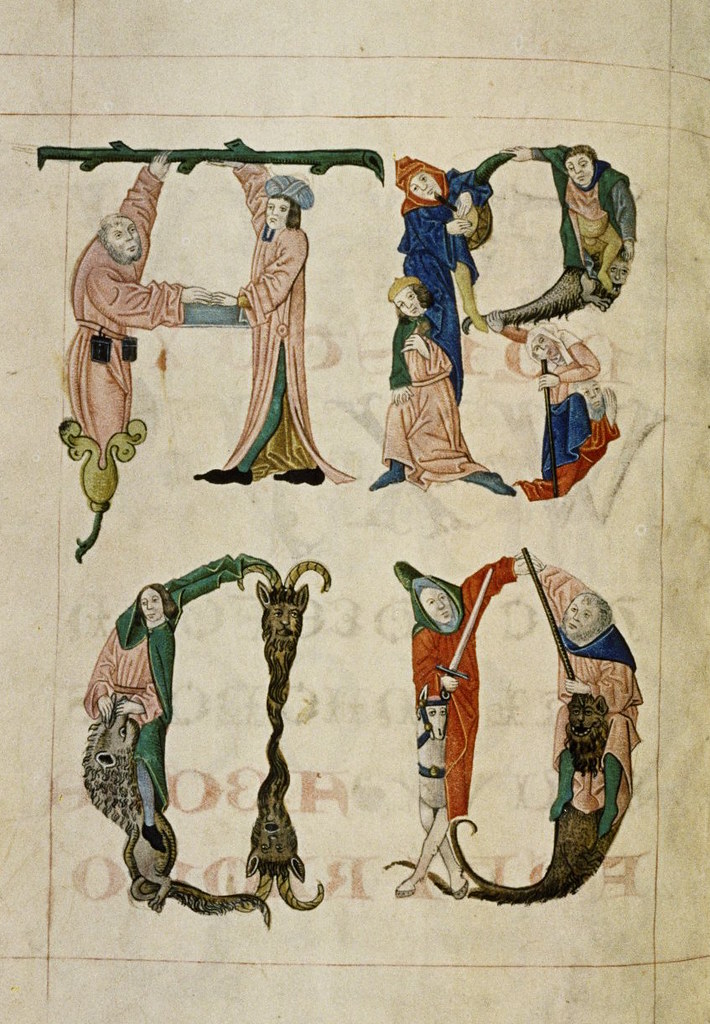
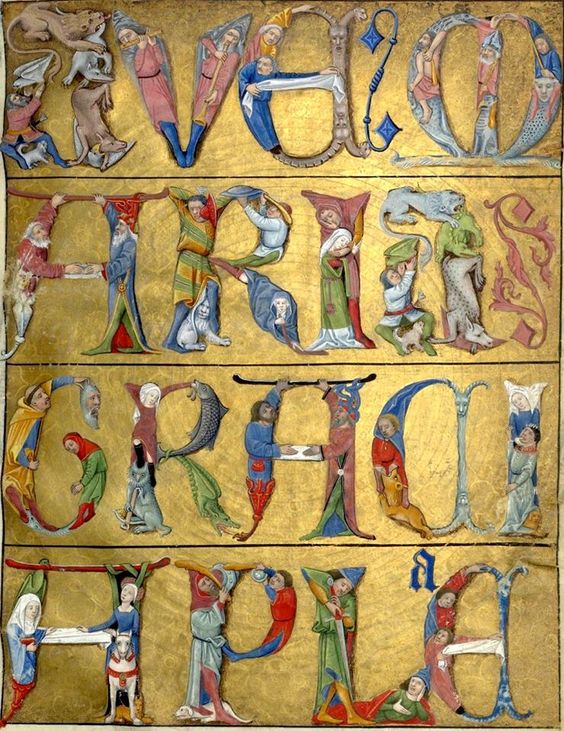
Page from the Horae ad usum Parisiensem (1475-1500)
Page from the Horae ad usum Parisiensem (1475-1500) — Source.
dsdsd
Attributed to Lampridio Giovanardi (1811-1878), Anthropomorphic or Posture Master Alphabet (ca. 1860)Source.
Detail from above.
Detail from above.
dsdsd
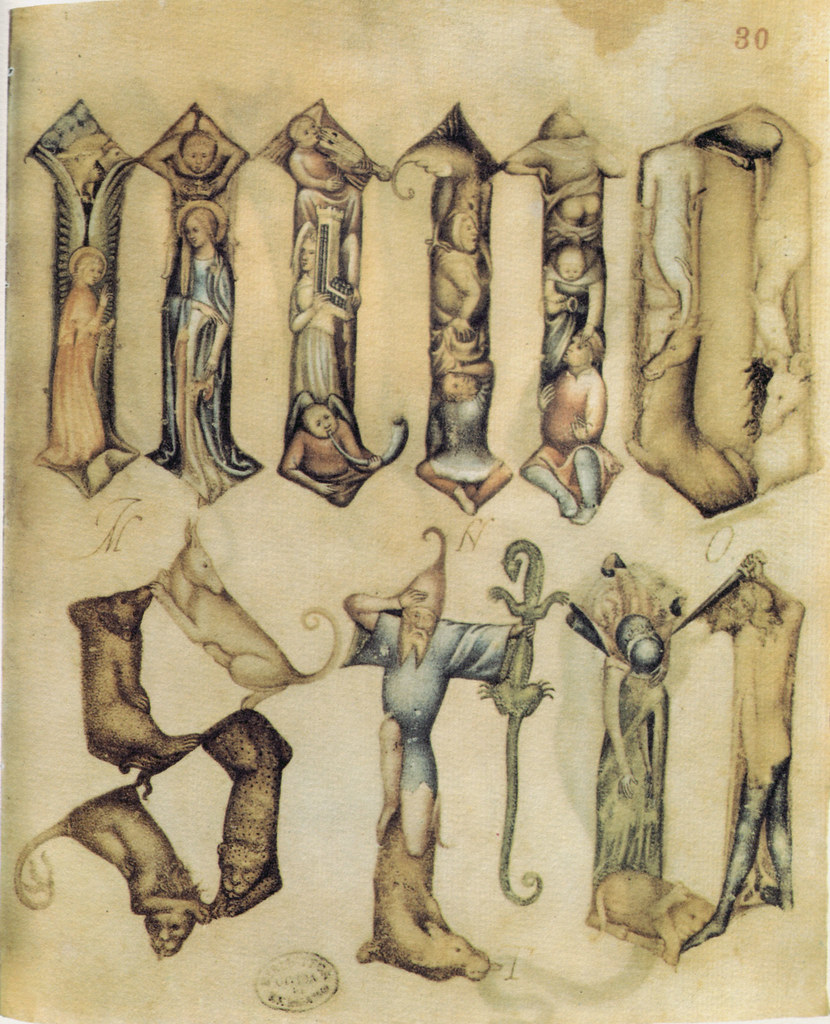
Part of the painted alphabet of Giovannino de’ Grassi (d. 1398) — Source.
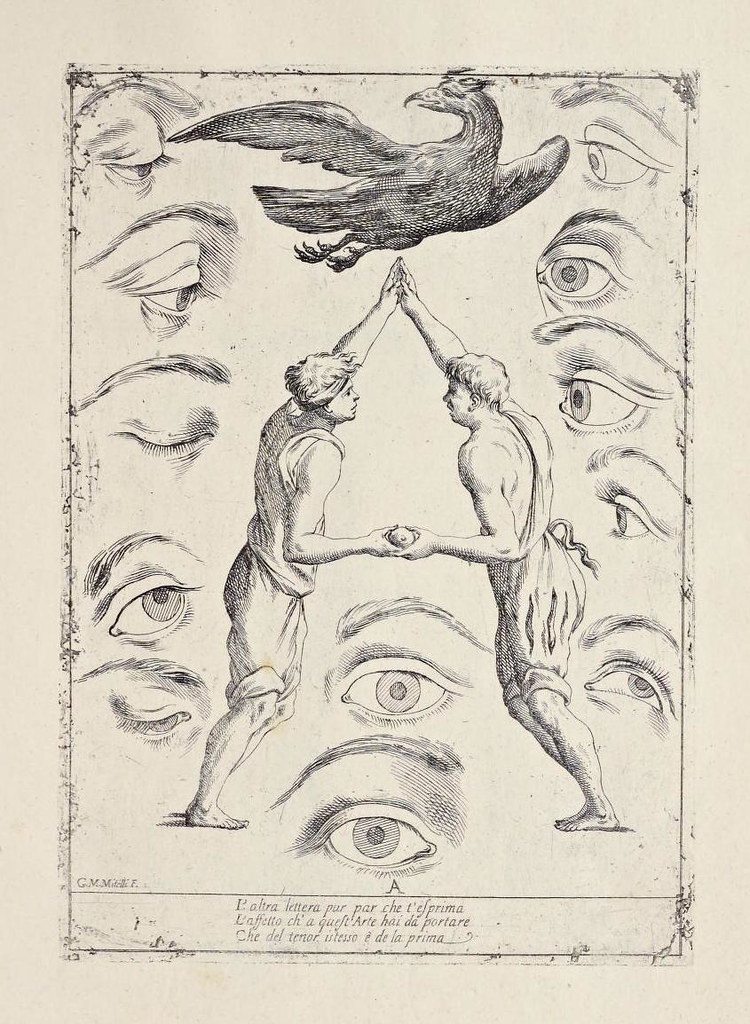
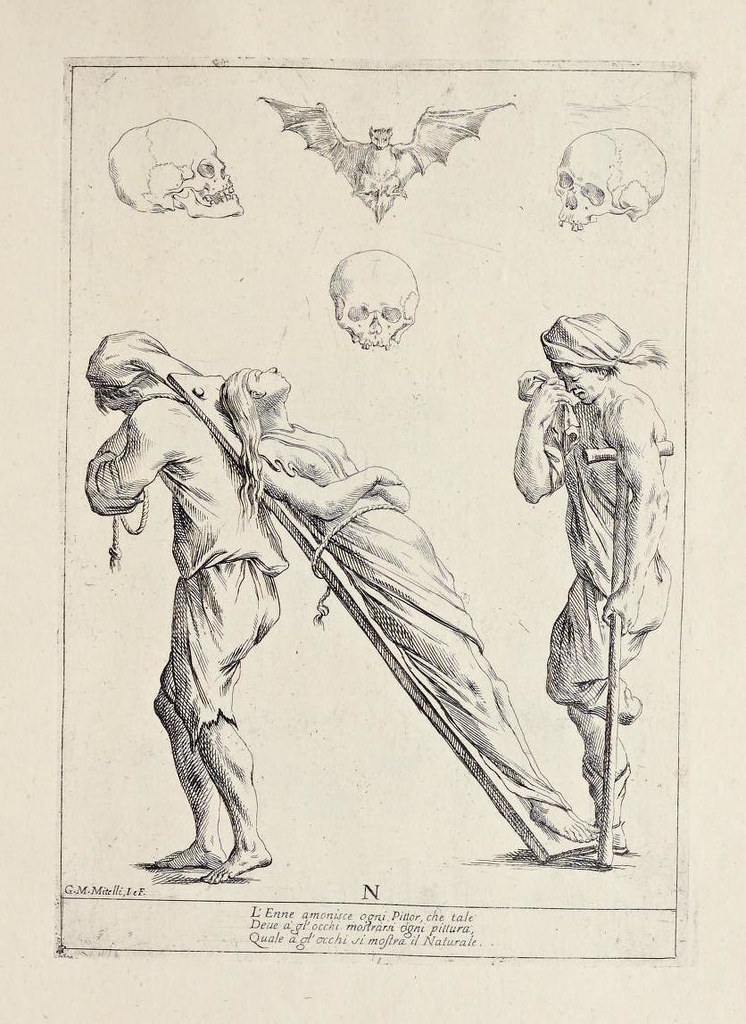
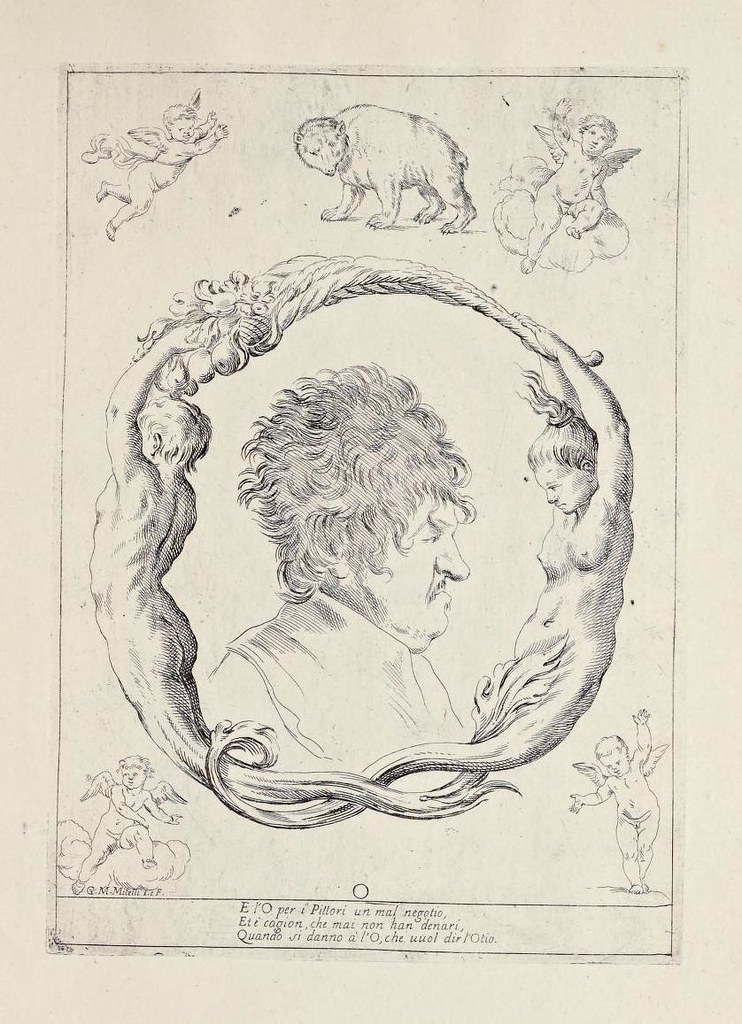
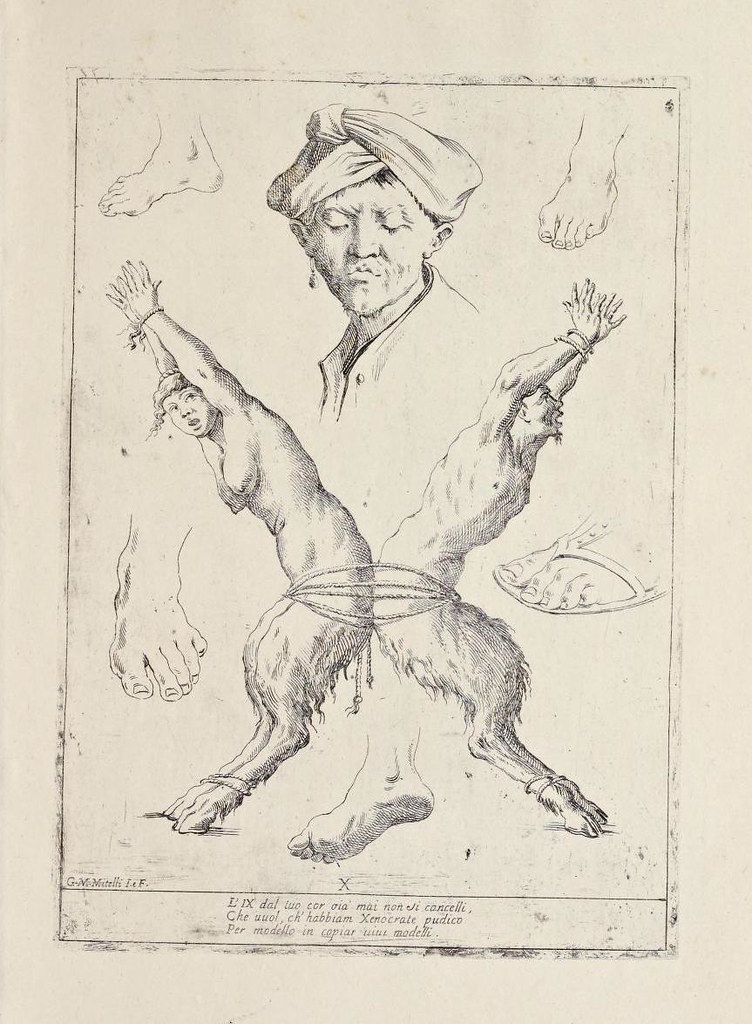
Pages from Alfabeto in sogno (1683) by Giuseppe Maria Mitelli. The title translating as Dream Alphabet
.
 Alfabeto in sogno (1683) by Giuseppe Maria Mitelli. The title translating as Dream Alphabet
.
 Alfabeto in sogno (1683) by Giuseppe Maria Mitelli. The title translating as Dream Alphabet
.
Pages from Alfabeto in sogno (1683) by Giuseppe Maria Mitelli. The title translating as Dream Alphabet
Pages from Alfabeto in sogno (1683) by Giuseppe Maria Mitelli. The title translates as Dream Alphabet — Source.
dsds
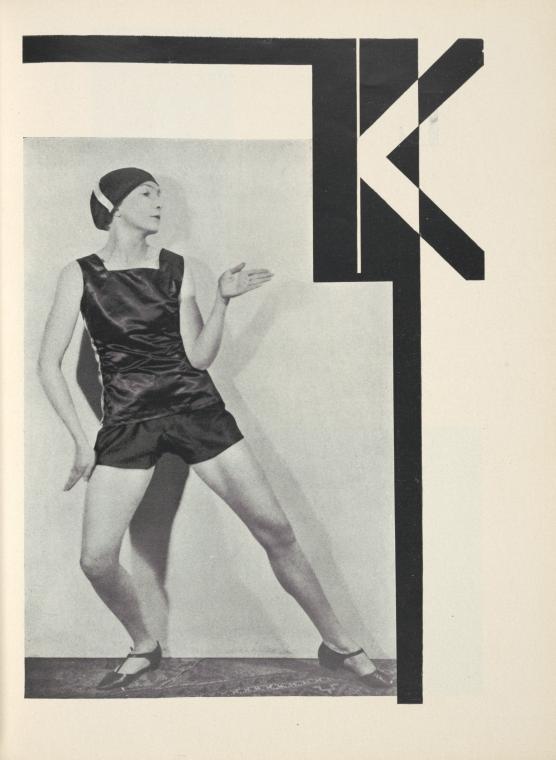
Choreographic interpretation of the letter “K”, photographed from the book Abeceda (1926) — Source.

Saturday, May 4, 2019

Second Known Portrait of Leonardo da Vinci, Made Just Before His Death


Scholars Say They Have Discovered the Second Known Portrait of Leonardo da Vinci, Made Just Before His Death

The figure's beard—a rare fashion at the time—was a major tip-off.
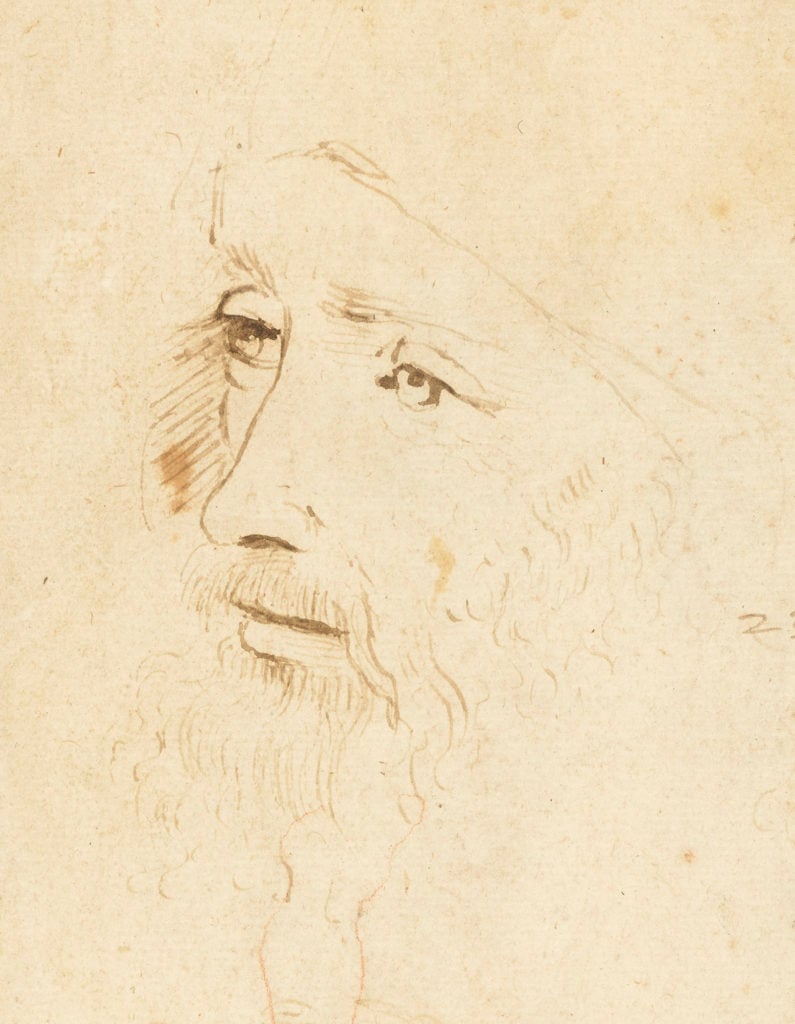
A sketch of Leonardo da Vinci, around 1517–18, by an assistant of Leonardo. Royal Collection Trust / © Her Majesty Queen Elizabeth II 2019.
The world’s second-known portrait of Leonardo da Vinci has been unearthed. For years, the Old Master drawing of an unknown bearded man has belonged to the British Royal Family. The identity of the sitter was unknown until the head of prints and drawings of the Royal Collection took a closer look. The telltale clues to the elderly man’s true identity included his “luxuriant” but unfashionable facial hair and the shape of his nose.
The three-quarter profile of a bearded man is believed to have been made by an assistant to Leonardo shortly before the artist’s death in 1519. The casual depiction is on a piece of paper that also has a sketch of a horse leg on it, part of a group of studies made for an equestrian monument that the King of France commissioned Leonardo to create.
The drawing will go on display later this month as a part of the exhibition “Leonardo da Vinci: A Life in Drawing,” which opens May 24 at the Queen’s Gallery at Buckingham Palace. The show is one of the headliners in a year of celebrations going on Europe-wide to commemorate the 500th anniversary of the Renaissance man’s death.
<i>A sketch of Leonardo, the head of a youth, and a horse's legs</i>, and <i>A portrait of Leonardo</i>, attributed to Francesco Melzi, in the Print Room, Windsor Castle. Royal Collection Trust. Copright Her Majesty Queen Elizabeth II 2019.
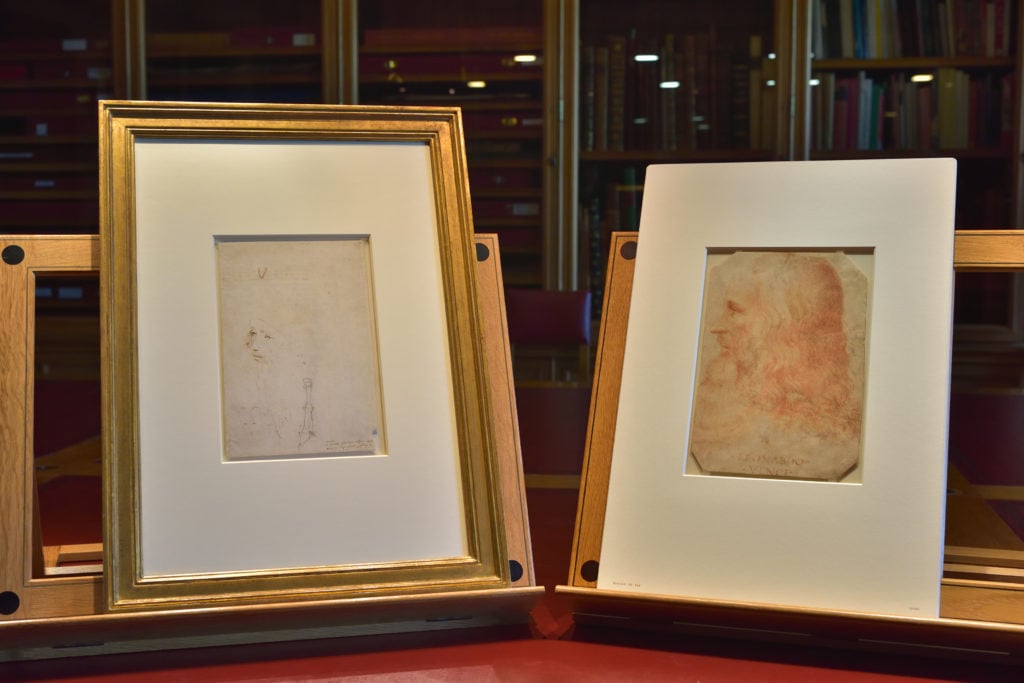
A sketch of Leonardo, the head of a youth, and a horse’s legs, and A portrait of Leonardo, attributed to Francesco Melzi, in the Print Room, Windsor Castle. Royal Collection Trust. © Her Majesty Queen Elizabeth II 2019.
The drawing was first noticed by Martin Clayton, head of prints and drawings at the Royal Collection Trust, when he was preparing works from Windsor Castle for the show of around 200 works.
Clayton says that the features of the portrait bear strong similarities to the only other known drawing of Leonardo, one by Italian painter Francesco Melzi. “Leonardo was renowned for his well-kept and luxuriant beard at a time when relatively few men were bearded—though the beard was rapidly coming into fashion at this time,” says Clayton.
His “elegant straight nose,” beard shape, and “a ringlet falling from the mustache at the corner of the mouth and long wavy hair” were among the attributes of the image that tipped Clayton off.
Leonardo would have been around the age of 65 at the time he the portrait was made. Clayton noted in a statement that the artist “appears a little melancholy and world-weary.”
“Leonardo da Vinci: A Life in Drawing” will be on view at The Queen’s Gallery, Buckingham Palace, London from May 24 through 13 October 13, 2019.

Follow artnet News on Facebook: 
 
Want to stay ahead of the art world? Subscribe to our newsletter to get the breaking news, eye-opening interviews, and incisive critical takes that drive the conversation forward.
SHARE

Friday, May 3, 2019

Arcade


Arcade


By 
 

PINAKOTHEK


In his new biweekly column, Pinakothek, Luc Sante excavates and examines miscellaneous visual strata of the past.
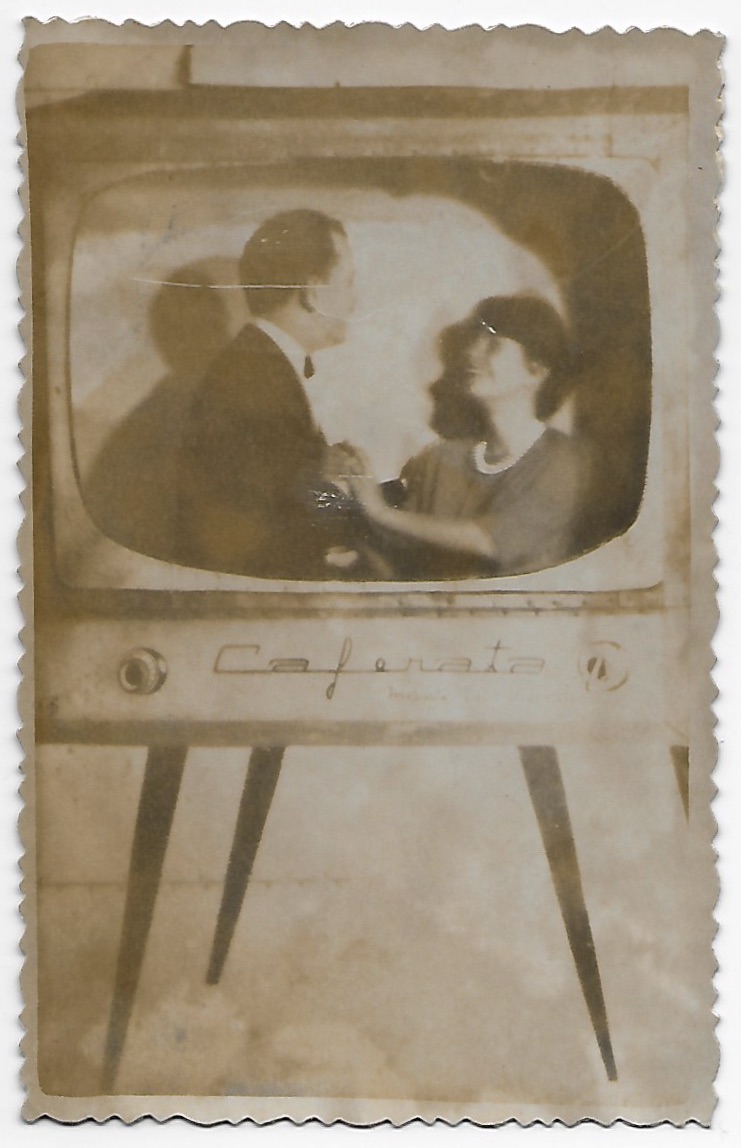
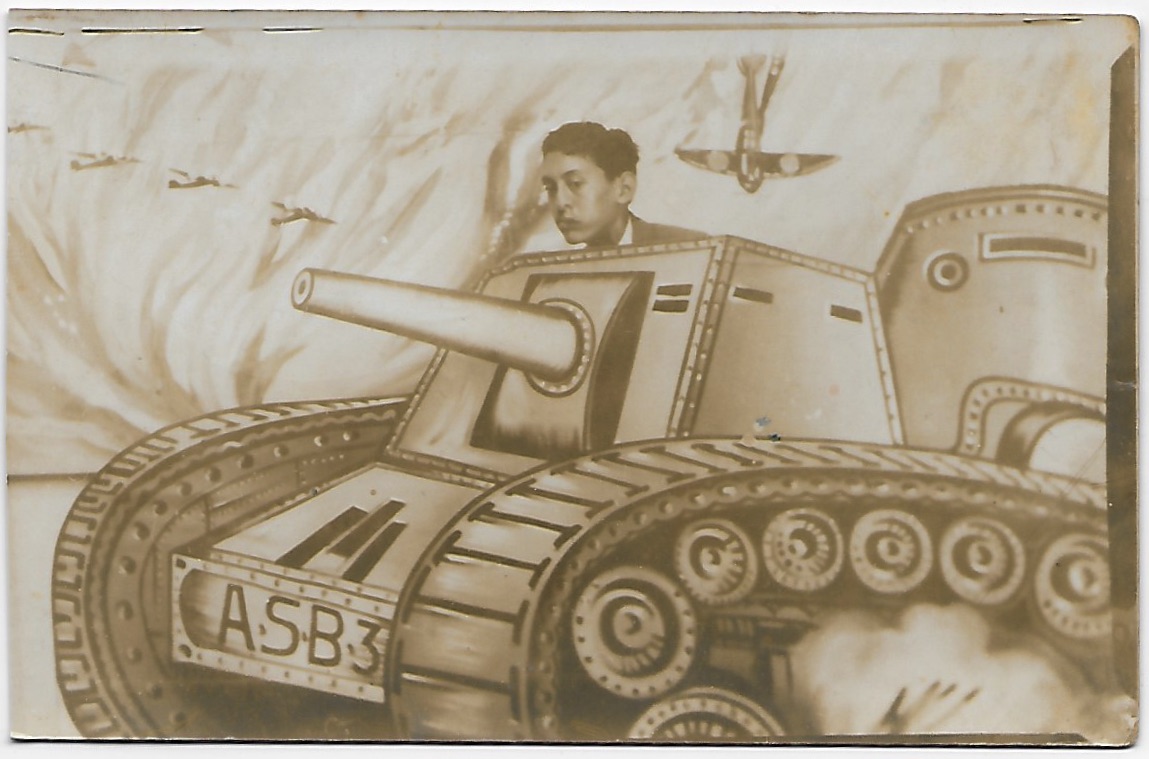
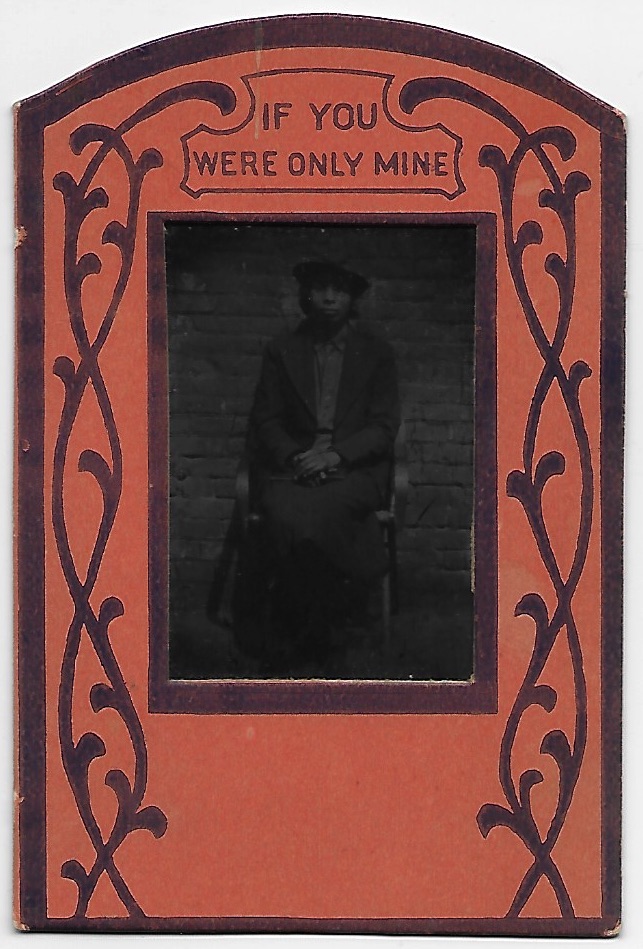
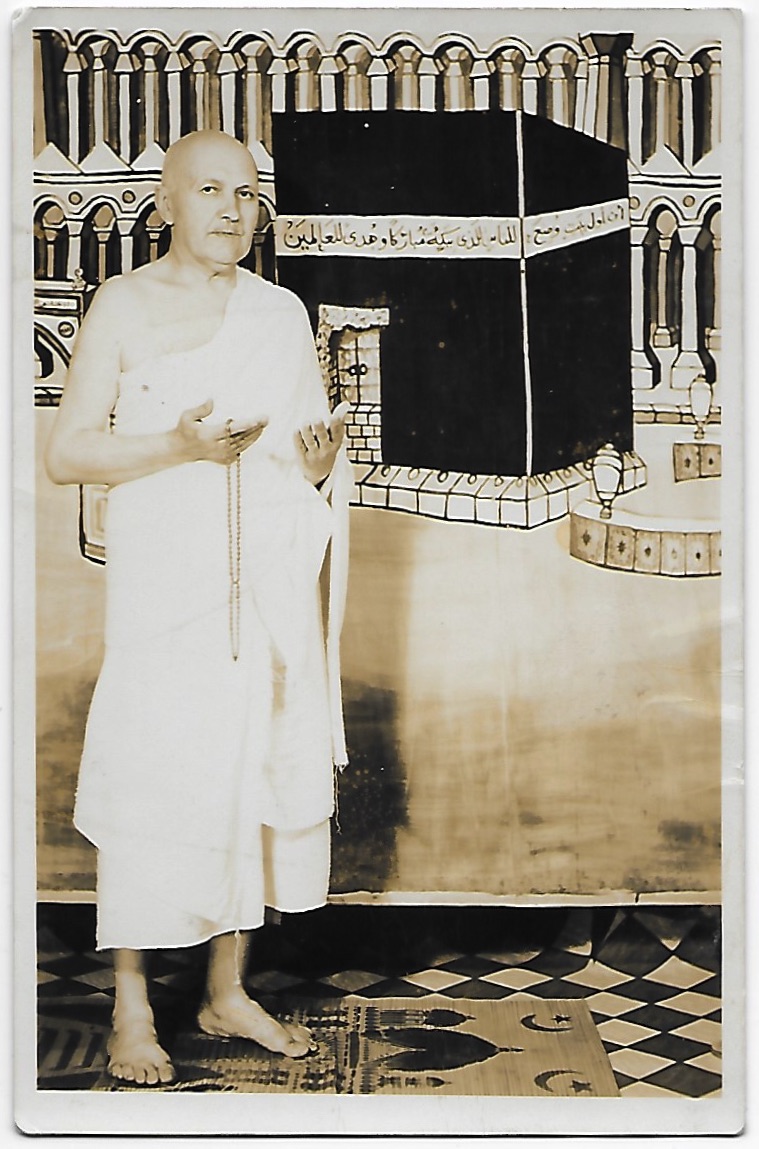
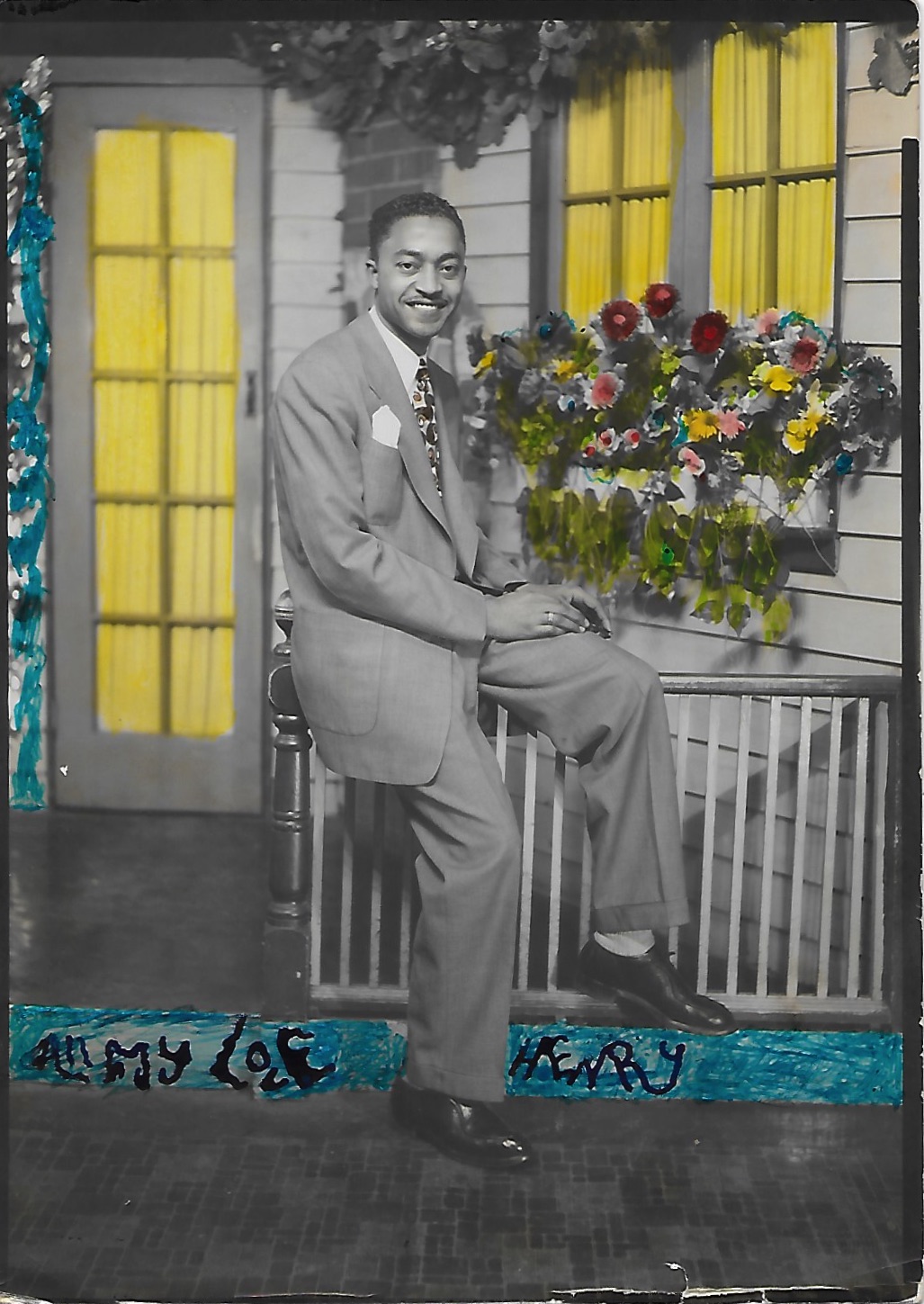
People visited the arcade to stage a play for themselves and a select audience of their family and friends. The photographer supplied flats and props and the shallow space between them, and the subjects reserved the option of creating a performance in that setting. Most people did no such thing, of course, but just sat there like stumps, overwhelmed and maybe intimidated by the lights, the camera, the photographer who in those circumstances was likely to be a seasoned carny. The photographer might be spieling at them, three hundred words a minute, while the pikers would be struggling to follow along, finally giving in to whatever that last thing he said was. Which usually meant stuffing an extended family into a prop canoe or charabanc, snap, snap, and outta there. The ideal way to treat drunks was to stick their heads in those holes—in boards that supplied the rest of their pictured body: boxer, beauty queen, infant—effectively immobilizing them.
Performance was understood as a central component of portrait photography from the beginning. It has taken many forms over time, but the premise of arcade photography descends in a straight line from the mid-nineteenth century. That was when the big photo studios became streamlined chain-store operations, and standardized various conventions of setting: the pillar, the plant stand, the rustic fence. While those objects were primarily intended to rest the subjects’ self-conscious hands and arms, they also carried a mild implied narrative, something about an appreciation for nature or wisdom. Before long, operators at shore points and lakeside resorts and the Bowery had begun to supply facsimiles of the beach views and hot-air balloon scenes that were otherwise unphotographable, at least with their equipment. By the early twentieth century you could stroll into an arcade and take your pick of dozens of settings: biplane, jail cell, outlaw saloon, Hawaiian beach, Niagara Falls, rear platform of train, top of the Eiffel Tower. The props and flats bore a strong resemblance to their larger cousins in the burlesque theaters; maybe they were made by the same people.
Some arcade photographers dispensed with setting altogether, if they were working in a place and time when people had very little money but still needed to be photographed. People got themselves photographed if they were vain, if they were lonely, if they were bored, if they were drunk, if they missed somebody, if they wished that somebody would send them a picture in return, if they felt full of pep and needed to express themselves, if they had eaten and drunk and shot at the shooting gallery and maybe seen a show and had thereby exhausted all the other entertainment resources in their burg. Getting yourself photographed was a pastime and an existential necessity. It reminded you that you existed outside your own head. It showed you your face as others would see it. It gave you an opportunity to compose yourself, although few had the skill to do so successfully, and often the photographer’s haste and hard sell would mitigate against it. Most people come off in arcade pictures as if they had suddenly been shoved onstage to face an audience of thousands.
Perhaps they had an intimation of how their picture would one day slip away from a family archive dispersed after a death, and enter the junk marketplace and from there the visual circulatory system of the digital world, where it might be seen by more people than they knew in the course of their lives. They had once innocently entered into a contract to perform, by virtue of temporarily occupying a small theatrical space, and now the contract, after many dormant decades, perhaps posthumously, was being put into effect. The arcade photo has not gone away entirely; these days it occurs primarily in booths and the effects are digital, which is to say that it occurs in a flat, notional space, essentially a green screen. What is missing is the fiction of live theater, of scenic conventions so old they have become detached from their moorings, of rough painting and basic carpentry. The classic arcade photo was an art of the poor, a dramatic staging of an ideal. It gave proof, however threadbare, that the subject had visited the phantom world.
Luc Sante’s books include Low Life, Evidence, Kill All Your Darlings, and The Other Paris. 


The Silly Satisfactions of “Long Shot”


The Silly Satisfactions of “Long Shot”

Thanks to the sparring between Charlize Theron and Seth Rogen,  you surrender to the film’s blend of chemistry and calculation.


Bottom is taken aback, in “A Midsummer Night’s Dream,” when Titania wakes and swoons at the sight of him. “Thou art as wise as thou art beautiful,” she says. He’s all ears. So what if the lady is out of his league? As he tells her, “Reason and love keep little company together now-a-days.” The coalescence of opposites—divine and mortal, rich and poor, a fairy queen with a half-assed fool—is one of the oldest and most twistable of tales, and Hollywood’s new addition to the myth is “Long Shot,” which advances the proposition that Charlize Theron plus Seth Rogen equals fireworks.
Theron plays Charlotte Field, who is both wise and beautiful, and Rogen plays Fred Flarsky, who is neither. She is the U.S. Secretary of State, groomed to the last follicle, and so industrious that she sets her alarm for three-thirty-five in the morning. He is an angry, hairy schlub who writes for the Brooklyn Advocateand wears a teal windbreaker. With toggles. But—and it’s a big but—she was once his babysitter, when she was in high school, and so it is that, decades later, they recognize each other at a ritzy soirée. Charlotte is there because she is Charlotte. She is tailed, as ever, by her advisers, Maggie (June Diane Raphael) and Tom (Ravi Patel), and by Agent M. (Tristan D. Lalla), her wall-like security guy. Fred is there because he just lost his job; his best friend, Lance (O’Shea Jackson, Jr.), has dragged him along to take his mind off things. “You kind of know Charlotte Field? It’s kind of like knowing a mermaid,” Lance says. He’s not wrong, and “Long Shot” is best described as an unholy cocktail of “The American President” (1995), “There’s Something About Mary” (1998), and “Splash” (1984).
Charlotte, who is so busy that she takes naps standing up, like a horse in its stall, reaches two major decisions. One, she hires Fred as a speechwriter, with special responsibility for zing. Two, she decides to run for President, after the incumbent, a muttonhead named Chambers (Bob Odenkirk), confides to her that he will not be seeking a second term. (In a nice example of reverse Reaganism, he sees the Presidency as a springboard for a more serious career as a movie star.) The result is that Fred and Charlotte get to hang out—on planes, in foreign hot spots, and, at one point, under conditions of genuine peril. And we all know what happens under those.
There comes a click, in romantic movies, when the link between the central couple is ratcheted up from the fortuitous to the intimate. Whether we accept that shift, and treat it as plausible, is entirely a matter for the actors; if Grace Kelly, turning at the door of her room, in “To Catch a Thief” (1955), had bestowed an unheralded kiss on the lips of anyone but Cary Grant, the audience would have scoffed. The director of “Long Shot,” Jonathan Levine, and the screenwriters, Liz Hannah and Dan Sterling, must be nervous about the click, because they keep reminding us how wacky and miraculous this whole passion thing can be. After spending a night with Charlotte, Fred asks Agent M., who misses nothing, “Could you not tell anybody about this?” To which M. responds, “They wouldn’t believe me anyway.”
The filmmakers needn’t fret too much, since “Long Shot” actually works. True, its effect is already fading by the time you head for the exits, crunching through dropped popcorn as if through fallen leaves, but while the movie lasts you buy into its blend of chemistry and calculation. Theron and Rogen spar with ease, not least because their characters share a full set of pop-cultural references, thus obeying the first commandment of modern love: when two souls jump for joy at the mention of Boyz II Men, two hearts shall beat as one. Fred’s editor at the Advocate cautions him that he can be “a little too much,” and the same goes for Rogen, who, as usual, both appeals and aggravates with his froggy, loudmouthed shtick. But fear not: the heroine is here to calm him down.
Clearly, Theron can turn her hand to any genre. Comedy becomes her, perhaps because—not although—she looks so laughably glamorous. (Levine wants to have it both ways: we get satirical snippets of Fox-like TV presenters, who obsess over Charlotte’s appearance, barely stanching their drool, but then the camera does feast on her, without respite.) Also, as a spiritual heir of Barbara Stanwyck, Theron is aware that, when occasion demands, she needs to be one of the boys. How else can you be sure to trounce them? Hence her dirty cackle, and hence the scene in which the Secretary of State gets totally zonked at a club, only to be pulled outside and forced to cope with a diplomatic emergency. Behold her, flopped against a wall, murmuring on the hotline to a hostile head of state, with glittering confetti in her hair.
What this movie reveals about geopolitics, or gender politics, need not detain us long. Despite a few palpable hits, as when Charlotte remarks that a woman of power can never raise her voice, lest she be accused of hysteria, the needle of dramatic interest tends to swing toward the Freddish point of view. He has his pal Lance to banter with; Charlotte is mainly alone, bereft of repartee, until the arrival of Fred. Elsewhere, we get Charlotte enduring a cozy, cooked-up dinner with the Canadian Prime Minister (Alexander Skarsgård), an oyster-slurping creep, while paparazzi swarm outside, and one fine sequence (why only one?) with Lisa Kudrow as a political P.R. consultant, who dryly admits that, in her trade, “we don’t drill down into specific policies, because people don’t seem to care.” Weirdest of all is a sudden lunge toward the lost values of bipartisan balance, as a friend of Fred’s confesses to being—whisper it softly—a Republican and a Christian. Regardless, they agree to stay friends. Aah.
Be warned: “Long Shot” is an R-rated flick. Do not be misled, however, into thinking that it’s suitable for grownups. Rather, given its blizzard of sniggering gags about boners and butt slaps, it is aimed at adolescents of all ages. The word “fuck” is tacked to every other line of dialogue, whether it belongs there or not, and the set-piece gross-out is focussed, tellingly, on the onanistic male; here, in short, is a degraded “Beauty and the Beast,” with jerk-off jokes instead of a singing teapot. As for the ending, it’s no surprise that the plot, like that of “Pretty Woman” (1990) or “Notting Hill” (1999), turns out to be soluble by fantasy alone. You could argue that such silly satisfaction comes with the territory, but although I enjoyed the snap of “Long Shot,” I couldn’t help remembering how “Roman Holiday” (1953)—another film about a lowly journalist who falls for a higher being—draws to its wrenching close. Audrey Hepburn, as the princess, and Gregory Peck, as the reporter, exchange a handshake and a look, wild with all regret, then return to their separate lives. Love keeps company with reason. Where should we go, these days, for entertainment as adult as that?

VIDEO FROM THE NEW YORKER


For real romance, more unabashed than anything in “Long Shot,” try the latest Werner Herzog documentary. In particular, try the scene in which Herzog, casting aside all inhibition, exclaims, in his matchless tones, “We luff you. I luff you.” Whom is he addressing? Not Charlize Theron, or the ghost of Marlene Dietrich, but a paunchy Russian widower of eighty-seven, with a birthmark on his scalp.
The movie is called “Meeting Gorbachev,” and, though studded with archival clips, it is largely based upon three interviews that Herzog, who once ate his own shoe on camera, conducts with the former General Secretary of the Communist Party of the U.S.S.R. The two men get on famously, and Gorbachev doesn’t even mind when a gift of chocolates, bearing his name, comes with the “G” broken off. (Imagine presenting Stalin with a chocolate “talin.” You’d be in the cellars of the Lubyanka by sundown.) In some ways, it’s a sad spectacle: Gorbachev is more heavyset than hitherto, and slower in his speech, showing little of the agility that caused such astonishment when, unlike his waxen predecessors, he ventured out and talked to fellow-citizens. “He’d make a good actor because he’s loose, and you don’t see the machinery of that looseness.” So said Paul Newman, having watched Gorbachev in action, in 1987.
As always, Herzog tries to remold his subject into an honorary Herzogian, all quirk and quiddity. But Gorbachev is too solid for that game. (We see a still, in which he stands next to Minnie Mouse. Each has a smile of iron.) He also issues a number of stubborn statements, such as “The proposals to end the Cold War first came from the Soviet Union,” that his reverent interlocutor is in no mood to contest. Historians of the period will learn nothing new from the movie, yet it remains a stirring enterprise, especially when it peers back, beyond the bright public record of Gorbachev’s heyday, into the mist of what feels like a distant past. When his father, Sergei, returned from the war, having at one time been reported dead, he embraced the young Mikhail and said, “We fought until we ran out of fight. That’s how you must live.” In the film, Herzog recites this unforgettable command, while dark birds fly, as if in formation, above the Gorbachev family graves. ♦

This article will be published in its print form in the May 13, 2019, issue.

Never miss a big New Yorker story again. Sign up for This Week’s Issue and get an e-mail every week with the stories you have to read.