Saturday, August 27, 2016

Illustrations | 10 Ways That Bad Behavior Built Civilization


Illustrations

10 Ways That Bad Behavior Built Civilization

Illustration inspired by Robert Evans’s A (Brief) History of Vice © Nathan Gelgud
Before humans were around, our tree-swinging ancestors got drunk on fruit.
Rotting berries, undergoing an uncontrolled process of fermentation, were loaded with sugar, and therefore calories. Far from fretting about their waistlines, these prehistoric primates needed to load up on energy to survive. So the monkeys who were good at finding fermented fruit spawned offspring who could do the same. Then, eventually, we got keg stands and binge drinking.
That’s right, next time you’re hungover, you can blame the monkeys.
Robert Evans, an editor at Cracked, fills his A (Brief) History of Vice with these kinds of anecdotes and history lessons about the human history of evolution, civilization, and debauchery. Nafutian tribes had their version of the United Nations by throwing beer bashes. Sumerians made currency to pay for prostitutes. Plato may have helped popularize the idea of an afterlife after tripping his face off. The history of people is a history of unscrupulousness.
So here, we bring you ten choice anecdotes, factoids, and insights from a long history of bad human behavior.
a brief history of vice robert evans

Illustrations | 10 Literary Terms to Impress (or Annoy) Your Friends

Illustrations

10 Literary Terms to Impress (or Annoy) Your Friends

You might not know it, but you have probably put a prolepsis into play recently. Did you know that a signature isn’t necessarily a scribbled name on a credit card receipt? You know that classic character that Gilda Radner played on “Saturday Night Live” who’d confuse “violence” with “violins”? Do you know what kind of mistake that is? You probably know what a climax is, and maybe even how to pronounce denouement, but do you know what part of a plot makes up the anagnorisis?
If this intrigues you, then our illustrated guide to Ten Literary Terms to Impress (Or Annoy) Your Friends is for you. And you don’t have to use it just to be a show-off. (Let’s be honest, this will only impress a very specific circle of friends.) In working on these illustrations, in seeing things named that I didn’t know had names, I started to think about my own favorite stories and poems differently. Does Humboldt’s Gift have a significant moment of anagnorisis, a moment of discovery? Yes, probably when Citrine discovers what exactly makes up Humboldt’s gift. (Okay, that was an easy one.)
The famous opening lines of Allen Ginsberg’s “Howl” use the device of enjambment — which is a much more academic way of describing Ginsberg’s speed-fueled run-on lines of poetry. Also, I can now stop faking it when I read or hear the term in media res. I’d always pretended to know what it means, doing that thing where you glide past it while reading, too proud to stop and look it up.
And next time I see a title like “Dead Man Walking, I’ll know that that’s a prolepsis. But I probably won’t announce it.
Literary Terms to Impress or Annoy Friends

Interviews | The Case for Sports Photography as Art

Interviews

The Case for Sports Photography as Art

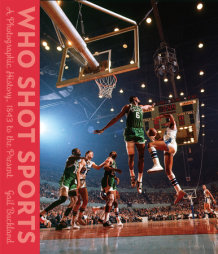
Cassius Clay from Who Shot Sports by Gail Buckland

Editor's Note:

Gail Buckland has written or been a collaborator on fourteen books of photographic history, including Fox Talbot and the Invention of Photography, The Magic Image (with Cecil Beaton), The American Century (by Harold Evans), and Who Shot Rock & Roll. She lives in Brooklyn and upstate New York. Her latest book is Who Shot Sports.
During the NBA Finals, a riveting photo of LeBron James popped up on social media that captures his greatness, worth way more than any sportswriter’s 1,000-word-ode to follow. There he is, bathed in light, levitating high above the rim, an almost spectral vision, ready to throw down on not just the Warriors, but on the outer limits of the sport itself. It’s a shot from Game Three, the first Cavaliers victory in the series, a lifetime before they would overcome a three-to-one deficit to the greatest regular season team in NBA history. In hindsight, it looks like the ascension of a basketball god. Had the Cavs lost, it would be a picture of an unfulfilled king, the most gifted player of the twenty-first-century crashing and burning yet again.
Sports photography is my favorite photography and not just because I have more or less given my life over to the games of others. There are a million shots that roll around in my head, the thrill of victory to the agony of defeat, all captured on film (or pixels) for the ages. Like many fans, I’d never given much thought to the person behind the lens, the geniuses who toil in general obscurity to cement sporting moments forever. Photographers like Heinz Kluetmeier, who was the first person to place a camera in the bottom of an Olympic pool at the 1992 games in Barcelona. In less than the blink of an eye, he got the immortal shot of Michael Phelps touching the wall after catching Serbia’s Milorad Cavic in the final meters of the 100-meter butterfly in Beijing in 2008. Even more than the televised race itself, it’s the thing I’ll always remember.
Thanks to Gail Buckland, sports shutterbugs are having their moment in the lights. She’s the author of Who Shot Sports: A Photographic History from 1843 to Present and the curator of an exhibition currently on display at the Brooklyn Museum, an outfield heave from the old ballpark where Jackie Robinson integrated baseball in 1947.
The literary half of Who Shot Sports is a thorough 330-plus-page coffee table tome, summed up concisely in the intro, “When the action stops, the still photograph remains.” Images range from the famous like Nat Fein’s Pulitzer Prize-winning The Babe Bows Out, to lesser-known shots of unknown jocks such as Ernst Haas’s Handball, featuring two shirtless 1970s longhairs getting a sweat on in a graffiti-strewn Central Park. Buckland’s book, which was nearly five years in the making, is a celebration of the art form, obviously inspired by her love of sports, right?
“If I had a modicum of knowledge about sports, I would’ve stayed away from the project,” says Buckland. “My ignorance allowed me to go in blind. There’s merit in not recognizing the subject because I could really look at the pictures.”
Buckland may not have known Peyton Manning from Man o’War, but she certainly knows her snapshots. For forty years she’s been a scholar, curator, writer, and collaborator, examining photography through her own personal lens of expertise. Throughout her work on fourteen books, Buckland has delved into early photography, rock-and-roll, true crime, the White House in miniature, and with historians Walter Evans and Kevin Baker, The American Century. Photography is her passion and long-term research projects are the norm, so she has to be totally committed to an idea to go forward. “I stopped counting how many pictures I looked at, it’s tens of thousands,” she says."Thanks to Gail Buckland, sports shutterbugs are having their moment in the lights."TWEET THIS QUOTE
There are plenty of collections of iconic sports photos, but Buckland’s interest doesn’t lie in Michael Jordan, it’s with Walter Iooss, the legendary Sports Illustrated staffer who painted a parking lot blue to given the impression his Royal Airness was floating through the heavens.
Who Shot Sports is something that has never been done before. I wanted to enlarge the camera and knock down these hierarchies that certain subjects are more worthy of study than others because the beauty of sports means so much to people,” says Buckland. “My Eureka moment came when I realized how sports photographers think, that their decisive moment isn’t the same decisive moment in the field of play.”
Buckland’s insight comes through at the Brooklyn Museum exhibition where the photos are displayed according to eight categories — same as the book — ranging from “In and Out of the Ring” to “Fans and Followers” and “The Decisive Moment.” The latter manages to weave together brightly tattooed (future murderer) Aaron Hernandez, Willie Mays, a BASE jumper plunging off 400-foot Castleton Tower, and my five-year-old daughter’s favorite, a shot of her number-one athlete Serena Williams in an all-out lunge, calf muscles flexed to make Milo of Croton blanch.
Critics can debate whether sports photography is art. Or, no, they can’t. It is. The large original print of Neil Lifer’s amazing 1965 shot of Muhammad Ali — glove cocked, mouth roaring, a gorgeous physical specimen heralding a changing America — towers over the exhibition. Arguably the greatest sports pic ever clicked, the photo itself has inspired visual artists galore, creative types who never have to justify their work in the “toy department” as sports sections were once mocked. To wit, Who Shot Sports includes a few names you may know from work in other mediums: Stanley Kubrick, Andy Warhol, and going back to an 1859 portrait of a young English cricket squad, Lewis Carroll. We’re through the looking glass on this one.
While taking in all the photos, I kept coming back to the LeBron picture that grabbed me. As amazing as it is, it seems to have vanished into thin Wi-Fi-ed air. Pictures can span the globe in the blink of an eye, but are iconic images lost when they aren’t suitable for framing, or being cut out of a young fan’s SI and taped to the wall?
“I do worry we’re losing our communal memory,” says Buckland. “If a photo goes viral, it’s seen by millions, but you can’t hold onto it and it disappears in a week.”
Time will tell what lives in our collective sports imagination. For now, Who Shot Sports is definitive and authoritative, replete with all sorts of technological backstories for camera geeks. However, if you find yourself in Brooklyn, I highly recommend strolling through Buckland’s collection. There’s something wondrous about seeing the mix of athleticism, history, anthropology, physiology, gender, race, and “Holy Shit, how did they get that picture?” one-after-another.
“One of my exhibition goals is to get people who normally wouldn’t come into a museum,” says Buckland. “Whether it’s baseball cards or Wheaties boxes, sports photography is part of everyday life, so I hope the book and exhibit have wide appeal.”
They should. From the early days of Edward Muybridge’s 1878 invention — a fast shutter to capture a horse in motion (and to help in a $25,000 bet) — through a 2012 Jan Grarup digital collection of women in Mogadishu, literally risking their lives to play basketball, sport of the “deadly enemy America,” Who Shot Sports is as captivating as LeBron himself. 

Culture | On the Fine Line in Art Between Inspiration and Appropriation

Culture

On the Fine Line in Art Between Inspiration and Appropriation

Artists have been inspired by other artists for as long as the arts have existed.
The plots in some of Shakespeare’s plays predate the playwright himself. Jean Rhys’s acclaimed novel Wide Sargasso Sea is a response to Jane Eyre. Musicians use all kinds of techniques, ranging from improvisation to sampling, to invoke preexisting songs and transform them into something new.
Some draw their inspiration from the artistic traditions in which they were raised, while others look further afield, crossing international lines to find work that hits home. This can lead to memorable works of fine art, music, and literature. It can also lead to questions of appropriation — of an artist from one culture ripping off another’s artistic tradition, simplifying it to a fault, or reinforcing stereotypes in the work they’ve created.
This is not a new debate or area of study. David Toop’s 2001 book Ocean of Sound addressed these questions early on, with a section on the influence of Javanese music on French composer Claude Debussy."Sampling can forge cultural links just as easily as it can sustain a stereotype."TWEET THIS QUOTE
But in recent years it’s become more of a heated topic. Earlier this summer, New York published a discussion by critics Craig Jenkins and Frank Guan titled “Is Culture Borrowing Always Theft?” In it, they touched on everything from Paul Simon’s work with South African musicians on the album Graceland, to Jesse Williams’s recent comments about appropriation, to the career of Macklemore.
“I think I know acceptable cultural exchange when I see it, and it looks like collaboration, not costume, like advocacy, not avoidance,” said Jenkins.
Two new books now raise similar questions about cultural exchange. One looks back on artists who crossed international borders in the 19th and 20th centuries, the other examines how technology has brought musicians from across the globe closer in recent decades. Both are by American writers who have spent significant amounts of time overseas.
Jamie James’s The Glamour of Strangeness: Artists and the Last Age of the Exotic and Jace Clayton’s Uproot: Travels in 21stCentury Music and Digital Culture are acutely aware of how art that borrows from multiple cultures can complicate its own reception. In writing about Isabelle Eberhardt, a Swiss writer who spent much of her time in the Maghreb region of North Africa, James refers to hers as, possibly, “a unique case of a successful culture transplant.” And part of Clayton’s book explores the growth of World Music as a genre, leading to some instances of artists being popularized “based on what sound and story line is most appealing to an audience not remotely interested in learning about other cultures much less challenging their notion of the exotic.”
James has a lot to discuss in The Glamour of Strangeness. In weaving in his own experiences of living in Indonesia, he explores the idea of “the voluntary exile who goes to distant lands in search of a new home with no intent to repatriate.”
Many of his subjects are artists, and in the introduction James notes that the book was originally going to focus on two of them: Javanese artist Raden Saleh, who lived in Europe in the 1800s and was influenced by the art he saw there, and Walter Spies, an artist who moved from Germany to Bali in the first half of the 20th century. Saleh’s presence deepens the narrative, as James points out that Saleh brought the techniques and perspectives that he had learned in Europe to his native country. “Before Raden Saleh,” James observes, “no Indonesian artist had ever painted a picture with the forest as its principal subject.” In other words, this skewed closer to a cultural exchange, rather than a case of a European artist bringing their own perspective on a non-European landscape.
James navigates the complexities of these issues. He points out that Paul Gauguin was an advocate for the Tahitian people with whom he lived, but was also responsible for some horrifically bigoted statements about the island’s Chinese population.
In the case of Walter Spies, James takes several pages to dispute the work of Australian academic Adrian Vickers, who argued that Spies had gone to Bali “to propagate the canons of Western art among the islanders.” James cites several examples of Spies’s own writing in which he championed Balinese art against the influence of European aesthetics — again, creating a sense of exchange and dialogue, rather than cultural colonialism. And in a later chapter, James discusses filmmaker Maya Deren, whose interest in voodoo led her to visit Haiti and write the book Divine Horsemen: The Living Gods of Haiti. In looking at its impact in the sixty-plus years since its publication, James points to its acclaim by academics and adds, “more significantly, it has been accepted by Haitian readers.” That it ends on that note is no accident.
In his conclusion, James contends that readers may find evidence via the artists profiled that “cultural identity can be a personal choice, made in defiance of the accident of nationality assigned at birth.” It’s an admirable goal, though it may strike some as overly idealistic.
There’s a similar interest in skirting international cultural boundaries in Clayton’s book. He is himself a musician, under the name DJ Rupture. Here, too, he describes surreal visions of places where borders don’t entirely hold true: the city of Varosha in Cyprus, which Clayton sees in the distance en route to one international gig, has been abandoned and off-limits since 1974.
Clayton’s book addresses modern-day questions of appropriation more directly. He talks about hearing the voices of Jamaican men sampled on 1990s jungle records, which he initially viewed as “a form of respect.” Over time, this became more codified, with producers becoming increasingly detached from the music that they were sampling, which started to venture into morally grey territory.
“Sampling can forge cultural links just as easily as it can sustain a stereotype,” Clayton writes, and in the way that he charts how this moved from dialogue to racist cliche, he neatly summarizes how such an exchange can turn sour.
Clayton discusses his own musical evolution in light of this, charting how he moved from sampling North African music, to wanting something deeper, to collaborating with a Moroccan violinist. This in turn led to the creation of software that would make such collaborations easier in the future. By showcasing his own involvement in cultural dialogues, Clayton also makes his own creative path an educational one, showing how artists with the best intentions can also go awry.
Near the end of the book, Clayton discusses the Portland, Oregon, musician and record label-owner Christopher Kirkley. His label, Sahel Sounds, has released a host of notable music from Mali, Ghana, Niger, and elsewhere. While Clayton has been critical elsewhere in the book about Western labels releasing music from across the globe, he hails Kirkley as someone who’s gotten it right — partially because Kirkley spent time in those areas playing music himself, and partially because Kirkley is “not trying to maintain a middleman position.” Alternately: he’s running this label with a consciousness of the ways that cultural exchange can go wrong, and is seeking to address it.
“Allowing this awareness of imbalances in access and power to shape how, and for whom, the Sahel Sounds project operates is what I find so compelling,” Clayton writes. It’s a self-awareness that seems increasingly important in today’s cultural landscape.
Both James (in The Glamour of Strangeness) and Clayton (in Uproot) emphasize the need for travel, whether literal or metaphorical, to broaden one’s artistic horizons. “[G]rowth happens when we abandon our comfort zones,” Clayton writes, and goes on to discuss the need for patience, and of the importance of waiting and learning when engaging with a different culture. The deeper you understand another culture’s art, the more attuned to its nuances you’ll be — and, one can hope, the less likely you’ll engage in an act of artistic appropriation.
In a time of instant connections and artistic gratification, taking a longer road might feel counter-intuitive, but the rewards can be both moral and aesthetic.

Illustrations | The 4 Most Notorious Rivalries in Art History, Illustrated


Illustrations

The 4 Most Notorious Rivalries in Art History, Illustrated

Illustration inspired by Sebastian Smee’s The Art of Rivalry © Nathan Gelgud
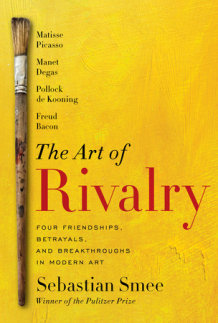
Reading Sebastian Smee’s new book The Art of Rivalry, you see patterns emerge. Younger artists befriend older ones, then ruthlessly surpass them. Artistic competition serves as a pretext for the attentions of one person. Tensions between friends mirror critical assessments of each other’s work. Every happy artist is alike in the same way, each unhappy one gets really drunk.
Edgar Degas painted a portrait of Edouard Manet and his wife Suzanne, but may have gotten too close for the older artist’s comfort. Francis Bacon was self-destructive, alienating his friend Lucien Freud, whose uneasy artistic realism started to seem childish to his drunk friend. Pablo Picasso and Henri Matisse both went through prolific periods in order to replace each other on the walls of the Stein family home. Jackson Pollock wanted to punch everybody, even his late-to-fame comrade Willem de Kooning.
The Art of Rivalry is made up of four distinct chapters, each devoted to the friendship between two titans of painting. For a certain kind of reader, this stuff is catnip, and Smee’s adept handling of context, history, and gossip is enough to make some of us feral with happiness. To mark the occasion of the publication of this special book, we bring you an illustrated guide to the four most contentious friendships in the history of art.
art of rivalry

Friday, August 26, 2016

Pictures at an Exhibition | Silvestre Pestana at Serralves Museum of Contemporary Art, Porto, Portugal


Pictures at an Exhibition

Silvestre Pestana at Serralves Museum of Contemporary Art, Porto, Portugal

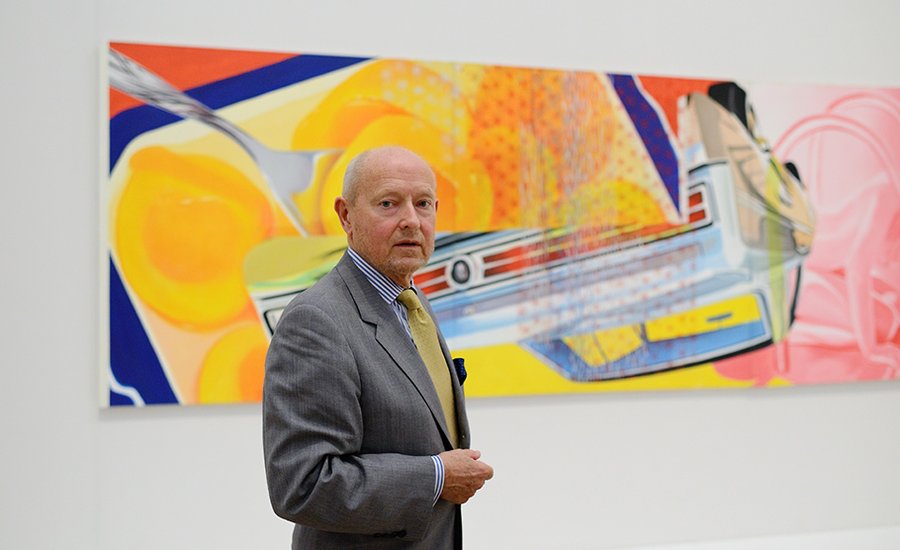
Installation view of "Silvestre Pestana: Techno-Form," 2016, at Serralves Museum of Contemporary Art, Porto, Portugal. FILIPE BRAGA/©SERRALVES MUSEUM OF CONTEMPORARY ART
Installation view of “Silvestre Pestana: Techno-Form,” 2016, at Serralves Museum of Contemporary Art, Porto, Portugal.
FILIPE BRAGA/©SERRALVES MUSEUM OF CONTEMPORARY ART
Pictures at an Exhibition presents images of one notable show every weekday.
Today’s show: “Silvestre Pestana: Techno-Form” is on view at the Serralves Museum of Contemporary Art in Porto, Portugal, through Sunday, September 18. The solo exhibition, the first major survey of the Portuguese artist’s work, presents installations and documentation of performances completed over the course of five decades.
Copyright 2016, Art Media ARTNEWS, llc. 110 Greene Street, 2nd Fl., New York, N.Y. 10012. All rights reserved.


Recommended Articles

Collecting 101 Looking to Start Buying Art? Here Are 9 Tips From Seasoned Experts on How to Build a Great Collection

Collecting 101

Looking to Start Buying Art? Here Are 9 Tips From Seasoned Experts on How to Build a Great Collection

Looking to Start Buying Art? Here Are 9 Tips From Seasoned Experts on How to Build a Great Collection
The Value of Art author Michael Findlay
This is not your first time at the rodeo. Oh, wait, perhaps it is.
If you’ve made the decision to take the plunge and buy art, congratulations. As you’re likely overwhelmed, we asked art dealers, auction-house officials, and collectors to suggest strategies for picking “entry points”—relatively inexpensive ways to collect pieces by name artists, or by lesser-known artists of good repute (or with a cult following), in various schools and movements of art.
We got an earful. The resounding message was, as summed up by Acquavella Gallery director Michael Findlay, is that it’s always better to buy a great example of something by a not-quite-superstar, or a work that’s been overlooked due to its subject matter, than to buy a bad “autograph”—a work that has mostly the artist’s fame to recommend it.

Look for the Cults, the Teachers of the Great Artists, the Formative Scenes of Art History
When I advise entry-level collectors, says Dan Lienau, director of the Annex Galleries in Santa Rosa, California, “I suggest looking at the incredible array of printmakers who worked at Stanley William Hayter’s Atelier 17 in Paris and New York” in the 1930s-'50s. The subject of a current show at the Philadelphia Museum of Art, “Breaking Ground: Printmaking in the US," with other museum shows in the works, “they influenced every printmaker working today,” he says.
Hayter, first a Surrealist and later working in abstraction, founded the Atelier in Europe and then moved it to New York. Hundreds of artists went through Atelier 17, according to Lienau, “from the big names like Miró, Picasso, Motherwell—who were there and did their own printing at this point, they didn’t just come in to sign the prints—to the teachers who went on to found printmaking departments in universities” throughout the world. A color etching by Hayter himself might sell for as little as $1,500.

ARTSPACE RECOMMENDS:

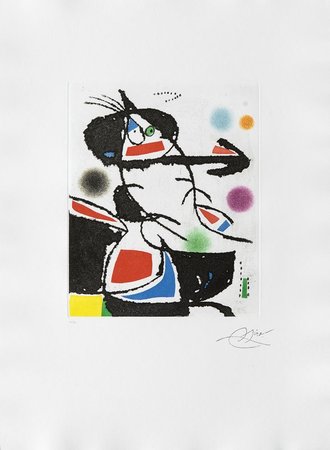
JOAN MIRÓ Montagnards III (Les)


Fill in the (Female) Blanks in Art History
MoMA didn’t buy many works by women artists early in the last century, but in 1946 the institution purchased Liquor Store Window by the charmingly named Fannie Hillsmith. Many pioneering women artists are being given a second look as art history is re-sifted with less of gender bias, and Hillsmith is certainly one of the artists being reconsidered, having shown early in her career at Peggy Guggenheim’s legendary Art of This Century Gallery, and with the influential dealer Sydney Janis. An American Cubist from New Hampshire, later in life she taught at Cornell and could count critic Clement Greenberg as a fan. New York’s Susan Teller gallery carries circa-1940’s drawings by the artist for less than $1,000.

ARTSPACE RECOMMENDS:
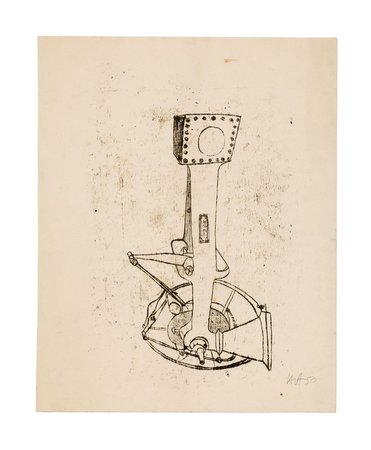
HEDDA STERNE Follow This Artist Untitled, 1950

Hedda Sterne's Untitled, 1950


Choose a Lesser-Known—But Not Uncharacteristic—Work by a Great Artist
Albrecht Dürer was the leading figure of Late Gothic and High Renaissance German art, and “he remains after 500 years—like Rembrandt, Goya, and Picasso—one of the superior masters of printmaking,” says New York dealer Pia Gallo. Dürer’s engravings, particularly his three Meisterstiche (“master engravings”) Knight, Death, and the Devil; Melencolia I; and St. Jerome in His Study, have been collected for centuries, adds Gallo. And it’s the case that almost every major art museum has an impression of at least one of his three best-known prints.
“But to purchase an early impression of any of Dürer’s three master engravings in very good condition would cost hundreds of thousands of dollars today,” says Gallo. Dürer’s St Paul had been engraved the same year, maintaining the same level of technical virtuosity, imagination, and skill. A very fine early impression can be acquired for less than $10,000.” The lesson here applies to contemporary art as well, such as with the much-lauded but still lower-priced photography of Ed Ruscha.

ARTSPACE RECOMMENDS:

Ed Ruscha's Little Mexican Church on a Windowsill [2007 NYABF Fundraising Edition], 1970/2007


Don’t Be Scared Off If the Artist Is Already Too Expensive for You; Have a Strategy

If you can’t afford a work you like, keep an eye on the artist. His or her work may show up elsewhere, says New York collector Emily Rubin, who owns small works by Tom Otterness, among other artists.
Other experts advise that, if money is a concern, don’t make your first art purchase at a live auction, where bidding fever can kick in, and where estimates already reflect secondary-market prices.

ARTSPACE RECOMMENDS:

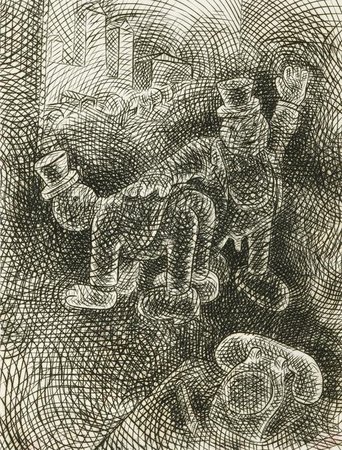
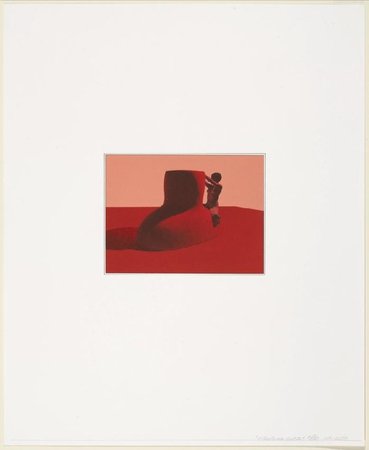
tom otterness spanking


Look to Museums for Clues
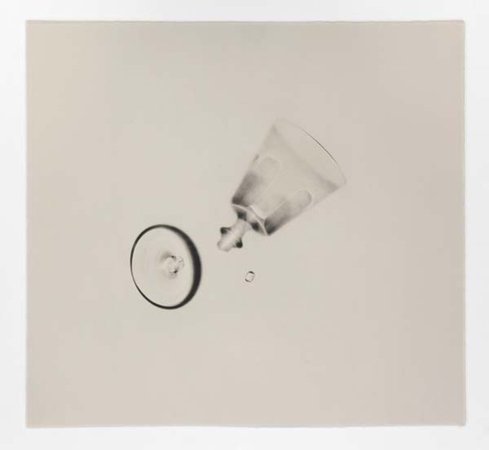
One of the most buzzed-about public art installations of recent years (or at least outdoor-art installations) currently sits atop the Metropolitan Museum of Art: Transitional Object (Psycho Barn) by Cornelia Parker. Her recreation of the spooky film set from the 1960 Hitchcock movie prompts London’s Alan Cristea, of the gallery that bears his name, to suggest works by the artist. Her 2015 print series, “one day this glass will break,” in small editions of 15, cost about $3,700 apiece.

ARTSPACE RECOMMENDS:

cornelia parker broken galss


Look West
As the West Coast scene becomes more influential in the art world, so does its history.
Senior advises collectors to bet on Bruce Conner. “An iconic figure and influential artist on the West Coast and beyond, he’ll be the subject of a traveling retrospective” organized by SFMoMA and opening at the Museum of Modern Art in July, she says.
While Conner’s drawings can easily reach $50,000 his "#100" prints series, published by the artist in 1971 and “relating to the felt-tip drawings he was making at the time,” are “very accessibly priced.”

ARTSPACE RECOMMENDS:

ken price


Buy Work by Artists Trying to Say Something Timely and Important—Especially If Important People Are Listening
Art with passion and politics is rarely dismissed as decorative. Barack Obama collects work by Glenn Ligon. Why not you?
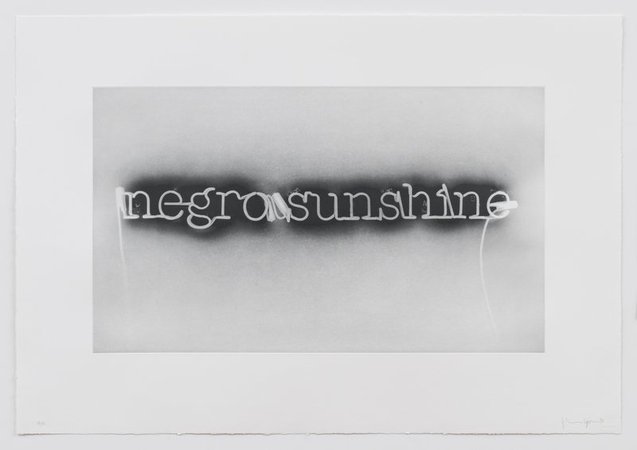
“Glenn Ligon’s paintings, drawings, prints and sculpture explore cultural and social identity and draw freely from literary and pop-cultural sources,” notes Betsy Senior, founder and director of New York veteran print shop Shopmaker and Senior.
The pick: His text-based etchings. “Phrases are repeated until eventually dissipating into obscurity. Smudged and broken type interferes with legibility, suggesting the viewer’s liberal and intellectual struggle to read the [text] and understand its implications.”

ARTSPACE RECOMMENDS:

glenn ligon warm glow


Find 20th-Century Artists Likely to Remain in the Art History Books, and Buy Their Current or Late Works 

Late works are almost always cheaper than ones done in what is considered to be the artist’s prime, sometimes for good reason. The artist may be repeating his or her own ideas, or producing work with less skill and energy.
But once an artist is firmly in the canon, scholars start looking at the whole career, and late works by Picasso, Matisse, and de Kooning are now embraced.
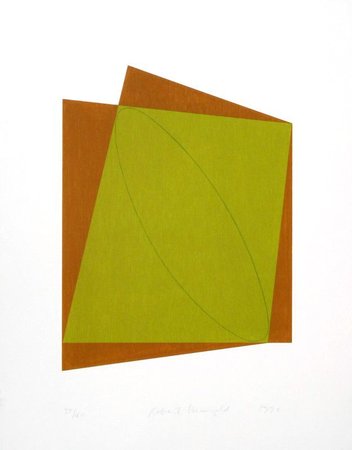
A pick: Andrew Witkin, director of the Barbara Krakow gallery, notes that 1990s prints by Sol LeWitt and Bob Mangold, “iconic within their work,” are available for in the low thousands.

ARTSPACE RECOMMENDS:

robert mangold


Finally: Do Your Research If You Want to Find Deals
Findlay, the director of Acquavella Gallery, is experienced in selling eight-figure art but reels off a host of “cheap” works he found when he was researching his upcoming book on collecting art, including "small paper sculptures by Isama Noguchi and Polaroids by Tina Barney for under $100; sculpture by Rebecca Warren and good prints by Max Ernst, Jean Dubuffet, and John Baldessari in the $250-$1,000 range.”
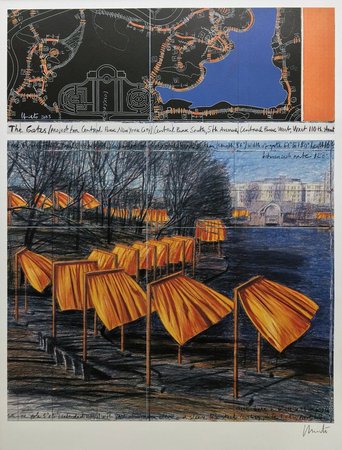
There were “under $5,000, small paintings by Ray Parker, Christo collages, and multiples by Jean Arp; under $10,000, a unique wall relief sculpture from 1969 by Gerald Laing, granite sculpture by Brazilian Iran do Espiritu Santo, and photographs by Jim Naughton, paintings by Jules Olitski, and Leon Golub.  Obviously you are not going to get large major works but you can get good examples, not atypical.”
He concludes that, even without a lot of money, “You can collect art.”

ARTSPACE RECOMMENDS:

christo the gates

Related


Artspace Logo