Sunday, March 18, 2018

Tips for Artists on How to Talk about Their Art


Creativity
6 Tips for Artists on How to Talk about Their Art


Art class at Pomona College, 1998. Photo by David Butow/Corbis via Getty Images.
Even the most incisive, prolific, gifted artist can feel unduly daunted by the dreaded “Talk.” That is, the request to speak on demand about their work—profoundly and eloquently, no less—be it for a large audience as part of an event, or a one-on-one with a dealer or critic in their studio. Indeed, MFA programs require students to toss some word salad regularly, by structuring their evaluations around the excruciating practice of peer and faculty review as a way of professionalizing young artists, readying for them for the “real world.” But being able to distill the abstract idea behind a work—or even an entire practice—into pragmatic, concrete language can propel and even help define an artist’s career.
While wordsmiths such as Liam Gillick and Kara Walker may make it look easy, many an artist would prefer to keep mum on the subject of their own work lest their verbal skills accidently undermine their creative vision. To gain some insight into what makes an artist a clear and effective speaker, Artsy spoke to conversational wizards from across the art world, including artists, professors, dealers, curators, and critics. Below, we’ve compiled their advice.

Know Your Target Audience

First and foremost, artists should assess what’s meaningful to them in their work before they try to tell anyone else why it’s important.
“Figure out the one thing that is most essential for people to know about your work, whether it’s a particular piece or your practice overall. The thing that if it was left out, or misinterpreted, you’d feel truly sad or angry,” said ChloĆ« Bass, a New York–based Conceptual artist, writer, and professor of art at Queens College, CUNY.
Once you’ve articulated it for yourself, Bass suggests figuring out how to explain it to five different people: a non-artist friend, an artist friend, a curator, a neighbor, and your grandma. If you find yourself using the same language each time, you’re losing four-fifths of those potential audiences. “There’s a misconception that talking about our work is somehow different from or fancier than just talking to people. It isn’t, or at least I believe it shouldn’t be.”

Do Some Prep Work

Even if you have your elevator pitch honed sideways and backwards, Jane Harmon of New York’s Fortnight Institute gallery said it’s helpful to have a fully fleshed out idea for a show before talking with a dealer or curator. “When I talk to an artist, I want to know what brings her work all together,” she said. That doesn’t have to be limited to just one thing, but Harmon noted if an artist can identify a specific thread of interest that runs through their work, she knows they’ve been thinking about how it can all play in a space together—which can help her see it in theirs.
Don’t feel the need to rush to finish a bunch of work in advance of presenting an idea, though. Mark Scala, chief curator of Nashville’s Frist Center for the Visual Arts, said he’s curious to talk about the evolution of an artist’s work as it develops. “It helps spur useful conversation when one can see a few examples of source materials—drawings, photographs, digital files, piles of discards, ongoing works that might present intractable problems,” he said, noting that it’s also useful to see the progression from older to more recent work.

Be Honest

For many artists, it’s difficult to pinpoint a “why” for every decision they’ve made when creating a body of work, given that creative expression is an intuitive process.
Artist Nathaniel Mary Quinn said that early on in his career, he often worried he wouldn’t come across as intelligent if he didn’t have an answer for everything he was asked about his work. Now, with numerous shows at the likes of Rhona Hoffman Gallery and Pace under his belt, the artist noted that he’s realized it’s easier to sound informed when you talk about things you do know, rather than trying to bluff your way through the things you don’t, which in turn boosted his confidence. He strives to be honest and genuine. “Don’t make things up,” he advised. “If you don’t know why you make certain choices in your practice, then just say ‘I don’t know!’”

Steer Clear of Description

If ever you do find yourself at a loss of what to say, it’s tempting to retreat to the obvious, which is what’s already visually apparent in the work. But that doesn’t help the viewer understand the bigger picture. Self-taught artist and former industrial designer Hugo McCloud, who had his first major solo show at Sean Kelly Gallery last year, said he staves off the the desire to describe by having a consistent point to return to when he’s talking about his work. “I know that I’m comfortable beginning a conversation by talking about my process,” he said. So if he feels like he’s veering off topic in a studio visit or gallery discussion, McCloud returns to his process as a touchstone to get him back on track.
Catherine Howe, a painter and director of the New York Academy of Art’s critical studies program, said the big challenge is “to further illuminate a visual work through language that brings new associations, familial links, and unexpected insight.” She advises her students to spend their time talking about the things that aren’t self-evident in the work, like how McCloud focuses on the behind-the-scenes making of the work. “I often ask if we are really adding something to the experience of looking,” said Howe. “Can we prolong and enrich this visual experience?”

Don’t Oversell

Howe is quick to note, however, that there’s a limit to how much you might want to say. “I caution students to avoid hyperbole and, to a certain degree, against front-loading with obviously placed, politically alluring jargon,” she said. Instead, she encourages artists to try to solidify their own speaking voice, even though it can be difficult to do so under pressure.
When speaking about her own work, Bass said “there’s a real sense of risk,” and overblown language is tempting to use when you’re feeling vulnerable. But she believes it’s more useful, both for her and her audience, to figure out how to present big ideas using small—“by which I don’t mean brief, but rather comprehensible”— language.

Practice

Bass, who came to art from a theater background, sees creative practices as based both in conversation, whether scripted or improvised, and collaboration—which is why she said the best tip she can give is to rehearse. “Learn to say the same thing different ways, using clear, concise language, and the rest will logically begin to follow,” she offered.
But communicating your thoughts and ideas isn’t the same as learning lines—and shouldn’t be. Rather, it should be a process of translation. “With any act of translation, there are always losses or slippages, whether it’s from Spanish to English, or from visual to verbal,” said Bass. “I think we have to be okay with that, and we shouldn’t expect that seeing a thing will somehow convey the exact same information as hearing that thing explained.”
Margaret Carrigan

Need a Creative Boost? Take a Look at Your Diet


Creativity
Need a Creative Boost? Take a Look at Your Diet


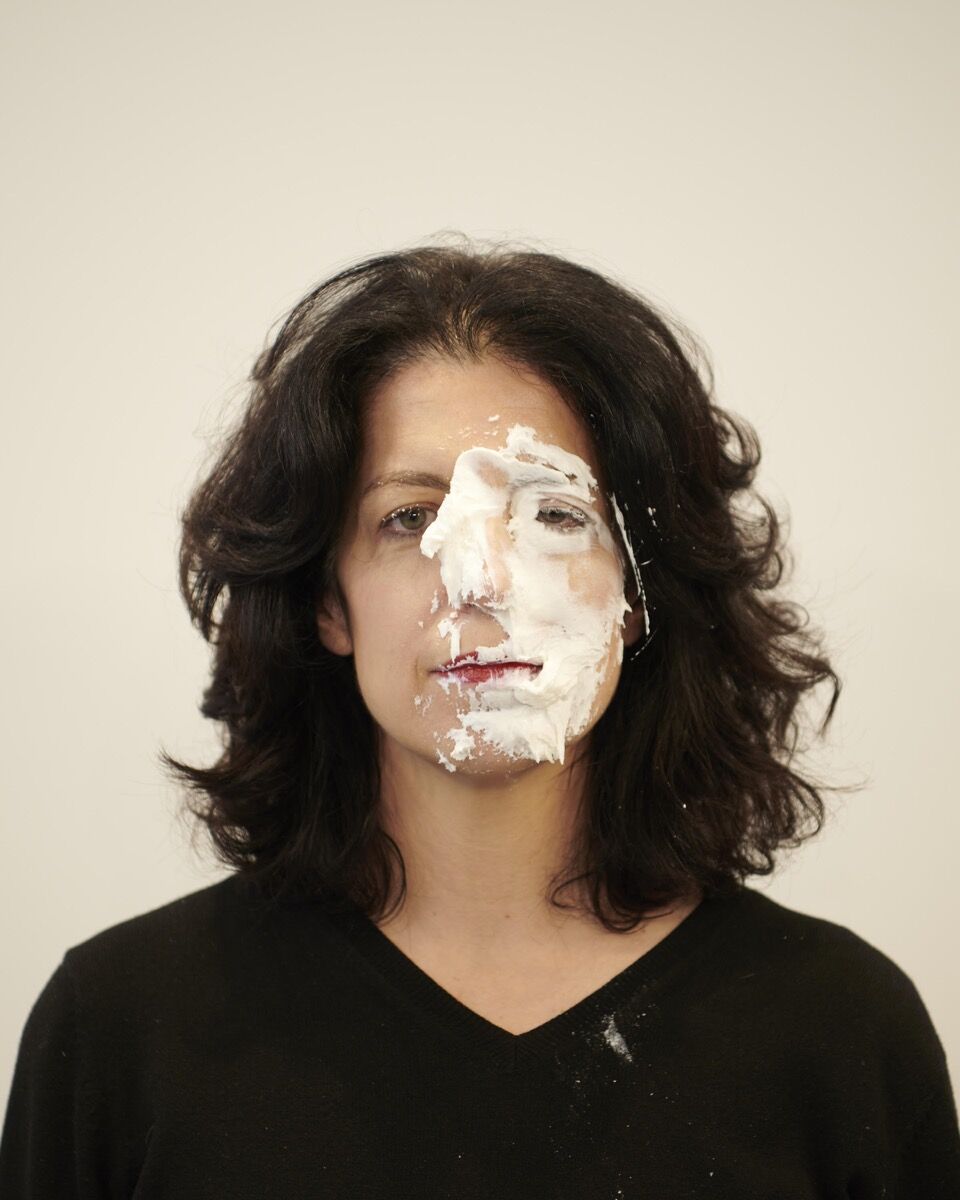
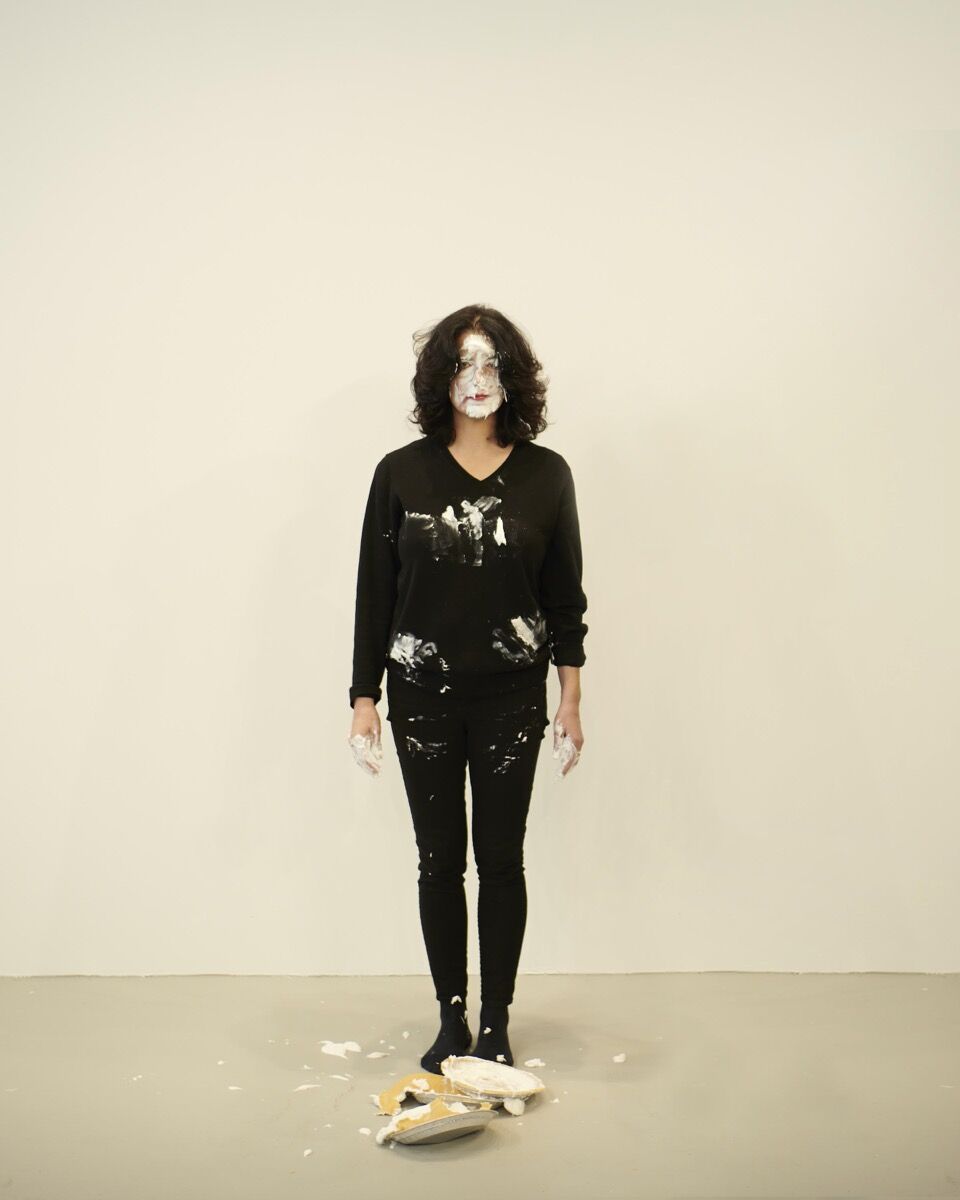
I’m in the back room of Meredith Rosen Gallery in New York, talking food with Jennifer Rubell moments before she begins a daily performance (part of her current exhibition there), in which she is the recipient of numerous pies to the face. For the artist, food serves as a medium and a source of inspiration.
“I eat in a very particular way,” Rubell says. “If I wrote down everything I consumed in a day and you looked at my work, you’d understand that it’s exactly the same thing. I would call it minimalist, in the sense that every detail matters, the vegetable, meat, fish, whatever. It’s great food all the time, I never waste a meal—except for the fucking Chipotle I just had.”
Rubell assures me she’s not alone: virtually all the artists she can think of are exacting about the way they eat, though few follow diets. Rosen, her dealer, adds that most artists are also good cooks. And why not? Artists, almost by definition, are sensualists who like making things, and food certainly engages several senses. But if artists are paying so much attention to food, I wonder if they might be using it, even inadvertently, to boost creativity, or if one might even consciously try to optimize one’s output with nutrition.  
Jennifer Rubell, Consent, 2018, daily interactive performance. Photo by Jason Schmidt. Courtesy of Meredith Rosen Gallery.
Jennifer Rubell, Consent, 2018, daily interactive performance. Photo by Jason Schmidt. Courtesy of Meredith Rosen Gallery.
Jennifer Rubell, Consent, 2018, daily interactive performance. Photo by Jason Schmidt. Courtesy of Meredith Rosen Gallery.
Jennifer Rubell, Consent, 2018, daily interactive performance. Photo by Jason Schmidt. Courtesy of Meredith Rosen Gallery.
Dr. Fernando Gómez-Pinilla, a professor in the Departments of Neurosurgery and Integrative Biology and Physiology at UCLA, thinks we can. Ten years ago, he undertook a study, for the journal Nature Reviews Neuroscience, of the effects of nutrients on cognitive function. “Food is like a pharmaceutical compound that affects the brain,” he said in an interviewafter the study was published. “This raises the exciting possibility that changes in diet are a viable strategy for enhancing cognitive abilities.” Since then, he tells me, “there have been many studies that establish the fact that different food components have very powerful roles in cognitive function.”
Taken together these investigations suggest some avenues toward enhancing creativity, from the broadest strategy to minute, tactical interventions. One study, for instance, found that young adults who simply ate more fruits and vegetables “reported higher average eudaemonic well-being, more intense feelings of curiosity, and greater creativity compared with young adults who ate less.” This finding ought to tickle your own curiosity, since there is a long-assumed link between creativity and melancholia, or depression. It turns out that in aggregate these studies tell us a lot about what science has determined (or assumes) to be the ideal physical and emotional conditions for creativity, such as overall happiness or being chilled out.
As to why eating more fruits and vegetables might increase our sense of well-being and make us more creative, Dr. Gómez-Pinilla argues for a two-fold answer. He points first to the role of flavonoids, which are compounds found most commonly in fruit and many vegetables. Although the science underlying the exact actions of these compounds remains fuzzy, it seems that they both increase blood flow within the brain and promote synaptic plasticity (the ability to make stronger connections between synapses, increasing memory and sharpening thinking). The second reason is that consuming more fruits and vegetables often means eating less sugar, and excess sugar has been shown to contribute to cognitive decline and depression. So, Rubell would do well to avoid eating pies in her performance.
Diet, however, is never simple. It’s always a matter of trade-offs, as is demonstrated through the pros and cons of sugar. Glucose (one type of sugar) is the primary fuel source for all cells, especially those in the brain, because the brain uses most of our energy. Not eating enough can leave you feeling sluggish and mentally slow. However, eating too much sugar—which, I think we all recognize, is woefully easy to do—is thought to accelerate the aging of cells and, according to a review by the Harvard Department of Neurobiology is linked “to memory and cognitive deficiencies,” neither of which is a plus for creative thinking.
Consider the problem of chocolate. It contains cocoa polyphenols that can elevate mood and alleviate anxiety—which can hinder the decision-making that is central to creative endeavors. These traits have led to articles extolling the treat as a productivity enhancer. Yet, chocolate is almost always mixed with high amounts of sugar, which in the short term may well help you ramp-up output and be more creative, but over time can impair brain function and lead to all sorts of health problems.
Perhaps we’d do better to stick with omega-3 fatty acids, which Dr. Gómez-Pinilla puts “at the top of the list.” He pointed specifically to DHA and EPA, which are found in fish, fish oil, and, to a smaller extent, in pastured eggs and beef. People with various cognitive disorders as well as attention problems often have low levels of these fatty acids, and some studies have concluded that consuming fish or fish oil can have a protective effect on the brain. There is also some evidence that supplementing with DHA and EPA can help brain efficiency and heighten cognitive performance. Walnuts are rich in another omega-3 fatty acid, ALA, but also in antioxidants, vitamin E, and folate. What this combination of compounds does to the brain remains unclear, but one study out of UCLA found that munching on a handful of walnuts a day, over a period of years, resulted in improved cognition in a wide swathe of the population.
Still, a handful of fish-oil pills or walnuts will not transform you into a Leonardo. I would add that anything other than high-quality fish oil will be destructive rather than helpful, and sources of the good stuff are both difficult to find and expensive. Then again, a steady diet of fish might allow you to remain highly inventive as you age.
But long-term, incremental changes are not what most of us are looking for. What we want is a hack, the magic pill that will blast your mind into the creative stratosphere.
Well, aside from re-engineering your DNA, there aren’t a lot of options. There are those who whisper about tyrosine, one of the few substances shown to have a direct effect on creativity. A dopamine precursor abundant in seaweed, bananas, and almonds, tyrosine has been shown to “promote convergent (‘deep’) thinking,” as the authors of a study in the journal Psychological Research put it, and “facilitate control-hungry creative operations.”
Others, like the painter Caio Fonseca, who in his spare time is also a pianist and classical composer, swear off food altogether—or at least some of the time. Not long ago, Fonseca experimented with a seven-day fast that left him feeling calm and remarkably clear-headed. The experience led him to begin intermittent fasting, eating all his food within an eight-hour window each day. The practice has resulted in improved brain function—in studies on mice—and claims numerous adherents among humans. “It’s not that I notice feeling sharper when I’m fasting,” says Fonseca. “But when I slip up and break the habit, I notice feeling foggier and less energetic.”
The irony of all this searching for the perfect brain-kibble is that many of us already indulge in the most tried and true creativity hack known to history: alcohol. As generations of boozing artists and writers can attest, alcohol, at least in the right amount, works. But how it works has only recently been demonstrated. And, oddly enough, it’s by impairing brain function (which means, of course, it’s not healthy to consume anything more than small amounts). Alcohol hampers concentration, allowing the mind to wander, and, several studies have found, a straying mind is actually better at creative problem solving than a focused mind.
I would add that alcohol is also disinhibiting, so it may make you less likely to edit out seemingly “incorrect” notions—such as the creeping thought that diet is too complex a subject to keep reading about, so better just have another whiskey.
Daniel Kunitz