Monday, July 3, 2017

Philosophy has a lot to learn from film
Philosophy has a lot to learn from film

Costica Bradatan
is a professor of humanities at Texas Tech University and an honorary research professor of philosophy at the University of Queensland, Australia. He is the author, most recently, of Dying for Ideas: The Dangerous Lives of the Philosophers (2015). Bradatan serves as the religion/comparative studies editor for The Los Angeles Review of Books and is the founding editor of Philosophical Filmmakers, an interdisciplinary book series at Bloomsbury.  
1,500 words
Edited by Sam Haselby
REPUBLISH
What philosophical lessons have you learned from film?
 10Responses
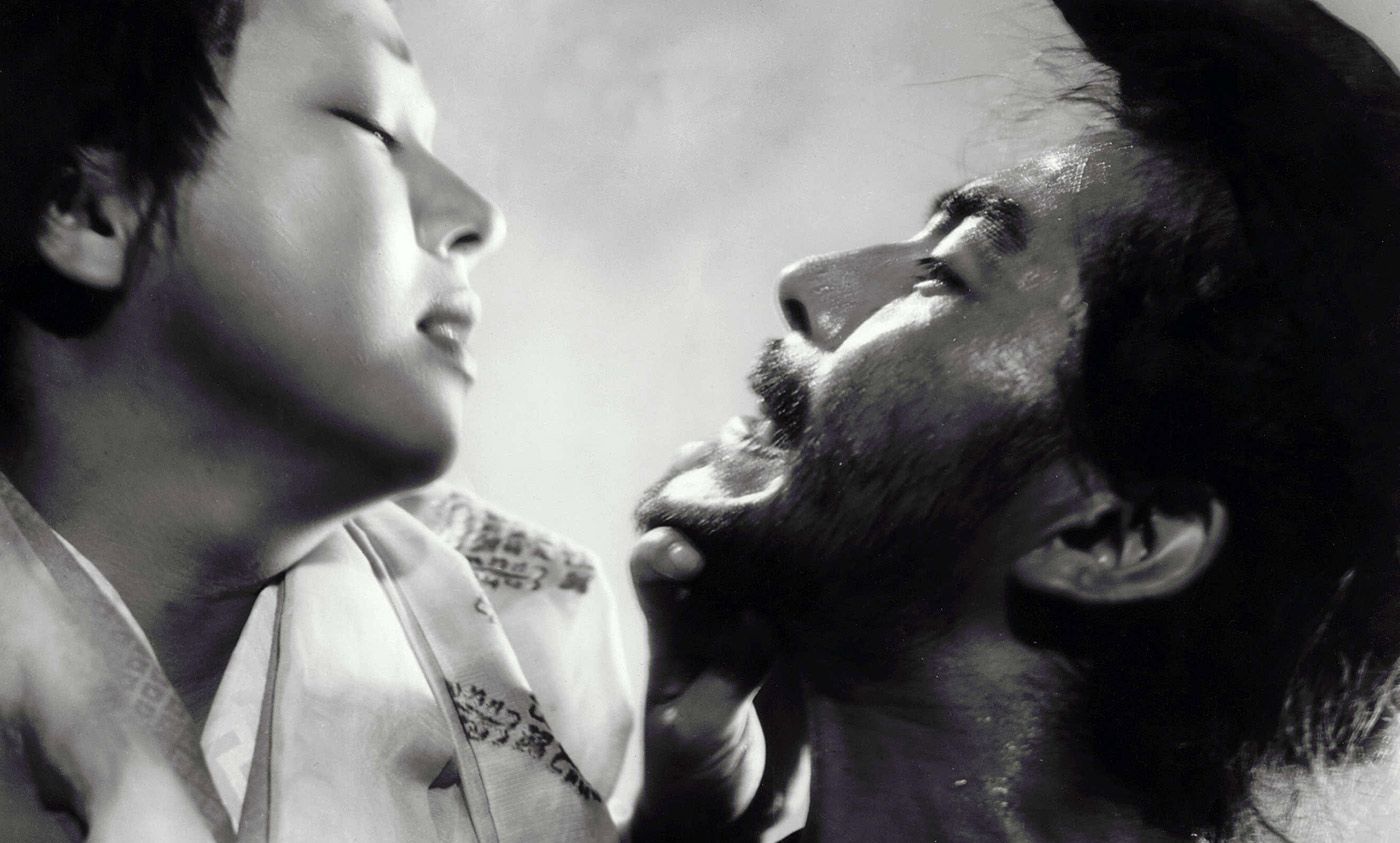
Machiko Kyō and Toshiro Mifune in Kurosawa's <em>Rashômon</em> (1951). <emPhoto by Rex Features</em>
Machiko Kyō and Toshiro Mifune in Kurosawa's Rashômon (1951).
Picture this: a man – a samurai – is killed in a grove. One by one, all those involved are brought before a court. The woodcutter talks of the horror that seized him when he stumbled upon the body. The priest testifies that he had seen the man earlier and identifies a likely attacker. Then the attacker, Tajōmaru, is brought in. He claims he tied up the samurai, seduced his wife right in front of him, and afterwards killed the samurai in a swordfight.
Some readers might recognise the plot outline. The film is Akira Kurosawa’s masterpiece Rashômon (1950), which treats viewers to a unique feast: thinking on screen, philosophising not through any structured argumentation, nor in abstruse language, but via exquisite storytelling, compelling imagery and innovative cinematography. 
It’s then the turn of the samurai’s wife to give testimony. In her story, she is raped by Tajōmaru, who leaves without killing her husband. After the rape, she unties her husband, but then passes out, only to awake to find her husband dead next to her, having committed suicide.
The philosophical puzzle at the core of Kurosawa’s film is clear already: what if we can’t really know and tell what’s going on? If whatever account we produce about the world around us is a world unto itself, and each person’s account is wildly different from any other’s, with no way of knowing whose one is actually the case?
Sign up for Aeon’s Newsletter
Even more compellingly, we then hear, via a medium, the version of the dead samurai himself: after Tajōmaru sleeps with his wife, the brigand begs her to go away with him, which she accepts on the condition that he kills her husband. But Tajōmaru suddenly takes her husband’s side. Somehow the lady manages to escape, the brigand frees the samurai and leaves, and the latter commits suicide.
Kurosawa’s characters look at the same world, yet for moral or cognitive reasons their accounts of what they see are worlds in themselves, making it impossible to know what the actual world is like. The film’s ultimate message is that we are fundamentally unable to ‘tell the truth’.
What we hear next is yet another version, the woodcutter’s. He had witnessed the whole thing, but didn’t tell the court. He gives his account after the trial, under the Rashômon gate: after Tajōmaru sleeps with the lady, he begs her to marry him. Unmoved, she frees her husband and challenges him to fight the brigand. The samurai engages Tajōmaru in a swordfight, in which he is killed.
This is the latest version, but we can’t say it’s the true one. Had there been more people involved, we would have heard even more accounts, each more different than the last. Philosophically, this is nothing new: from Friedrich Nietzsche’s deconstruction of truth in terms of the ‘will to power’ to Richard Rorty’s notion that truth is ‘made rather than found’ to our own age’s ‘social construction’ of everything, we’ve got accustomed to a world that seems to have dispensed itself of the need to know where the truth lies. Disturbing as its message might be at a human level, Kurosawa’s film joins a conversation that has been going on for a while now in Western philosophy.
Yet, you could wonder, what is a filmmaker doing joining philosophical conversations? According to an as-yet marginal, but increasingly influential line of thought, Kurosawa does exactly what any good filmmaker should do: provoke viewers into transcending what they see on screen, engage with big questions about the human condition, pursue philosophical ends through cinematic means. From Gilles Deleuze and Stanley Cavell to Stephen Mulhall and Robert Sinnerbrink, an argument has been made that film can be philosophy. Indeed, that cinema can serve philosophy not in some ancillary role – for example, by providing ‘illustrations’ of philosophical problems in classroom settings – but in its own right, with its own means, and in a manner irreducible to the methods of traditional philosophy. Obviously, not all films are eminently philosophical, but some are, and that’s enough. As Mulhall puts it in On Film (2001): ‘Such films are not philosophy’s raw material, nor a source for its ornamentation; they are philosophical exercises, philosophy in action – film as philosophising.’
Philosophers are nothing if not argumentative, so the ‘bold thesis’ of film as philosophy has been appropriately besieged. Film cannot be philosophy, the main line of attack goes, because it does not work with arguments, as philosophy always should, but with images, emotions and such like. In other words, filmmakers cannot be philosophers because they don’t live up to an understanding of philosophy that boils down to making argument and preempting counterarguments. However, by this definition, quite a sizeable number of philosophers are not philosophers either: there is no place in it for Heraclitus or Diogenes, neither for Confucius nor Nietzsche.
Regardless of whether films satisfy some technical definition of philosophy, the fact remains that they can have on us the same effect that the great, perennial works of philosophy do: shake and awaken us, breathe new life into our minds, open us up to new ways of seeing ourselves and the world around us. There is a purity of gaze, a depth of vision and a quality of insight in the works of Andrei Tarkovsky, Ingmar Bergman, and Kurosawa, on a par with those of the great philosophers.
Most important, however, given philosophers’ unhealthy obsession with rationality, filmmakers can teach them what it means to be human: about our messy ways, about how shifty, complex and ultimately irrational we can be. We are driven by emotions and passions as much as we are by reason; we employ mythical imagination just as much as argumentative thinking. And, perhaps, philosophy should for its own good be more generous with its definitions and humbler in relation to other fields. From film, for example, it can learn many a useful thing – human warmth, social urgency and a way of speaking directly to the human heart – things that don’t abound in philosophical texts.
Kurosawa’s Rashômon does exactly that. Not only does the film flesh out the old notion that truth is man-made, but it dramatises and intensifies it in a way that philosophy alone is unable to. Through narrative, filming style, performance, mise-en-scène and such like, we get a sense of what the inability to grasp the real feels like: the conflicting stories are told in flashback, which raises the crucial issue of truth’s relationship to memory and forgetting, remembrance and misremembrance. The remembering and retelling is done during a relentless downpour: it is as though everything in this world – reality, truth, ourselves – has become liquid; the setting of remembering is a site of devastation, a temple in ruins – a reminder, if one was needed, that ‘God is dead’ or at least very silent. In the court, we never see the judges’ faces, only those of the people brought in to give their wildly conflicting testimonies: they are talking to us – we are the judges, we have to take everything in; then there are shots directly into the Sun, which creates a lingering sense of blindness and disorientation. All this only deepens the overwhelming impression that what we witness – an ending to our ability to tell the truth – is a tragedy of cosmic proportions. The Buddhist priest’s lamentations are haunting:
War, earthquake, winds, fire, famine, the plague. Year after year, it’s been nothing but disasters. And bandits descend upon us every night. I’ve seen so many men getting killed like insects, but even I have never heard a story as horrible as this. Yes. So horrible. This time, I may finally lose my faith in the human soul. It’s worse than bandits, the plague, famine, fire or wars.
Of course, all this is ‘only a movie’. In addition, it’s been so much fun toying around with the notion that truth is a human fabrication, that everything can be endlessly constructed and deconstructed. So much fun. And yet. The time for payback could have come earlier than we expected. For when the government pushes us to accept lies not as lies but as ‘alternative facts’, we know that the frame of reference is no longer Rorty or Nietzsche, but George Orwell’s 1984 (1949). And it’s not a fiction we read, it’s one we start to inhabit.
We should have at least seen it coming. After all, Rashômon gave us plenty of warning.
REPUBLISH

Christoph Niemann and Nicholas Blechman publish their visual conversations


Christoph-niemann-nicholas-blechman-conversations-illustration-publication-top
Work / Publication

Christoph Niemann and Nicholas Blechman publish their visual conversations

1032
Illustrator Christoph Niemann and creative director of The New Yorker Nicholas Blechman have published Conversations, a six-month project which saw the two creatives exchange drawings and photographs via their smart phones. The only rules for the project were that Nicholas used black ink and Christoph used blue, and the conversation had to be non-verbal.
The project initially started in the late 90s, “as an outlet to mainstream illustration” and was called 100%. “I worked as an art director at The New York Times and also needed a break from editorial design,” explains Nicholas. “Each book was a collaborative limited edition drawing project on a theme (maps, architecture, love). After September 11, we drew on the theme of evil and published with Princeton Architectural Press. That was in 2005 – we have not done a book since.”
Last year, the pair picked back up on the project as part of the Met Museum’s new group show, which opened last month titled Talking Pictures: Camera-Phone Conversations Between Artists. “The premise of the show is to use the cameras in our phone to have a visual conversation. Christoph and I both saw this as an opportunity to publish another edition,” say Nicholas.
This new edition sees Christoph and Nicholas photograph and draw their surroundings, including sights such as a “lonely cargo container of empty tarmac of Tegal airport, a skiing trip in the Alps”, as well as some “political anxiety, inspired by our shock of Trump”. The choice of using two ink colours was to give each creative an identifiable voice with Nicholas using a fine-nibbed pen for his neat, considered linework and Christoph a brush for his looser mark makings.
Christoph-niemann-nicholas-blechman-conversations-illustration-publication-itsnicethat-17
As well as appearing in the exhibition, the project is also a self-published book containing 142 pages of conversation, which was a natural progression of the project. “After a while we wanted to review the conversation. We found it hard to judge what we were doing by clicking through a folder of images,” says Christoph. “For both of us the most natural step was to put it into a layout. Once we realised how the question/answer setting of two opposing pages helped the series, we knew this had to be a book.”
A big challenge of the project was categorising images and being able to tell the difference between a good image and one that worked well for the project. “After a while we realised that if an image worked all by itself, it didn’t work for the conversation. We found that the strongest images made no sense by themselves, but only became meaningful when juxtaposed or facing, another person’s image,” explains Christoph and Nicholas.
“As a designer/illustrator/artist you are trained to make every image as strong and convincing as possible,” says the pair. “It was interesting how some strange images turned into compelling spreads or series. On the other hand we edited out many nice drawings that worked by themselves but felt foreign when place in the narrative.”
The work flows as an easy dialogue between the two, full of wit, observation and insight into the everyday. But Christoph and Nicholas have been careful to avoid an overarching message, rather they see the images as simply speaking to each other, like friends on the phone.
Talking Pictures: Camera-Phone Conversations Between Artists is on show at the Met Museum now until 17 December 2017. And you can get a copy of the book here.
Christoph-niemann-nicholas-blechman-conversations-illustration-publication-itsnicethat-1
Nicholas Blechman & Christoph Niemann: Conversations
Christoph-niemann-nicholas-blechman-conversations-illustration-publication-itsnicethat-2
Nicholas Blechman & Christoph Niemann: Conversations
Christoph-niemann-nicholas-blechman-conversations-illustration-publication-itsnicethat-3
Nicholas Blechman & Christoph Niemann: Conversations
Christoph-niemann-nicholas-blechman-conversations-illustration-publication-itsnicethat-4
Nicholas Blechman & Christoph Niemann: Conversations
Christoph-niemann-nicholas-blechman-conversations-illustration-publication-itsnicethat-5
Nicholas Blechman & Christoph Niemann: Conversations
Christoph-niemann-nicholas-blechman-conversations-illustration-publication-itsnicethat-6
Nicholas Blechman & Christoph Niemann: Conversations
Christoph-niemann-nicholas-blechman-conversations-illustration-publication-itsnicethat-7
Nicholas Blechman & Christoph Niemann: Conversations
Christoph-niemann-nicholas-blechman-conversations-illustration-publication-itsnicethat-8
Nicholas Blechman & Christoph Niemann: Conversations
Christoph-niemann-nicholas-blechman-conversations-illustration-publication-itsnicethat-9
Nicholas Blechman & Christoph Niemann: Conversations
Christoph-niemann-nicholas-blechman-conversations-illustration-publication-itsnicethat-10
Nicholas Blechman & Christoph Niemann: Conversations
Christoph-niemann-nicholas-blechman-conversations-illustration-publication-itsnicethat-12
Christoph-niemann-nicholas-blechman-conversations-illustration-publication-itsnicethat-13
Nicholas Blechman & Christoph Niemann: Conversations
Christoph-niemann-nicholas-blechman-conversations-illustration-publication-itsnicethat-14
Nicholas Blechman & Christoph Niemann: Conversations
Christoph-niemann-nicholas-blechman-conversations-illustration-publication-itsnicethat-15
Nicholas Blechman & Christoph Niemann: Conversations
Christoph-niemann-nicholas-blechman-conversations-illustration-publication-itsnicethat-16
Nicholas Blechman & Christoph Niemann: Conversations
Christoph-niemann-nicholas-blechman-conversations-illustration-publication-itsnicethat-18
Nicholas Blechman & Christoph Niemann: Conversations
Christoph-niemann-nicholas-blechman-conversations-illustration-publication-itsnicethat-19
Nicholas Blechman & Christoph Niemann: Conversations
Christoph-niemann-nicholas-blechman-conversations-illustration-publication-itsnicethat-20
Nicholas Blechman & Christoph Niemann: Conversations

Saturday, July 1, 2017

What Your Therapist Really Thinks: ‘Am I Screwing Up My Children?’

What Your Therapist Really Thinks: ‘Am I Screwing Up My Children?’

By 
Image
Photo-Illustration: Eugenia Loli
Dear Therapist,
Am I screwing up my children?
Seriously Wondering
Dear Seriously Wondering,
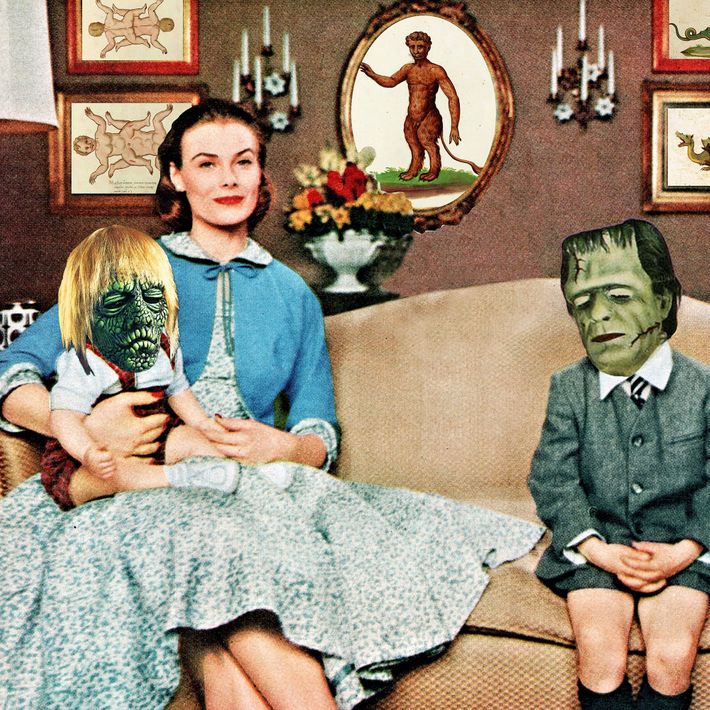
Half a century ago, the psychoanalyst Selma Fraiberg published a seminal paper on parenting called “The Ghosts in the Nursery.” Using observations from her work with distressed families, Fraiberg described the ways in which our unconscious issues — or ghosts — from our childhoods come unbidden when we become parents. A baby’s cry, a toddler’s hug, a kindergartner’s bid for independence — all of this reawakens dormant memories of how we were loved as children, memories with potential to haunt us like ghosts. We can’t plainly see them, but their presence is palpable. If we felt criticized, unseen, unsupported, controlled, neglected, or traumatized growing up — and we haven’t worked through these feelings as adults — these ghosts will cause us to reenact our pasts and create a pattern of what Fraiberg called intergenerational transmission: Our parents do with us some version of what our grandparents did with them; we, in turn, do with our kids some version of what was done with us.
Often, I’ll hear about these ghosts from adults who come to therapy and tell me about their parents. There’s the patient who grew up sheltered from a web of family secrets, including the identity of her biological father, and who now, in the spirit of “openness,” inappropriately makes her young daughter the holder of her own personal secrets. There’s the father whose bids for affection as a child were rejected and now finds his 5-year-old’s desire for snuggles before bed to be “needy.” There was the mom who felt that her brother was favored by her own mom, and now favors her son over her daughter, unable to see that her issues with her daughter may have more to do with her past than her daughter’s willfulness. I’ve also heard stories of neglect and abuse that made me hug my son more tightly than usual when I came home that night, unable to imagine an adult — specifically, me — doing any of that to him.
And yet.
There will always be an “and yet.”
I have made what I’ll euphemistically call “insensitive remarks” to my son that I deeply regret.  I have raised my voice too many times to count.  At times, when I’m stressed or exhausted or at my limit, it takes everything in me to take a deep breath so that I can be the kind of parent who doesn’t scare the bejesus out of my child.  But I’m telling you, sometimes it’s been close.  And because it’s been close, I get it all too well.  I’ll bet every parent, if caught at the wrong moment, gets it all too well.  Fortunately for most parents, those moments are few and far between, but what if every day was like that?  What if you never worked through your pain so as to not inflict it on others; what if you never had the opportunity to understand those “ghosts in the nursery” that Selma Fraiberg wrote about being passed through the generations?
I don’t know, Seriously Wondering, what prompted you to ask your question. I don’t know whether a sanctimonious comment from some self-styled perfect mom made you question yourself. I don’t know if you’ve acted in ways that cross a line in your own mind, and you’re stunned to find yourself doing the exact same thing that you swore, as a child, you would never do to your own kids when you grew up and had them.  I don’t know if you’re just a garden-variety helicopter parent who does everything to make your kids’ lives free of bumps and struggles, and you’re just now realizing that it’s time to let them experience some healthy discomfort.
But whatever the reason, the answer is yes.  Yes, you are screwing up your kids.  Because there are just so many ways to do it that’s it’s almost unavoidable.  As the poet Philip Larkin put it:  “They fuck you up, your mum and dad, / They may not mean to, but they do.”
Interestingly, people tend to come to therapy with strong polarized views of their parents, one way or another — love or hate, with no middle ground. For one patient, her parents were “bat-shit crazy.” For another, his parents were “saints.” As therapy progresses, positions become more nuanced, but I’m especially suspicious of saintly parents. Kids try your patience, they constrict your freedom, they drain your bank account, they interfere with your social and professional lives, they get violently ill the second you go on a long-awaited vacation, and they have needs that inevitably come up at the most inconvenient of times. No matter how much you love them, it’s hard to be a saint under these conditions.
Meanwhile, we pay too much attention to their experience, or we don’t pay enough attention to their experience, or we fight with our spouses about whether we’re paying too much or too little attention to their experience. We have narcissistic impulses, nudging them to become more like us and less like themselves. Indeed, the greatest shock many parents have comes with the discovery that our kids are not our clones. They have their own interests, their own personalities, their own quirks, their own priorities, their own goals, their own ways of doing things, and their own ways of being that work for them (if not us). Yes, they also may have inherited or acquired our less desirable traits, which we find “cute” (“She’s so stubborn, just like me”), but they’ll develop their own as well, which we find frustrating (“He just does the minimum to prepare for his tests; Iwasn’t like that at all”).
But perhaps the least-talked-about ghost is our envy. Take the case of a parent who came from a household with little money, and who now admonishes her child every time she gets a new pair of shoes or goes on vacation: “You need to be more grateful. Do you realize how lucky you are?” A gift wrapped in a criticism, every time. Or consider the parent who, while visiting prospective colleges with his 11th-grade son, spends the entire tour at the school that he himself dreamed of attending — and from which he was rejected — making negative comments about the tour guide, the curriculum, the dorms, embarrassing his son in front of admissions staff. Then there’s the patient whose sibling was ten years her senior, and who as a grown-up unconsciously creates conflict between her twins because she envies their close relationship.
Often, outside of our awareness, we envy our children’s childhood — the opportunities they have that we didn’t; the emotional stability we have the foresight to provide but didn’t get ourselves; the potential they have with their whole lives ahead of them, a stretch of future that’s now in our past. We envy their youth. We strive to give our children all the things that we didn’t or no longer have, but somehow end up, without even realizing it, resenting them their good fortune.
There’s a term coined by Donald Winnicott, the influential English pediatrician and child psychiatrist: “the good-enough mother” (which applies to any primary caregiver). Winnicott found that being a good-enough parent was sufficient to raise a well-adjusted child. Many people experience pain in childhood, but not all parents transmit that pain to their children. The fact that you’re curious about how you’re doing as a parent, SW, makes me think that you’re like the majority of parents out there — fallible, human, and screwing your kids up a little, but good enough. And the more ghost-busting you can do — by better acquainting yourself with your projections, envy, unresolved pain, and disappointments — the more your ghosts will stay out of your grandchildren’s nurseries one day, too.
Lori Gottlieb is a writer and a psychotherapist in private practice. Got a question? Email therapist@nymag.com. Her column will appear here every Friday.
All letters to What Your Therapist Really Thinks become the property of New York Media LLC and will be edited for length, clarity, and grammatical correctness.
The information provided by What Your Therapist Really Thinks is for entertainment and educational purposes only, and is not intended to be a substitute for professional medical advice, diagnosis, or treatment. Always seek the advice of your physician, mental-health professional, or other qualified health provider with any questions you may have regarding a medical condition.