Wednesday, April 27, 2016

Art Helps Police Officers Learn to Look

Photo

New York City police officers sizing up Manet’s “Mademoiselle V. ... in the Costume of an Espada” (1862) at the Metropolitan Museum of Art. Credit Sam Hodgson for The New York Times

To teach people how to notice details they might otherwise miss, Amy E. Herman, an expert in visual perception, likes to take them to museums and get them to look at the art. Recently she escorted a group of New York City police officers to the Metropolitan Museum of Art and asked them to describe some of the things they saw.
They did their best. “This seems to be a painting of some males with horses,” one officer said of Rosa Bonheur’s mid-19th-century work “The Horse Fair,” a scene of semi-chaos as horses are driven to market. He tried to abide by Ms. Herman’s admonishment to avoid words like “obviously.” “It appears to be daytime, and the horses appear to be traveling from left to right.”
Another pair of officers tackled Picasso’s 1905 “At the Lapin Agile,” which depicts a wilted-looking couple sitting at a French bar after what might have been a long night out. “They appear to have had an altercation,” one observed. The other said, “The male and female look like they’re together, but the male looks like he’ll be sleeping on the couch.”
The officers asked that their names not be used because they were not authorized to speak to reporters. They said that they did not know much about art — their jobs allow little opportunity for recreational museumgoing — and Ms. Herman said she preferred it that way.
“I’ve had people say, ‘I hate art,’ and I say, ‘That’s not relevant,’” she said. “This is not a class about Pollock versus Picasso. I’m not teaching you about art today; I’m using art as a new set of data, to help you clear the slate and use the skills you use on the job. My goal when you walk out the door is that you’re thinking differently about the job.”
A painting has many functions. It’s a cultural artifact, an aesthetic object, an insight into a time and a place, a piece of commerce. To Ms. Herman, it’s also an invaluable repository of visual detail that can help shed light on, say, how to approach a murder scene. “It’s extremely evocative and perfect for critical inquiry,” she said in an interview. “What am I seeing here? How do I attach a narrative to it?”
Before unleashing the officers in the galleries, she talked to them in a classroom in the Met’s basement. She put up a slide of “Mrs. John Winthrop,” a 1773 portrait by John Singleton Copley. The painting, showing a woman sitting at a table holding little pieces of fruit, is considered a masterpiece of fine detail — the intricacy of the lace trim on the lady’s gown, the rich decorations on her hat. But there’s a detail that’s so obvious, or maybe so seemingly irrelevant, that most people fail to mention it in their description.
Continue reading the main story


“Everyone sees that this is a woman with fruit, and 80 percent miss the mahogany table,” she said. (They also miss the woman’s reflection in the veneer.)
Ms. Herman also displayed a pair of slides featuring reclining nudes: Goya’s “The Nude Maja” (1797-1800) and Lucian Freud’s 1995 “Benefits Supervisor Sleeping,” who is very fat. Ms. Herman asked the group to compare the pictures. “Most cops, when I ask this question, say it shows someone before and after marriage,” she said.
Several officers raised their hands.
“Uh, the woman at the bottom is more generously proportioned,” one said.
“She is morbidly obese,” said another.
“Right!” Ms. Herman said. “Don’t make poor word choices. Think about every word in your communication.”
Ms. Herman, who has a new book out, “Visual Intelligence: Sharpen Your Perception, Change Your Life,” came to her vocation in a roundabout way. She worked first as a lawyer, did not like it, took a job in the development office at the Brooklyn Museum and then moved to the Frick Collection. Earning a master’s degree in art history at night at Hunter College, she eventually became head of the Frick’s education department.
There, inspired by a program in which Yale medical students studied works of art to better observe their patients, she helped devise a similar program for the Frick. Eventually she moved beyond medicine. She has been offering the courses full time as her own business since 2011; her clients include federal and local law enforcement agencies across the country, as well as medical students and business executives.
Photo

Amy E. Herman, an expert in perception, guiding a group of New York City police officers in a class at the Metropolitan Museum of Art. Credit Sam Hodgson for The New York Times

Steve Dye, chief of police at the Grand Prairie Police Department in Texas, brought in Ms. Herman recently to talk to a group of officers from the region. He said her presentation was invaluable in showing the officers how to better observe and document their findings accurately and free from bias.
“Some of the works of art she showed us, we wouldn’t notice the finer details,” he said. “And we’re supposed to be professional observers.”
When forced to deconstruct paintings in group settings, people from different professions tend to respond differently.
“The law enforcement community is much more forthcoming,” Ms. Herman said. “Cops will outtalk you every time. Doctors and medical students are much more inhibited. They don’t want to be wrong, and they never want to show that they are ignorant about anything.”
The New York Police Department is one of Ms. Herman’s most important clients. She tailors her presentations to her audiences, and they are on the regular training curriculum at the detective bureau and the training bureau at the Police Academy; other divisions use her services from time to time. In general, her program is voluntary rather than mandatory.
“Amy reminds officers to explore outside the box,” said Police Officer Heather Totoro, who added that the program helped officers in training because of its “uniqueness and power.”
“She taps into officers’ unique sixth sense, teaching them to tell her what they see, not what they think.”
Law enforcement officials tend to view the works through the lens of the job: Who has done what to whom? Where is the perp?
“Sometimes they’ll say, ‘We have an E.D.P. here’ — an emotionally disturbed person,” Ms. Herman said. Once she showed some officers El Greco’s “The Purification of the Temple,” which depicts Jesus expelling the traders and money-changers amid turmoil and mayhem.
“One cop said, ‘I’d collar the guy in pink’” — that would be Jesus — ‘“because it’s clear that he’s causing all the trouble.’”
Among the works she finds most interesting as a learning tool is Vermeer’s exquisitely ambiguous “Mistress and Maid,” a 1666-7 portrait of a lady seated at a table, handing over (or being handed) a mysterious piece of paper. “There are so many different narratives,” she said. “The analysts come away asking more questions than answers — ‘Who’s asking the question? Who’s doing the talking? Who’s listening?’ The cops will say, ‘It’s a servant asking for the day off.’”
She also likes “House of Fire,” a 1981 painting by James Rosenquist that has three absurdist parts: an upside-down bag of groceries, a bucket under a window shade, and a group of aggressively thrusting lipsticks. “It’s really conducive to good dialogue,” she said. “How many times do officers have to make order out of chaos? So many times in our work we come across things that don’t have a coherent narrative.”
The officers in the class seemed impressed, both by Ms. Herman and by their grand surroundings.
One officer said that she had learned “how to sit down with colleagues and deal with the fact that you can perceive things so differently from each other.” It was her first trip to the Met, or indeed to any art museum.
“I didn’t know what to expect,” she said. “It’s very Thomas Crown-ish, isn’t it?”

Continue


Tuesday, April 26, 2016

Animation, Made of Photos from Early-1900s


The best free cultural & educational media on the web


Mesmerizing Animation, Made of Photos from Early-1900s America, Lets You Travel in a Steampunk Time Machine


Surely you remember Cheers, if only from the sitcom’s syndicated reruns ceaselessly aired around the world. And if you remember Cheers, you’ll remember no part of it more vividly than its opening credits sequence, which broke from the well-established tradition of showing the faces of the series’ cast members.


Instead, writes Stephen Cole at Fonts in Use, the studio charged with creating the sequence “collected archival illustrations and photographs of bar life, culled from books, private collections, and historical societies. They hand-tinted the images and paired them with typography inspired by a turn-of-the-century aesthetic.”
The Old New World
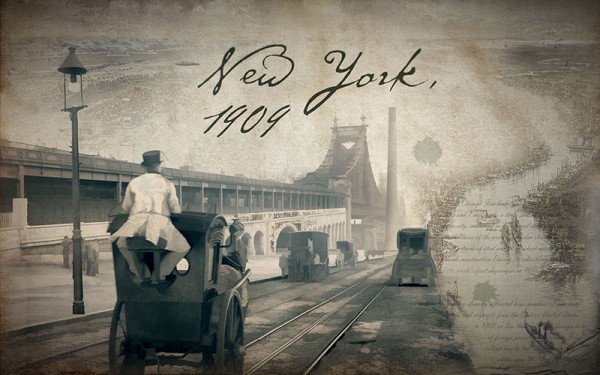
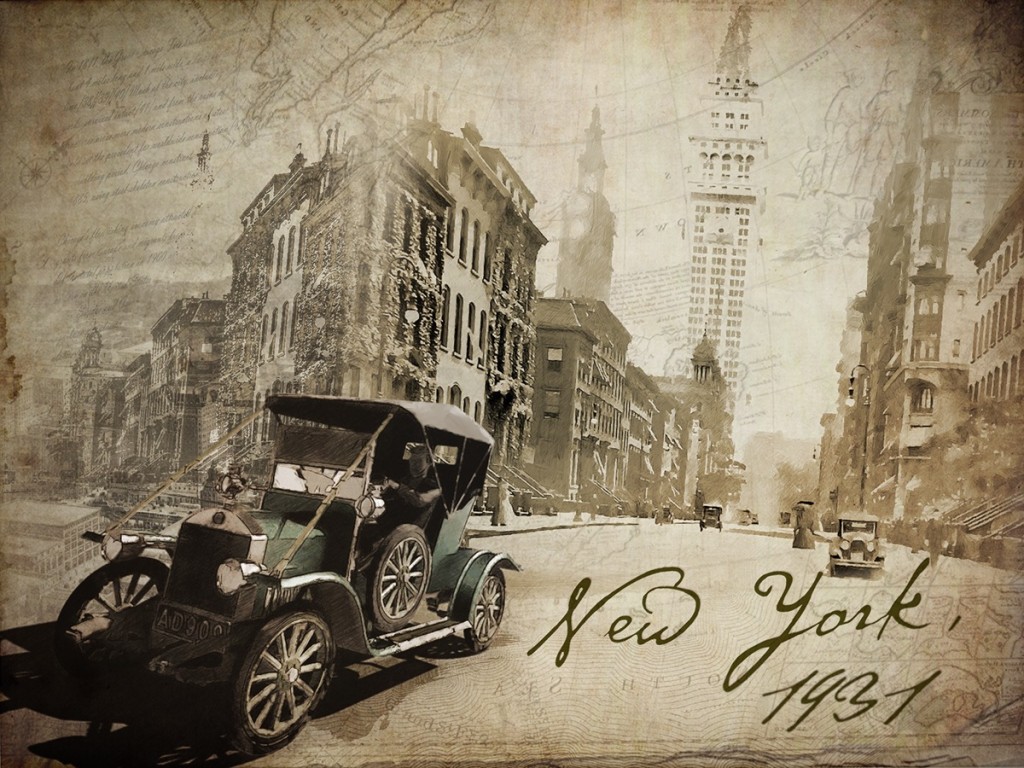
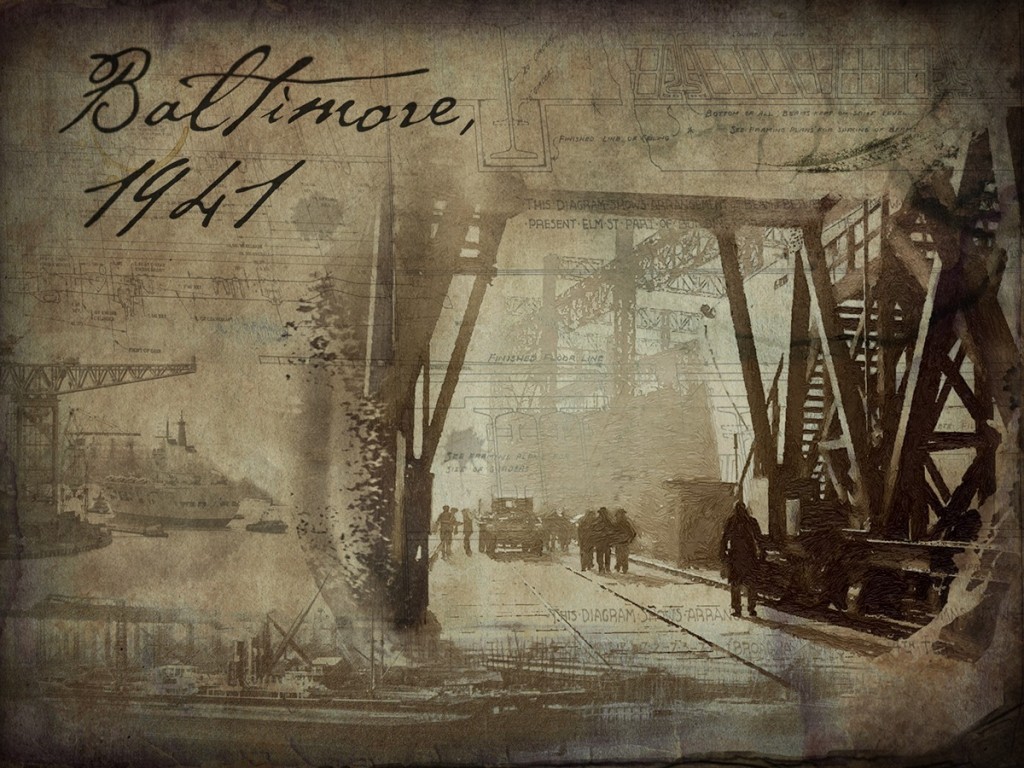
As fondly as we remember their work, the art of bringing turn-of-the-century photos to life has come a long way indeed since Cheers debuted in 1982. Take, for instance, the short above: The Old New World by Russian photographer and animator Alexey Zakharov, who in just over three and a half minutes takes us right back to early-1900s America. “The photos show New York, Boston, Detroit, Washington, D.C., and Baltimore between 1900 and 1940, and were obtained from the website Shorpy,” writes Petapixel’s Michael Zhang, quoting Zakharov’s own description of the work as a “photo-based animation project” as well as a chance to “travel back in time with a little steampunk time machine.”
The Old New World 2
You can see a gallery of more of the materials that went into The Old New World at Behance. Just as those Cheers opening credits evoked the conviviality of old-time tavern culture, Zakharov’s film evokes what it meant — or at least, to all of us currently alive and thus without any living memory of that era, what we think it meant — to live in the headiest cities going in the headiest country going, places whose booming industry and culture held out seemingly infinite promise, even on quiet days.
The Old New World 3
Should Netflix picks Cheers as their next beloved sitcom to revive, they might consider going to Zakharov for a new title sequence. He’s certainly got all the pictures of Boston he’d need.
The Old New World 4
via Petapixel
Related Content:
Download 2,000 Magnificent Turn-of-the-Century Art Posters, Courtesy of the New York Public Library
The Oldest Known Footage of London (1890-1920) Shows the City’s Great Landmarks
London Mashed Up: Footage of the City from 1924 Layered Onto Footage from 2013
James Joyce’s Dublin Captured in Vintage Photos from 1897 to 1904
Watch 1920s “City Symphonies” Starring the Great Cities of the World: From New York to Berlin to São Paulo
Based in Seoul, Colin Marshall writes and broadcasts on cities, language, and style. He’s at work on a book about Los Angeles, A Los Angeles Primer, the video series The City in Cinema, the crowdfunded journalism project Where Is the City of the Future?, and the Los Angeles Review of Books’ Korea Blog. Follow him on Twitter at @colinmarshall or on Facebook.


Daily Habits of Famous Writers

  • Audio Books

  • Online Courses

  • Certificate Courses/MOOCs

  • Movies

  • Languages

  • Textbooks

  • eBooks

  • K-12


  • The Daily Habits of Famous Writers: Franz Kafka, Haruki Murakami, Stephen King & More


    Though few of us like to hear it, the fact remains that success in any endeavor requires patient, regular training and a daily routine. To take a mundane, well-worn example, it’s not for nothing that Stephen R. Covey’s best-selling classic of the business and self-help worlds offers us “7 Habits of Highly Effective People,” rather than “7 Sudden Breakthroughs that Will Change Your Life Forever”—though if we credit the spam emails, ads, and sponsored links that clutter our online lives, we may end up believing in quick fixes and easy roads to fame and fortune. But no, a well-developed skill comes only from a set of practiced routines.
    That said, the type of routine one adheres to depends on very personal circumstances such that no single creative person’s habits need exactly resemble any other’s. When it comes to the lives of writers, we expect some commonality: a writing space free of distractions, some preferred method of transcription from brain to page, some set time of day or night at which the words flow best. Outside of these basic parameters, the daily lives of writers can look as different as the images in their heads.


    But it seems that once a writer settles on a set of habits—whatever they may be—they stick to them with particular rigor. The writing routine, says hyper-prolific Stephen King, is “not any different than a bedtime routine. Do you go to bed a different way every night?” Likely not. As for why we all have our very specific, personal quirks at bedtime, or at writing time, King answers honestly, “I don’t know.”
    So what does King’s routine look like? “There are certain things I do if I sit down to write,” he’s quoted as saying in Lisa Rogak’s Haunted Heart: The Life and Times of Stephen King:
    “I have a glass of water or a cup of tea. There’s a certain time I sit down, from 8:00 to 8:30, somewhere within that half hour every morning,” he explained. “I have my vitamin pill and my music, sit in the same seat, and the papers are all arranged in the same places. The cumulative purpose of doing these things the same way every day seems to be a way of saying to the mind, you’re going to be dreaming soon.”
    The King quotes come to us via the site (and now book) Daily Routines, which features brief summaries of “how writers, artists, and other interesting people organize their days.” We’ve previously featured a few snapshots of the daily lives of famous philosophers. The writers section of the site similarly offers windows into the daily practices of a wide range of authors, from the living to the long dead.
    HarukiMurakami3

    A contemporary of King, though a slower, more self-consciously painstaking writer, Haruki Murakami incorporates into his workday his passion for running, an avocation he has made central to his writing philosophy. Expectedly, Murakami keeps a very athletic writing schedule and routine.
    When I’m in writing mode for a novel, I get up at 4:00 am and work for five to six hours. In the afternoon, I run for 10km or swim for 1500m (or do both), then I read a bit and listen to some music. I go to bed at 9:00 pm. I keep to this routine every day without variation. The repetition itself becomes the important thing; it’s a form of mesmerism. I mesmerize myself to reach a deeper state of mind. But to hold to such repetition for so long — six months to a year — requires a good amount of mental and physical strength. In that sense, writing a long novel is like survival training. Physical strength is as necessary as artistic sensitivity.
    Not all writers can adhere to such a disciplined way of living and working, particularly those whose waking hours are given over to other, usually painfully unfulfilling, day jobs.
    Franz-Kafka
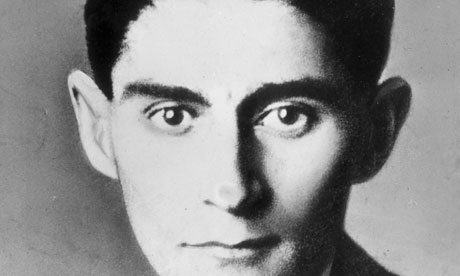
    An almost archetypal case of the writer trapped in such a situation, Franz Kafka kept a routine that would cripple most people and that did not bring about physical strength, to say the least. As Zadie Smith writes of the author’s portrayal in Louis Begley’s biography, Kafka “despaired of his twelve hour shifts that left no time for writing.”
    [T]wo years later, promoted to the position of chief clerk at the Workers’ Accident Insurance Institute, he was now on the one-shift system, 8:30 AM until 2:30 PM. And then what? Lunch until 3:30, then sleep until 7:30, then exercises, then a family dinner. After which he started work around 11 PM (as Begley points out, the letter- and diary-writing took up at least an hour a day, and more usually two), and then “depending on my strength, inclination, and luck, until one, two, or three o’clock, once even till six in the morning.” Then “every imaginable effort to go to sleep,” as he fitfully rested before leaving to go to the office once more. This routine left him permanently on the verge of collapse.
    Might he have chosen a healthier way? When his fiancée Felice Bauer suggested as much, Kafka replied, “The present way is the only possible one; if I can’t bear it, so much the worse; but I will bear it somehow.” And so he did, until his early death from tuberculosis.
    While writers require routine, nowhere is it written that their habits must be salubrious or measured. According to Simone De Beauvoir, outré French writer Jean Genet “puts in about twelve hours a day for six months when he’s working on something and when he has finished he can let six months go by without doing anything.” Then there are those writers who have relied on pointedly unhealthy, even dangerous habits to propel them through their workday. Not only did William S. Burroughs and Hunter S. Thompson write under the influence, but so also did such a seemingly conservative person as W.H. Auden, who “swallowed Benzedrine every morning for twenty years… balancing its effect with the barbiturate Seconal when he wanted to sleep.” Auden called the amphetamine habit a “labor saving device” in the “mental kitchen,” though he added that “these mechanisms are very crude, liable to injure the cook, and constantly breaking down.”
    So, there you have it, a very diverse sampling of routines and habits in several successful writers’ lives. Though you may try to emulate these if you harbor literary ambitions, you’re probably better off coming up with your own, suited to the oddities of your personal makeup and your tolerance—or not—for serious physical exercise or mind-altering substances. Visit Daily Routines to learn about many more famous writers’ habits.
    Related Content:
    The Daily Routines of Famous Creative People, Presented in an Interactive Infographic
    Haruki Murakami Lists the Three Essential Qualities For All Serious Novelists (And Runners)
    Stephen King’s Top 20 Rules for Writers
    Honoré de Balzac Writes About “The Pleasures and Pains of Coffee,” and His Epic Coffee Addiction
    The Daily Habits of Highly Productive Philosophers: Nietzsche, Marx & Immanuel Kant
    Philosophers Drinking Coffee: The Excessive Habits of Kant, Voltaire & Kierkegaard
    Josh Jones is a writer and musician based in Durham, NC. Follow him at @jdmagness


    The best free cultural & educational media on the web


    Monday, April 25, 2016

    A Legendary Fashion Photographer, Revisited | The Work of Louise Dahl-Wolfe

    Slide Show
    Slide Show|15 Photos

    The Work of Louise Dahl-Wolfe

    The Work of Louise Dahl-Wolfe

    CreditCollection Center for Creative Photography, University of Arizona, © 1989 Arizona Board of Regents, ALL RIGHTS RESERVED
    When the photographer Louise Dahl-Wolfe was hired at Harper’s Bazaar in 1936, fashion photography as we think of it today hardly existed. As she recalled years later, at the beginning of her career “there weren’t really fashion photographers, just artists like Steichen, who just happened to do fashion photography.” Dahl-Wolfe worked as a principal photographer at Bazaar — alongside its editor in chief Carmel Snow, the art director Alexey Brodovich and fashion editor Diana Vreeland — for 22 years, and played a large role in redefining the form: pioneering a shift away from stiff society portraits to a more natural and relaxed style of photography.
    A new book, out this month from Aperture, provides a comprehensive look at the influential photographer’s work. The daughter of Norwegian immigrants, Dahl-Wolfe grew up in San Francisco. Initially, she hoped to become a painter; she studied design, composition and art history at the San Francisco Institute of Art. Though she abandoned painting after an instructor reportedly called her work “the essence of superficiality,” she wrote in her 1984 autobiography, “The Photographer’s Scrapbook,” that much of her success as a photographer was thanks to her training. In particular, her studies in color theory served her well: Dahl-Wolfe distinguished herself as one of the first photographers at ease working with color film. “From the moment I saw her first color photograph, I knew that the Bazaar was at last going to look the way I had instinctively wanted my magazine to look,” Snow later wrote.

    T Magazine Newsletter

    Sign up for a weekly compendium of exquisite and exclusive fashion, design, food, interiors and travel coverage.
    Dahl-Wolfe took up photography after meeting Anne W. Brigman, an early member of the Photo-Secession group. She worked as an interior designer for a few years in New York before setting off on a trip across Europe and North Africa — where she met her future husband, the American painter and sculptor Mike Wolfe. In 1933, the couple moved to New York, where Dahl-Wolfe worked briefly as a food photographer for Woman’s Home Companion before she started shooting for Saks Fifth Avenue and Bonwit Teller.
    During her tenure at Harper’s Bazaar, Dahl-Wolfe shot 86 covers for the magazine — including, in 1943, the 17-year-old model Betty Bacall, who was subsequently discovered by the film director Howard Hawks, who changed her name to Lauren and cast her in “To Have and Have Not” alongside Humphrey Bogart. But, as Ginia Bellafante wrote on the occasion of a Museum of the Fashion Institute of Technology retrospective in 2000, it was the sense of “languorous sexuality” that set Dahl-Wolfe’s images apart. With women becoming increasingly more independent and active, styles were more casual and comfortable too, and Dahl-Wolfe’s images — often shot in far-flung locations including Tunisia, Cuba, Spain and the California desert, featuring women reclining and relaxing — captured the new sensibility. “Independent, witty and self-aware, allowing herself one outfit a year from the Paris fashion shows,” John P. Jacob, a curator at the Smithsonian American Art Museum, writes of the photographer in “Louise Dahl-Wolfe,” “she did not so much discover the new American style as she embodied it.”

    Popular Songs You Never Knew Prince Wrote

    11 Popular Songs You Never Knew Prince Wrote


    Songs Prince Wrote for Others
    Prince in 1985
    Michael Ochs Archives/Getty


    04/21/2016 AT 05:45 PM EDT

    With Prince's shocking death, the monumental scope of his influence on music is just starting to become clear.

    The rock, funk and R&B icon has inspired dozens of today's award-winning artists and has crafted numerous albums that ended up greatly reshaping our current musical landscape. He is not just Prince; he is a king.

    And unlike some royalty, Prince loved to share his wealth, writing numerous songs for his fellow artists and allowing his music to be covered by other performers as well.

    Some of Prince's successful pieces may surprise you, especially since he doesn't sing a word on the tracks. Read on for ten songs you probably know, but never knew were written by Prince.


    http://www.people.com/article/prince-songs-written-for-others


    1. "Nothing Compares 2 U" by Sinead O'Connor

    Perhaps The Purple One's best known outside effort, this 1990 single, complete with bald, teary video, gave Sinead O'Connor a worldwide hit. Prince originally wrote and composed "Nothing Compares 2 U" for his funk band side project, The Family, but the song was never released as a single.

    2. "Manic Monday" by The Bangles

    Prince wrote this weekday lament in 1984 as a duet for the band Apollonia 6, but the song was never put on a record. Two years after crafting the catchy creation, Prince offered the song to The Bangles under the pseudonym "Christopher," because he liked the song "Heroes Take the Fall" and was reportedly attracted to the group's rhythm guitarist Susanna Hoffs.

    3. "Love Song" by Madonna

    Prince helped Madonna cowrite this song for the 1989 album Like a Prayer. Madonna traveled to The Studio at Paisley Park in Minnesota, where Prince was pronounced dead, to come up with the piece. Along with helping to write the track, Prince also sang and played guitar on "Love Song."

    4. "Stand Back" by Stevie Nicks

    Prince paired up with Nicks to help her write this top five hit. The Fleetwood Mac singer has often shared the interesting birth story behind this single from her solo career. According to Nicks, she was inspired to create the song after listening to Prince's "Little Red Corvette." When she went to record "Stand Back", she called Prince about the song, and he showed up at the studio that night to help finish up the track.

    5. "I Feel For You" by Chaka Khan

    While Khan was not the first one to this song, she made the most memorable version. Prince originally wrote the song for Patrice Rushen but ended up recording the song himself and putting it on his 1979 self-titled album. "I Feel For You" went on to be covered by The Pointer Sisters and Mary Wells, but it was Khan's 1984 version that became the hit to withstand the test of time.

    6. "The Glamorous Life" by Sheila E.

    Like "Manic Monday," Prince first wrote this song for Apollonia 6. The creation was eventually given to the singer and percussionist Sheila E., who transformed the song into a top dance hit.

    7. "Jungle Love" by The Time

    The rival band in Purple Rain is actually playing plenty of Prince songs. "The Kid" wrote many songs for the Minneapolis-based band, who were also close friends and collaborators with the artist in real life. Prince helped pen "Jungle Love," one of the group's most popular songs, in 1983 and also played multiple instruments on the track.

    8. "With This Tear" by Celine Dion

    Prince wrote the 1992 song as a gift to Dion, who put the present, backed by her stunning voice, on her self-titled album.

    9. "Sugar Walls" by Sheena Easton

    Ditching his previous pseudonym "Christopher" for the new name "Alexander Nevermind," the disguised Prince wrote this U.S. dance hit for Easton in 1984.

    10. "Love... Thy Will Be Done" by Martika

    Prince co-wrote this single with Maritka for her 1991 debut album Maritka's Kitchen. The track went on to top pop charts in numerous countries.

    11. "How Come U Don't Call Me Anymore?" by Alicia Keys

    Prince wrote and recorded this ballad in 1982 as a b-side to his single "1999," but the track didn't become a commercial success until Keys covered the song in 2002, retitling it "How Come You Don't Call Me." Keys' version went on to appear on several charts across the world.