Friday, January 29, 2016

A Mapplethorpe show without the moral outcry

A Mapplethorpe show without the moral outcry

The Perfect Medium will include the photographer’s explicit work but won’t dwell on the controversy around it
Tulips, 1988, by Robert Mapplethorpe. Gelatin silver print Image: 49.1 x 49 cm (19 5/16 x 19 5/16 in.) Gift of The Robert Mapplethorpe Foundation to the J. Paul Getty Trust and the Los Angeles County Museum of Art, 2012.52.27 © Robert Mapplethorpe Foundation


SHARE THIS PAGE


Related


A little over 28 years ago, on 8 December 1988, Robert Mapplethorpe’s travelling retrospective, The Perfect Moment, opened at the Institute of Contemporary Art in Philadelphia. The exhibition, which included 150 images drawn from the photographer’s flower studies, his portraits, and his S&M imagery, met with both critical acclaim and moral outrage. The Corcoran Gallery of Art in Washington DC cancelled its leg of the show, and lost a bequest from the Mapplethorpe estate.

Grapes, 1985, by Robert Mapplethrope. Gelatin silver print Image: 38.5 x 38 cm (15 3/16 x 14 15/16 in.) Jointly acquired by the J. Paul Getty Trust and the Los Angeles County Museum of Art, with funds provided by the J. Paul Getty Trust and the David Geffen Foundation, 2011.7.20 © Robert Mapplethorpe Foundation

Grapes, 1985, by Robert Mapplethrope. Gelatin silver print Image: 38.5 x 38 cm (15 3/16 x 14 15/16 in.) Jointly acquired by the J. Paul Getty Trust and the Los Angeles County Museum of Art, with funds provided by the J. Paul Getty Trust and the David Geffen Foundation, 2011.7.20 © Robert Mapplethorpe Foundation

Have American artistic and social attitudes changed sufficiently to allow today’s big galleries to host a similar show? That seems to be the inference in the J. Paul Getty Museum and the Los Angeles County Museum of Art’s forthcoming exhibition, The Perfect Medium.

Self-Portrait, 1985, by Robert Mapplethorpe. Gelatin silver print Image: 38.7 x 38.6 cm (15 1/4 x 15 3/16 in.) Jointly acquired by the J. Paul Getty Trust and the Los Angeles County Museum of Art, with funds provided by the J. Paul Getty Trust and the David Geffen Foundation, 2011.7.21 © Robert Mapplethorpe Foundation

Self-Portrait, 1985, by Robert Mapplethorpe. Gelatin silver print Image: 38.7 x 38.6 cm (15 1/4 x 15 3/16 in.) Jointly acquired by the J. Paul Getty Trust and the Los Angeles County Museum of Art, with funds provided by the J. Paul Getty Trust and the David Geffen Foundation, 2011.7.21 © Robert Mapplethorpe Foundation

Back in 2011 the Californian museums jointly acquired the art and archives of Robert Mapplethorpe. In a few weeks’ time they will open this 300-work retrospective, which runs concurrently at both institutions March 20–July 31 2016.

Andy Warhol, 1983, by Robert Mapplethorpe. Gelatin silver print Image: 39.1 x 38.5 cm (15 3/8 x 15 3/16 in.) Promised Gift of The Robert Mapplethorpe Foundation to the J. Paul Getty Trust and the Los Angeles County Museum of Art, L.2012.89.156 © Robert Mapplethorpe Foundation

Andy Warhol, 1983, by Robert Mapplethorpe. Gelatin silver print Image: 39.1 x 38.5 cm (15 3/8 x 15 3/16 in.) Promised Gift of The Robert Mapplethorpe Foundation to the J. Paul Getty Trust and the Los Angeles County Museum of Art, L.2012.89.156 © Robert Mapplethorpe Foundation

After the LA run the show will travel to Canada and Australia, making this the first major travelling retrospective since The Perfect Moment toured, all those years ago. Yet, as Paul Martineau, associate curator of photographs at the J. Paul Getty Museum explained, "I wanted the focus to be on Mapplethorpe’s work and not on the sensationalism that accompanied The Perfect Moment."

Calla Lily, 1988, by Robert Mapplethrope. Gelatin silver print Image: 49 x 49 cm (19 5/16 x 19 5/16 in.) Jointly acquired by the J. Paul Getty Trust and the Los Angeles County Museum of Art; partial gift of The Robert Mapplethorpe Foundation; partial purchase with funds provided by the J. Paul Getty Trust and the David Geffen Foundation, 2011.9.26 © Robert Mapplethorpe Foundation

Calla Lily, 1988, by Robert Mapplethrope. Gelatin silver print Image: 49 x 49 cm (19 5/16 x 19 5/16 in.) Jointly acquired by the J. Paul Getty Trust and the Los Angeles County Museum of Art; partial gift of The Robert Mapplethorpe Foundation; partial purchase with funds provided by the J. Paul Getty Trust and the David Geffen Foundation, 2011.9.26 © Robert Mapplethorpe Foundation

“Mapplethorpe was more sophisticated than most people realise,” Martineau goes on. “He was an artist who understood the value of his own intuition and eye, who taught himself the history of photography, how to network, how to run a studio, and how to keep the public interested in him.”

Flower Arrangement, 1986, by Robert Mapplethorpe. Gelatin silver print Image: 49 x 49 cm (19 5/16 x 19 5/16 in.) Promised Gift of The Robert Mapplethorpe Foundation to the J. Paul Getty Trust and the Los Angeles County Museum of Art, L.2012.89.566 © Robert Mapplethorpe Foundation

Flower Arrangement, 1986, by Robert Mapplethorpe. Gelatin silver print Image: 49 x 49 cm (19 5/16 x 19 5/16 in.) Promised Gift of The Robert Mapplethorpe Foundation to the J. Paul Getty Trust and the Los Angeles County Museum of Art, L.2012.89.566 © Robert Mapplethorpe Foundation

There will be explicit material on display, as portraits, simple nude studies, as well as the artfully conceived flower photographs Mapplethorpe also produced. Britt Salvesen, curator and head of LACMA’s Wallis Annenberg Photography department, says that taken together the works will reveal “the rich resources of the Mapplethorpe archive, which provides a broader context for the iconic images that brought him fame. Mapplethorpe’s refined style challenged viewers to consider his portraits, flowers, and sexually explicit images as equal expressions of a personal vision,” Salvesen goes on. “His drive to capture the perfect moment is the core of his art.”

Orchid, 1987, by Robert Mapplethorpe. Gelatin silver print Image: 49.1 x 49.2 cm (19 5/16 x 19 3/8 in.) Gift of The Robert Mapplethorpe Foundation to the J. Paul Getty Trust and the Los Angeles County Museum of Art, 2012.52.23 © Robert Mapplethorpe Foundation

Orchid, 1987, by Robert Mapplethorpe. Gelatin silver print Image: 49.1 x 49.2 cm (19 5/16 x 19 3/8 in.) Gift of The Robert Mapplethorpe Foundation to the J. Paul Getty Trust and the Los Angeles County Museum of Art, 2012.52.23 © Robert Mapplethorpe Foundation

In an age of gay marriage, and with readily available explicit material online, the fuss around the earlier show seems peculiarly dated. Let’s hope this new show can both contextualise that earlier exhibition, while demonstrating just how accomplished an artist the photographer was.

Lisa Lyon, 1982, by Robert Mapplethorpe. Gelatin silver print Image: 38.4 x 38.4 cm (15 1/8 x 15 1/8 in.) Promised Gift of The Robert Mapplethorpe Foundation to the J. Paul Getty Trust and the Los Angeles County Museum of Art, L.2012.88.614 © Robert Mapplethorpe Foundation

Lisa Lyon, 1982, by Robert Mapplethorpe. Gelatin silver print Image: 38.4 x 38.4 cm (15 1/8 x 15 1/8 in.) Promised Gift of The Robert Mapplethorpe Foundation to the J. Paul Getty Trust and the Los Angeles County Museum of Art, L.2012.88.614 © Robert Mapplethorpe Foundation

For more on the show go here, and to enjoy your own copy of Mapplethorpe’s exquisitely conceived flower images order a copy of Mapplethorpe Flora: The Complete Flowers here. Trust us, the print quality on this book really has to be experienced. It really is stunning.

Ken and Lydia and Tyler, 1985, by Robert Mapplethorpe. Gelatin silver print Image: 38.4 x 38.2 cm (15 1/8 x 15 1/16 in.) Jointly acquired by the J. Paul Getty Trust and the Los Angeles County Museum of Art, with funds provided by the J. Paul Getty Trust and the David Geffen Foundation, 2011.7.19 © Robert Mapplethorpe Foundation

Ken and Lydia and Tyler, 1985, by Robert Mapplethorpe. Gelatin silver print Image: 38.4 x 38.2 cm (15 1/8 x 15 1/16 in.) Jointly acquired by the J. Paul Getty Trust and the Los Angeles County Museum of Art, with funds provided by the J. Paul Getty Trust and the David Geffen Foundation, 2011.7.19 © Robert Mapplethorpe Foundation


PHAIDON

Thursday, January 28, 2016

Bruise Violet

Bruise Violet: Stay angry
The most energy on stage Friday came from Bruise Violet. Inspired by indiscriminate anger, this three-piece all-girl punk band sings about anything and everything that pisses them off.
The group’s subject matter covers fuckboys, "Sketchy Jeff," and other youthful struggles — a fitting repertory considering the majority of the three-part band is still in high school. But don’t let the fact that they’re young throw you off. They present high-energy entertainment, the members demonstrating skilled performance chops beyond their collective years. It’s almost sweet, and it’s almost scary.
Throughout the performance, Bruise Violet's youth was most endearing in the banter between songs. They called for selfies from the crowd, and expressed over and over again their collective disbelief at being onstage that night. While their brief set probably prevented a pit from breaking out, there’s some big excitement coming in the next year for them.


Incredible photographic recreations of Hieronymus Bosch paintings


Incredible photographic recreations of Hieronymus Bosch paintings

01.27.2016
09:01 am

Topics:
Art

Tags:
Bosch
Lori Pond
Incredible photographic recreations of Hieronymus Bosch paintings
Adicionar legenda


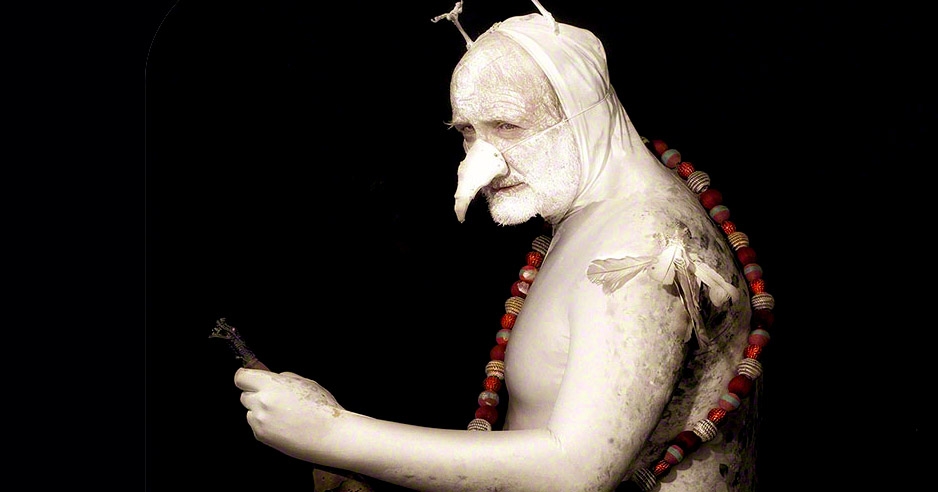
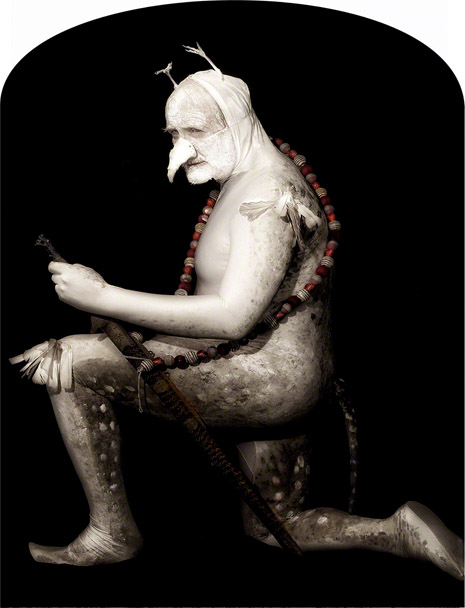
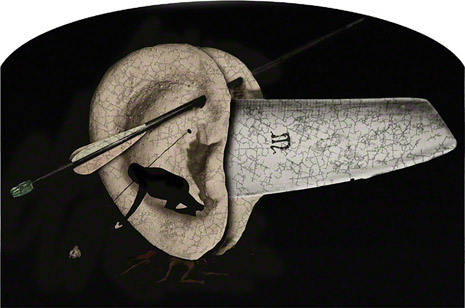
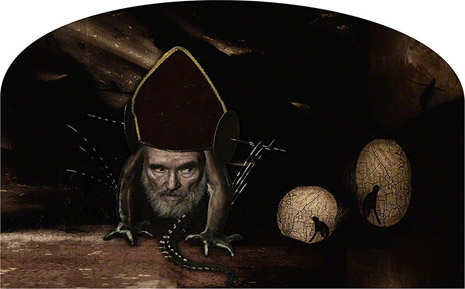
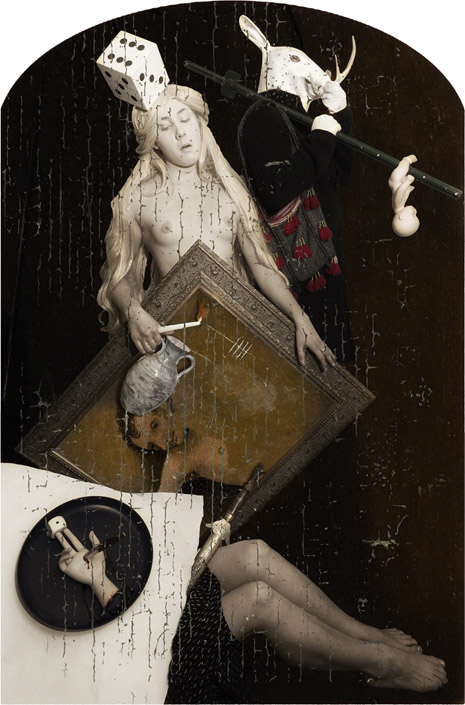
Photographer Lori Pond has produced an amazing series of prints that recreate figures and tableaux from the Hieronymus Bosch paintings “The Last Judgment,” “The Temptation of St. Anthony,” and “The Garden of Earthly Delights.” The painter’s unsettling visions fit well with much of Pond’s dreamlike work, such as her tintypes that recall the grotesque surrealism of Frederick Sommer and Joel-Peter Witkin, or her dark, brooding, and massively disquieting images of taxidermied animals baring their fangs.
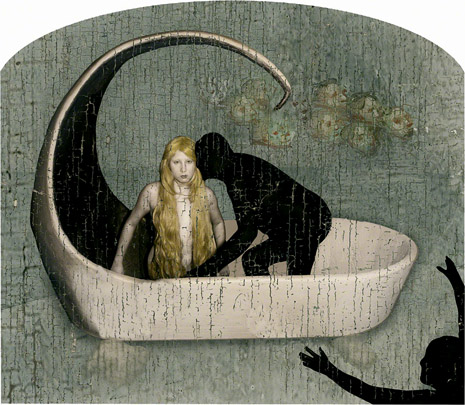
What’s remarkable, though, about the Bosch series, is just how much for these images was accomplished in-camera, before digital editing. In an interview with Create, Pond revealed the work that went into crafting these images:
“I hired a prosthetics designer to create the iconic ‘Bosch snout’ and legs and tail in one image, and a propmaster to make the life-size boat in Bosch Redux 4.0. My taxidermy teacher gave me some crows’ feet, and I got my friends not only to model for me, but also to help with the prop building, wardrobe, and makeup that went into every image. Most resulting photographs are made in camera, apart from some exceptions when I didn’t want to string up a woman in a harp or couldn’t find ears or birds bigger than a human.”
Where digital effects were added, Pond was faithful to the source material—the cracked paint textures applied to some of the images were lifted from high-res digital photos of the actual Bosch paintings.


Hey, this one looks awfully familiar!


Previously on Dangerous Minds:
A little ass music: Hieronymus Bosch’s 500-year-old butt song from hell
Hieronymus Bosch’s ‘Garden Of Earthly Delights’ featured on Dr. Martens bags and shoes
Vile Bodies: The nightmarish visions of photographer Joel-Peter Witkin
Posted by Ron Kretsch


VANTAG


Tiananmen Protest Images Go to Chinese Media Company


With Corbis Sale, Tiananmen Protest Images Go to Chinese Media Company


Corbis, the photography archive owned by Bill Gates that includes some of the most famous pictures ever made, has sold its image and licensing division to a Chinese company.
The sale gives the new owner, Visual China Group, control over photographs of immense cultural and commercial value — Marilyn Monroe on a subway grate, Rosa Parks on a bus, Jimi Hendrix at Woodstock and Albert Einstein sticking out his tongue
But it has been the transfer of images from the 1989 crackdown in Tiananmen Square, an event that China’s Communist Party has aggressively blotted out of public view ever since, that has perhaps raised the most alarm.
Xiao Qiang, the founder of China Digital Times, which tracks Chinese media censorship, said the worry was legitimate. “It should not be treated as a surprise if a Chinese media company’s decisions and actions were aligned with the policies and practices of the Chinese government,” he said.


But those involved say they don’t expect the sale to disrupt the status quo. The protest images will be available around the world even if they remain censored within China.
Photo

The sale gives Visual China Group ownership of iconic photographs. This image from the crackdown in Tiananmen Square in 1989 is included in the archive, though Corbis said the rights to the photograph belong to Reuters. Credit Arthur Tsang Hin Wah/Reuters

Visual China, which made the purchase through its affiliate Unity Glory International, has also struck a deal with Getty Images, Corbis’s main rival, to distribute the photographs in all countries except China, creating a combined library of more than 200 million images.
Getty has worked with Visual China for more than a decade to market its own library in China. Craig Peters, Getty’s senior vice president for business development, said he was confident that the company would safeguard the availability of politically sensitive images.
“V.C.G. has no limitations over what we produce or what we represent or what we bring to bear in our markets,” Mr. Peters said. “And that level of editorial discretion and integrity is something that we’ve maintained and is 100 percent absolutely intact.”
He also pointed out that many images in the archive, including from the Tiananmen crackdown, do not belong to Corbis. In those cases, the company serves simply as a licensing agent for other parties that hold the rights, such as The Associated Press and Reuters.
For example, reports about the sale of the archive have cited images of the so-called tank man, a solitary protester blocking a column of tanks. Corbis says it owns such an image, but one of the more widely shared ones belongs to Reuters, which can market the photo as it pleases through other channels.
“Corbis pays the rights owner a royalty,” said Whit Clay, a spokesman for Corbis. “But, as the contracts expire, the rights owner can pull their images from the Corbis archive.”
Visual China said in an emailed statement that it was “fully committed to being a good steward of the Corbis images and will continue to make the archives available globally.”
Corbis, based in Seattle, was founded by Mr. Gates in 1989 under the name Interactive Home Systems with a vision that people would one day decorate their homes with revolving digital displays of artwork. That did not happen, but over the years the company acquired an enormous library of images, most notably the Sygma collection in France and the renowned Bettmann archive.
Corbis has lately struggled against competition from lower-cost rivals like Shutterstock and Fotolia. It said in a statement that Visual China would be “an excellent steward” of the archive.

The sale also includes Corbis’s video and stock photography divisions, but not its product placement, celebrity news or music licensing businesses. The financial terms of the deal were not disclosed.
The move by Visual China comes after two other notable acquisitions of media assets by Chinese companies in recent weeks. On Jan. 12, the Dalian Wanda Group, a property and entertainment company, said it was buying Legendary Entertainment, one of Hollywood’s biggest movie production companies, for as much as $3.5 billion.
And in December, the Alibaba Group, the Chinese Internet giant, agreed to buy an influential Hong Kong newspaper, The South China Morning Post, as part of an explicit effort to reshape media coverage of China.


Books to Read if You Want to Work in Fashion

12 Books to Read if You Want to Work in Fashion

There are a lot of great books about fashion, but these 12 will actually teach you something.

Avatar:
Lauren Indvik
Author:
From histories and biographies to annotated coffee table books and theoretical texts, there are many, many terrific books on the subject of fashion. In fact, a browse through the fashion section of Amazon or even at the public library can be overwhelming.

If you're seeking to gain a broad understanding of the fashion industry and how it works, we suggest beginning with these 12 foundational texts. These are books that offer a broad overview of the forces shaping today's fashion system, from profit margins to marketing to celebrities, as well as those that capture a specific decade, or decades, of fashion history. With the exception of Christian Dior (whose autobiography, we believe, is essential to understanding the history and process of French couture), we have left out individual biographies and memoirs, though we'll take this opportunity to say that those on or from Paul Poiret, Coco Chanel, Elsa SchiaparelliYves Saint LaurentBill Blass and André Leon Talley are excellent. Enjoy!
"The End of Fashion: How Marketing Changed the Clothing Business Forever" by Teri Agins
If you only read one book on this list, read this. Though slightly dated now (it was published in 2000), Agins, a longtime fashion reporter at The Wall Street Journal, offers an overview of the modern fashion machine: how the big conglomerates, like LVMH, came to be; the triumph of marketing over design and, by extension, brands like Tommy Hilfiger and Ralph Lauren; the wheeling and dealing behind celebrity dressing; and more.
"Fashion (Oxford History of Art)" by Christopher Breward
If you're looking for a compact, well-illustrated overview of modern fashion history, start here. Also recommended: James Lavers's "Costume and Fashion: A Concise History," which will take you through Paleolithic dress all the way up to 1939, and Valerie Mendes and Amy de la Haye's "20th Century Fashion," which offers a decade-by-decade breakdown of styles and the cultural movements that drove them.
"Overdressed: The Shockingly High Cost of Cheap Fashion" by Elizabeth L. Cline
In 1965, 95 percent of the clothes Americans bought were made in America; today, that number is less than 3 percent. Part call to action, part historical text, fashion students will finish with a better understanding of why fast fashion chains are dominating our malls and our closets, why apparel manufacturing is no longer a major U.S. industry and what happens to our used clothes.
"Deluxe: How Luxury Lost Its Luster" by Dana ThomasLuxury fashion used to connote a certain quality and exclusiveness; today, it's a term we use to talk about brands of a certain price point — never mind if they're peddling cheaply made leather bags at a mall near you. Thomas looks at the evolution of the luxury fashion industry, showing how brands like Prada and Burberry have sacrificed quality for profits, and how they whip up consumer appetites for their goods. It'll also teach you a good deal about modern manufacturing, production and marketing methods.
"The Fashion Designer Survival Guide" by Mary Gehlhar
Learn what it takes to get a label off the ground, from drafting a business plan to sourcing materials to getting the most out of a runway show.
"Dior by Dior: The Autobiography of Christian Dior" by Christian DiorMore than an autobiography, this neat little tome offers a step-by-step look at the entire haute couture process, from the first quiet sketch, to the packed showing in the grand salon, to the competitive client fittings.
"The Beautiful Fall: Lagerfeld, Saint Laurent, and Glorious Excess in 1970s Paris" by Alicia DrakeAlicia Drake documents the careers of two of fashion's most important designers, Yves Saint Laurent and Karl Lagerfeld, with incredible biographical detail — so much detail, in fact, that Lagerfeld even sued Drake in 2006 for publishing so many personal details about his life.

"The Battle of Versailles: The Night American Fashion Stumbled into the Spotlight and Made History" by Robin GivhanThe Washington Post's Pulitzer Prize-winning fashion critic offers a fascinating portrait of the American fashion industry in the '60s and '70s, a time when ready-to-wear was upsetting the long reign of couture, and when American designers finally emerged from the back rooms of the Garment District, put their own names on the labels and joined the ranks of high society.
"Hijacking the Runway: How Celebrities Are Stealing the Spotlight From Designers" by Teri Agins
These days it's celebrities — not designers — who have the real power in fashion. From Elizabeth Taylor to Jessica Simpson, Teri Agins charts the the rise of celebrity-branded fragrances and fashion labels and their increasingly powerful roles in today's fashion system.
"Gods and Kings" by Dana Thomas
Alexander McQueen and John Galliano rocked the fashion establishment in the 1990s, going on to head two of Paris fashion's most important houses — Givenchy (McQueen) and Dior (Galliano) — before encountering tragedy in 2010 and 2011, respectively. Full of salacious details, it is nevertheless an important document of the fashion of the '90s and early 'aughts.
"The Fashion System" by Roland Barthes
Published in 1968, this essay (not the easiest to read if you've been out of school for a few years) is immensely important, having established a system for interpreting the meaning of clothing details that still forms the basis for many fashion critics' approaches today.
"Dressed: A Century of Hollywood Costume Design" by Deborah Nadoolman Landis
If you ever wanted to know how costume design works in the movies, this is your book.

Wednesday, January 27, 2016

Keys to Art Pricing


The Keys to Art Pricing New Collectors Need to Know

 
Valuing an artwork can be a subjective affair. It demands a detailed understanding of an artist’s career, factoring in nebulous shifts in taste along with economic variables like supply, demand, and the vagaries of the global economy. So what matters most? We spoke with leading specialists about the myriad elements they consider when assigning value to different pieces. 


Demand

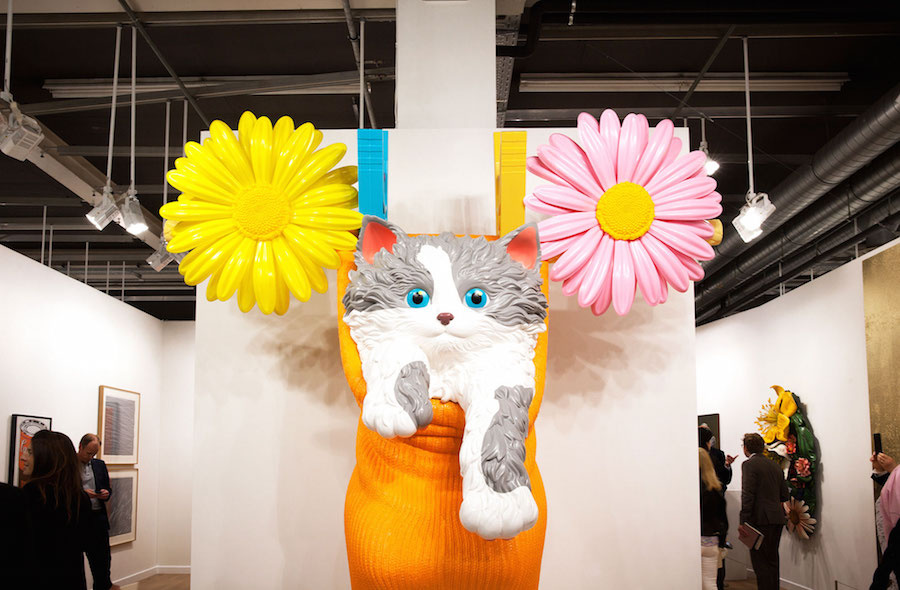
Installation view of work by Jeff Koons at Gagosian Gallery’s booth at Art Basel, 2015. Photo by Alec Bastian for Artsy.
Big names make for lofty price points. “We’re talking about whether the artist is in demand, whether there is an historical importance to them, whether they are a new young maverick, whether lots of people are participating in the market,” said Matt Carey-Williams, Phillips’s deputy chairman for Europe and Asia. “You might also look at artists of a similar ilk, engaged in the same ideas, like-minded artists, artists from a similar geography,” added Carey-Williams, on how he refines his estimates.


Size

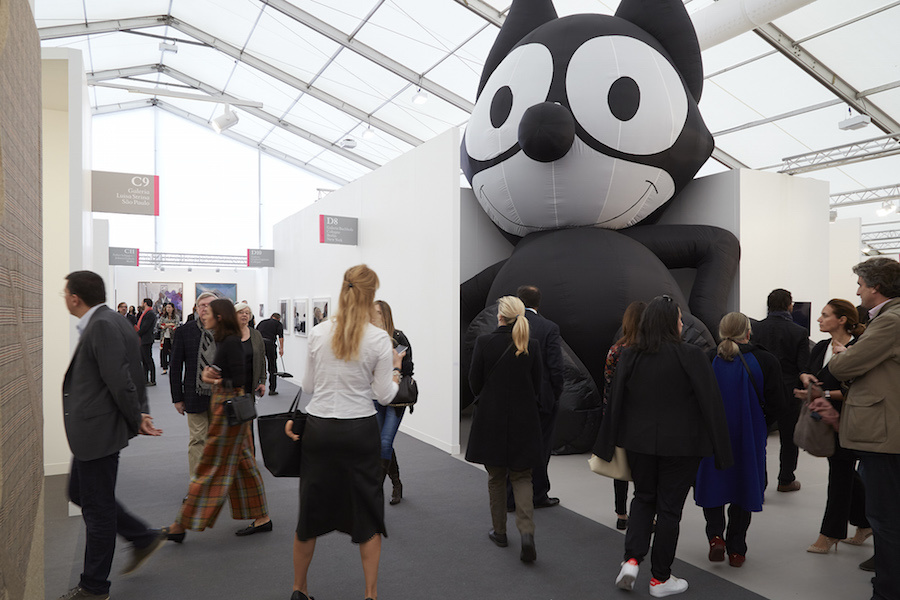
Installation view of work by Mark Leckey at Galerie Buchholtz’s booth at Frieze London, 2015. Photo by Benjamin Westoby for Artsy.
When it comes to painting, bigger is not always better, but it’s almost certainly more expensive. On the primary market, gallerists tend to price works for each artist at a standard price-multiple based on size. For works that have been sold before, whether at a gallery or at auction, comparison is often made to prices of other similarly sized works by the artist, using a number of price databases such as artnet and Art Price.
When the scale of a piece interferes with the collector’s ability to show if off in their home or office, said our expert, it can adversely affect the result. “With Mark [Bradford], scale is important, bigger really is better, the monumentality is part of the artistic enterprise, he wants these works to almost become environments,” said Carey-Williams, reflecting on Mark Bradford’s mixed media Constitution IV (2013), which Carey-Williams first sold at White Cube in 2013, and sold this October once again, in his new role at Phillips, for £3.8 million. “If it’s too big, you can have trouble housing it, if it’s too small, it’s not important or significant enough…most people who are collecting, unless they have their own foundations which can easily accommodate a painting of this size, most people are going to have to go to the living room and get the ruler out.”


Color and Other Unique Attributes

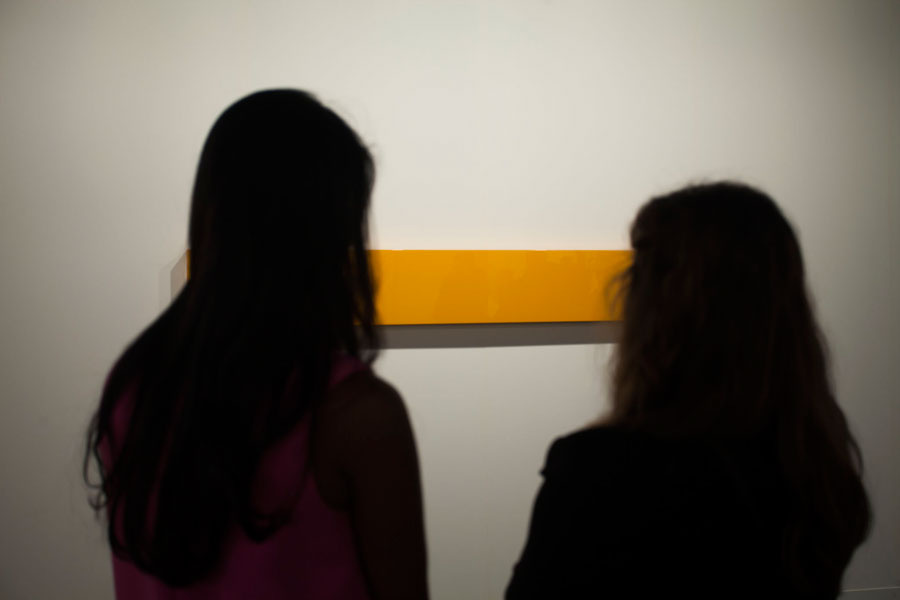
Installation view of work by John McCracken at Mnuchin Gallery’s booth at Art Basel in Miami Beach, 2015. Photo by Oriol Tarridas for Artsy.
Submarkets for individual artists, and markets within different periods for those artists, require their own brand of unique pricing lore. Case in point is the oeuvre of Lucio Fontana, who began puncturing the surface of paper or canvas in the late 1940s, developing the idea over the next two decades. “At different times, different colors are more or less popular,” wrote Melanie Gerlis, Art Market Editor at The Art Newspaper, in her 2014 book Art as an Investment?, referring to Fontana. According to Fontana specialist Luigi Mazzoleni, founding director of Mazzoleni London, “regarding the slashes,” the most popular colors on the market are white and red. Various other factors also come into play. He added, “The quality of the cut is very important as this gives a different rhythm and effect to the canvas. The quantity of cut is also important. A single cut is very minimalist and therefore very sought after, but multiple slashes are also sought after on the international market.”


Condition

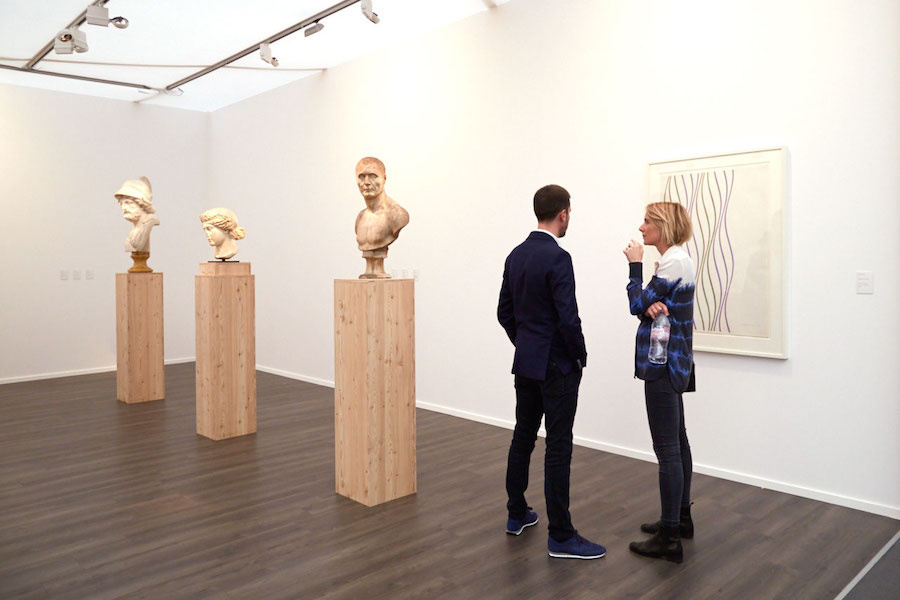
Installation view of Tomasso Brothers and Karsten Schubert’s joint booth at Frieze Masters, 2015. Photo by Benjamin Westoby for Artsy.
With older work, the less the wear and tear, the more it’ll hurt your bank balance. Any repurposing or repair jobs, certainly when they’ve taken place without the artist’s oversight, can dampen prices. “With works by Alexander Calder, those works are fragile, the mobiles [can be] repainted,” said Paul Nyzam, Head of Evening Sales at Christie’s, Paris. “Sometimes they are repainted by the artist himself. But the market really values the work that has not been retouched by anyone. You can explain differences in terms of results with those things.”
Nyzam also discussed pieces by French artist Martial Raysse. Part of Raysse’s career included the creation of collages incorporating “ordinary goods from the consumerism world,” such as lipstick and tissues. “We had a case some time ago [when the artist told us] that a few of those elements were not original and were added by someone else,” added the specialist. “The artist wants us to mention in the condition report any element, which is not from his hand. He is very careful about that.”
On the flipside, damage that is particularly unique can make prices rocket. Dennis Hopper famously shot an Andy Warhol portrait print of Mao Zedong, leaving two bullet-holes, and it sold at Christie’s in 2011 for 10 times its pre-sale high estimate.


Provenance

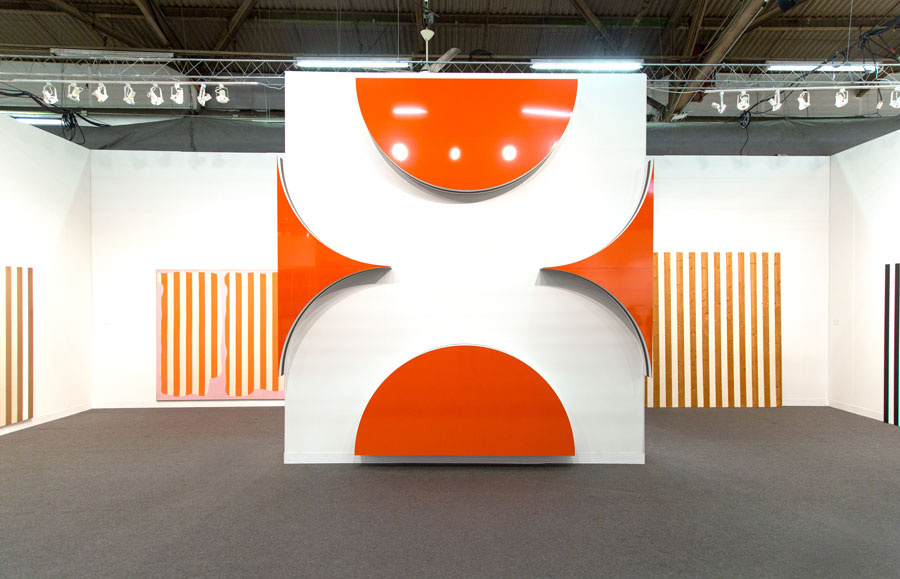
Installation view of works by Daniel Buren at kammel mennour’s booth at The Armory Show, 2015. Photo by Christophe Tedjasukmana for Artsy.
Pieces with high-profile exhibition and collecting history cost more, particularly if celebrated names are involved. In a historical context, establishing authenticity, or the possibility of any potential legal claims over ownership, are of paramount importance. In the contemporary market, provenance can involve shoring up an artist’s reputation. “The provenance of the contemporary artist [involves] the kind of events that are taking place around the artist, from being picked up by a gallery to having exhibitions in public and private institutions,” said Anders Petterson, founder of art market research and analysis firm ArtTactic. “All of this will add to the wider story of the artwork. And obviously being part of a major collection will add to the work itself.”

—Rob Sharp