VANTAG galeria

|\| ART BLOG HUMOR BLOG PHOTO BLOG CULTURE BLOG |:| FOR THE RENAISSANCE MAN & THE POLYMATH WOMAN |/|

Monday, August 19, 2019

Why Is the Middle of the Art Market Vanishing

Hyperallergic


OPINION

Why Is the Middle of the Art Market Vanishing?

Kyle ChaykaJanuary 25, 2013

POPULAR

  • The Mega-Dealers Who Ate the Art World
  • Lee Krasner’s Second Act 
  • The Cultural Legacy of Animals in Japanese Art Over 17 Centuries
  • When Gordon Parks Photographed the Life of a Brazilian Boy and Sparked Debate
  • Required Reading
Advertise on Hyperallergic with Nectar Ads

SPONSORED

  • VCUarts Professor Guadalupé Maravilla Awarded 2019 Guggenheim Fellowship
  • SVA’s Third Annual Art & Activism Event: Takin’ it to the Streets

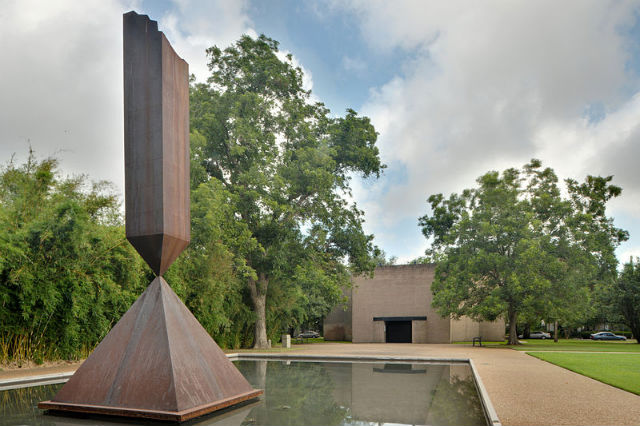
Barnett Newman's "Broken Obelisk" (Image via wikipedia.org)
Barnett Newman’s “Broken Obelisk” (Image via wikipedia.org)

As if we didn’t have enough trouble preserving the middle class, the middle of the art market is the latest topic of debate among members of the art world’s commercial side. Why is the high end of the art market constantly booming while the lower and middle sectors suffer?
At times it can seem like the giant blue-chip galleries, among them Gagosian, Hauser & Wirth, David Zwirner, and others, are sucking the oxygen out of the room: The galleries are in all the headlines; their contemporary artists are making auction records, opening museum shows, and starring at fairs everywhere you look. This comes at the expense of less widely heralded artists and smaller galleries. Let’s look at a few hypotheses on the issues at hand.

It’s the Collectors

Art critic Martin Newman in The Mirror blames the rash of mega-collectors for the booming high-end and embattled middle of the market. New, uber-wealthy collectors are “bulk-buying” new art, grabbing enough new pieces from brand-name galleries that at least some of the artists are going to turn out to be famous, right? Smaller collectors (the traditional doctor and lawyer set) are being pushed out and artists aren’t getting the nurturing they need — it’s either sell in the millions or nothing.

It’s the Dealers

It must be said that the writers and editors of ARTINFO are providing a constant, important drumbeat of critical market writing, even from within the auspices of Louise Blouin Media (who isn’t buying those fairs, after all). Shane Ferro notes that the middle market is “treading water” even as prices at the high end are growing. Impressionism and modern art are hurting the most.
Who is to blame? Well, people aren’t talking about the dealers so much, Ferro notes. “The big dealers — Gagosian, David Zwirner, Pace, etc. — and the deep-pocketed collecting families like the Mugrabis and the Nahmads — have almost complete control over the markets of contemporary art’s most expensive artists,” she writes in another piece. The edge of the bubble (if it is that) is being pushed by aggressive dealers who keep prices moving upward.

It’s the Selachian Commercial Landscape

On his blog, middle-market dealer Edward Winkleman noted that many of his compatriots are committed to the classical Leo Castelli model of gallerist-ing, which means discovering an as-yet-unknown young artist and nurturing their career, launching a market, and profiting in kind from the results. That’s all very nice, but large galleries are really into poaching right now — that means stealing high-earning artists from galleries who often depend on their sales for the rest of their program — and raising their prices with a high-profile solo show. The poaching is “destabilizing the landscape,” Winkleman writes.

It’s PR for Tycoons

In one of his characteristically epic Intervention columns, ARTINFO’s executive editor Ben Davis calls the art market a Hobbesian combination of “nasty, brutish, and short.” The superrich are driving the train, and no one seems likely to unseat them. “As an investment, art is… a gamble by the already super-rich that their own wealth will continue to grow,” Davis writes. But that’s not all. He argues that buying art may also provide a genteel, culture-friendly image for the wealthy that they use to draw attention away from the sources of their money:
Maybe it’s not correlated merely to how rich the super-rich have become, but also to how ill-gotten their gains are and how much, therefore, they feel they have to compensate for. But personally, I feel that art is too important to become PR for tycoons, no matter how much they want to pay to make it so.
Bam. There’s no one answer here, and the middle market will continue to persist, as passionate strugglers always do. But what might be facing us is a choice: Do we want an art world full of Gagosians, Hirsts, and Koonses, or do we want something less flashy, more intellectually considered, perhaps less fashionable? Vote with your eyeballs and your allowance.

SHARE

TAGS

art marketBen DavisEdward WinklemanMark NewmanShane Ferro

RELATED

Thoughts on Stefan Simchowitz from BerlinJanuary 6, 2015
A Few Choice Words from GagosianOctober 12, 2012
"All Artists Are Theater Artists": Taylor Mac on the Connections Between Performance Art and PlaysNovember 18, 2015
Cabecilha at 7:02:00 PM No comments:
Share

What exactly is a museum? | new definition


NEWS
MUSEUMS

What exactly is a museum? Icom comes to blows over new definition

As 50-year-old statement is overhauled, feuds over new description could "seriously weaken" the International Council of Museums

VINCENT NOCE
19th August 2019 11:14 BST
“Major dissent” has been predicted if the proposed definition for museums is adopted at Icom's general assembly on 7 September. Photo: Scott Webb / Pexels
What exactly is a museum? If anyone knows, it should be the International Council of Museums (Icom), with its 40,000 members representing more than 20,000 museums. But that very question is, in fact, fuelling a bitter debate within the organisation and perhaps threatening its identity. On 12 August, 24 national branches—including those of France, Italy, Spain, Germany, Canada and Russia, along with five museums’ international committees—requested the postponement of a vote on a revised definition of museums, in order to deliver a “new proposal”.
The new definition was selected by Icom’s executive board in Paris on 22 July, but the petition issued by the 24 national committees predicts “major dissent” if the proposal, which constitutes a “considerable shift”, is adopted at its general assembly on 7 September in Kyoto. 
For almost 50 years, Icom has adhered to a statement defining the museum as “a non-profit institution” that “acquires, conserves, researches, communicates and exhibits the tangible and intangible heritage of humanity and its environment for the purposes of education, study and enjoyment.” But some people, including the Danish curator Jette Sandahl, object saying “it does not speak the language of the 21st century” and that it does not reply to current demands of “cultural democracy”.
Sandahl led the commission that put forward the new 100-word text, defining museums as “democratising, inclusive and polyphonic spaces for critical dialogue about the past and the future”. It adds: “Addressing the conflicts and challenges of the present, they hold artefacts and specimens in trust for society, safeguard diverse memories for future generations and guarantee equal rights and equal access to heritage for all people.” They are supposed to be “participatory and transparent”, work “in active partnership with and for diverse communities“ and “aiming to contribute to human dignity and social justice, global equality and planetary wellbeing”.
“A definition is a simple and precise sentence characterising an object, and this is not a definition but a statement of fashionable values, much too complicated and partly aberrant."FRANÇOIS MAIRESSE, A PROFESSOR AT THE UNIVERSITÉ SORBONNE NOUVELLE
Juliette Raoul-Duval, who chairs Icom France, quickly denounced an “ideological” manifesto, “published without consulting“ the national branches. “At first, I thought this was a joke,” says Didier Rykner, the founder of the Tribune de l’art, attacking what he describes as an Orwellian newspeak that replaces art works with artefacts and specimens. “The definition should emphasise the importance of the museums’ functions and its relationship to tangible and intangible heritage, which constitute its distinguishing characteristics from other cultural institutions,” claim the national committees which asked to delay the vote, deploring the “political tone” of Sandahl’s document. 
A former director of Icom, and one of the founders of the concept of “new museology” in the 1970s, Hugues de Varine confesses that he was surprised by the “over inflated verbiage” of an “ideological preamble” which does not distinguish a museum from a cultural centre, a library or a laboratory.
The quarrel could be interpreted as a debate between the old guard and the younger generation, or between Latin tradition and the Anglo-Saxon move towards a more “inclusive” model. François Mairesse, a professor at the Université Sorbonne Nouvelle and the chair of the International Committee of Museology, says the matter is more serious. He resigned in June from the commission headed by Sandahl, claiming the proposals “did not reflect the discussions held over two years”.
“A definition is a simple and precise sentence characterising an object, and this is not a definition but a statement of fashionable values, much too complicated and partly aberrant," Mairesse says. "It would be hard for most French museums—starting with the Louvre—to correspond to this definition, considering themselves as ‘polyphonic spaces’. The ramifications could be serious. Icom’s statement can be included in national or international legislation and there is no way a jurist could reproduce this text.”
Mairesse adds that "it does not take into account the extraordinary variety of museums. It would be disastrous to impose only one type of museum. If a vote breaks the consensus that has always governed Icom, it will seriously weaken the organisation.”
cjfy7r9i513fs0133kp2pm6c8
More NewsTopicsInternational Council of MuseumsMuseums & Heritage
Related content
Baltimore Museum of Art dedicates a year of exhibitions to women

Baltimore Museum of Art dedicates a year of exhibitions to women

Whitney Museum vice chairman Warren Kanders steps down after months of protests

Whitney Museum vice chairman Warren Kanders steps down after months of protests

Liverpool World Museum used facial recognition technology on visitors to Terracotta Warriors show

Liverpool World Museum used facial recognition technology on visitors to Terracotta Warriors show

Extinction Rebellion designs go on show at Victoria and Albert Museum

Extinction Rebellion designs go on show at Victoria and Albert Museum

New York thrift store find turns out to be valuable Schiele drawing

New York thrift store find turns out to be valuable Schiele drawing

With Jean Pigozzi's contemporary African art donation, MoMA to become a 'leader' in the field

With Jean Pigozzi's contemporary African art donation, MoMA to become a 'leader' in the field

Cabecilha at 6:00:00 PM No comments:
Share
‹
›
Home
View web version
Powered by Blogger.